
FFS Meaning in Text: What Does FFS Mean?
The ffs meaning is “For F***’s Sake,” a short expression people type when something annoys or frustrates them. It works like a written sigh that shows the sender has run out of patience with a situation. FFS is slang, so it belongs in casual chats rather than careful or polite writing.
People usually send FFS right after something goes wrong, such as a delay, a mistake, or a plan falling apart at the last minute. Most of the time it targets the situation, not the person reading the message, so it rarely works as a direct attack. Its tone can still feel strong, because even in short form the words behind it are easy for readers to hear.
This article explains what FFS means in plain English and shows where people use it in texts, group chats, and games. You will see original examples, simple ways to reply, and how FFS compares with softer reactions like SMH and WTH. It also covers tone, common misunderstandings, and the settings where leaving FFS out is the smarter choice.
What Does FFS Mean in Chat?
FFS means “For F***’s Sake.” People type it to show frustration, annoyance, or disbelief about something that just happened.
The letters usually sit inside a larger message rather than standing alone. Someone might open with “ffs, the train is cancelled again” or end with “third delay today, ffs.” The short form carries the feeling, and the rest of the sentence explains what caused it.
Simple Meaning (In Plain English)
In everyday words, FFS is what a person types at the moment they would normally throw their hands up and sigh.
It can stand in for several plain reactions:
- “Are you kidding me right now?”
- “This is honestly so annoying.”
- “I can’t believe this is happening again.”
The short form delivers the same feeling faster than any of these, which is why people reach for it when they are already annoyed.
Where Is FFS Used?
FFS lives in fast, informal writing. You’ll see it in text messages between friends, in WhatsApp and Instagram DMs, in private group chats, and in gaming chats, Discord servers, and Reddit threads. Anywhere people react in real time, someone eventually loses patience with a situation and types those three letters. A check-in is different from a reaction — the hru meaning in text is “how are you,” a friendly question rather than venting.
Careful writing stays free of it. Work email and messages to clients leave it out, because its force is easy to misjudge.
FFS in Gaming Chats
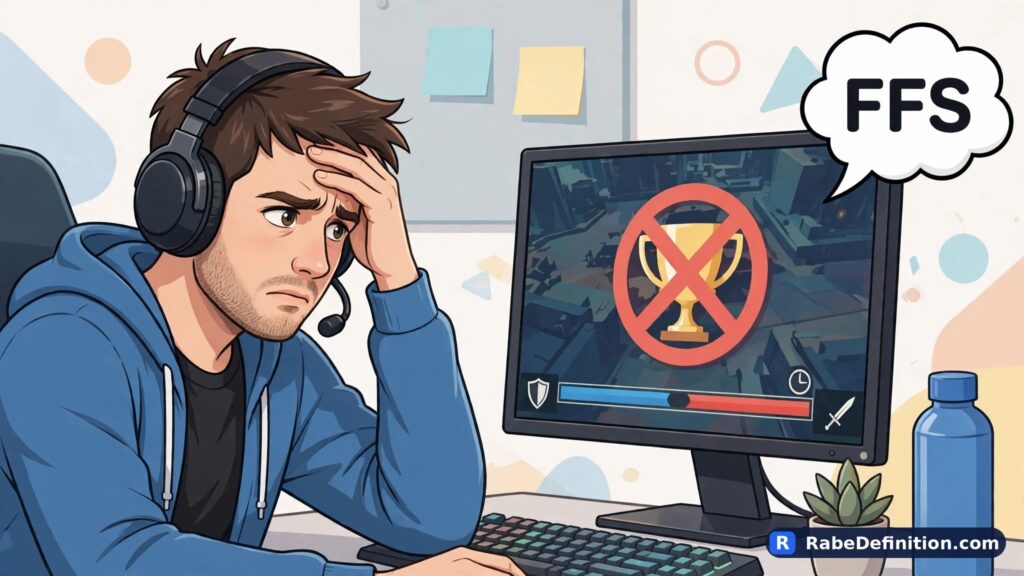
Gaming is one of the places FFS feels most at home. Matches move fast, and three letters say everything after a lost round or a laggy connection ruins a good moment. Teammates who play together read it as routine venting: “ffs, my game froze at the last second” is aimed at the freeze, not at anyone on the team.
It turns sharper when it follows a teammate’s mistake, where the same letters can sound like blame instead of venting.
Why Do People Use FFS?
Speed is the main reason. Writing out a full sentence takes effort, and an annoyed person rarely wants to spend effort on the thing annoying them. FFS says it instantly.
It also creates shared feeling. When a friend answers a story about a cancelled flight with “ffs,” the reply says “I get it, that’s maddening” without a long message. A quick yes works differently — the yh meaning in text is a fast “yeah” for agreeing in a chat.
Real-Life Examples of FFS in Chat
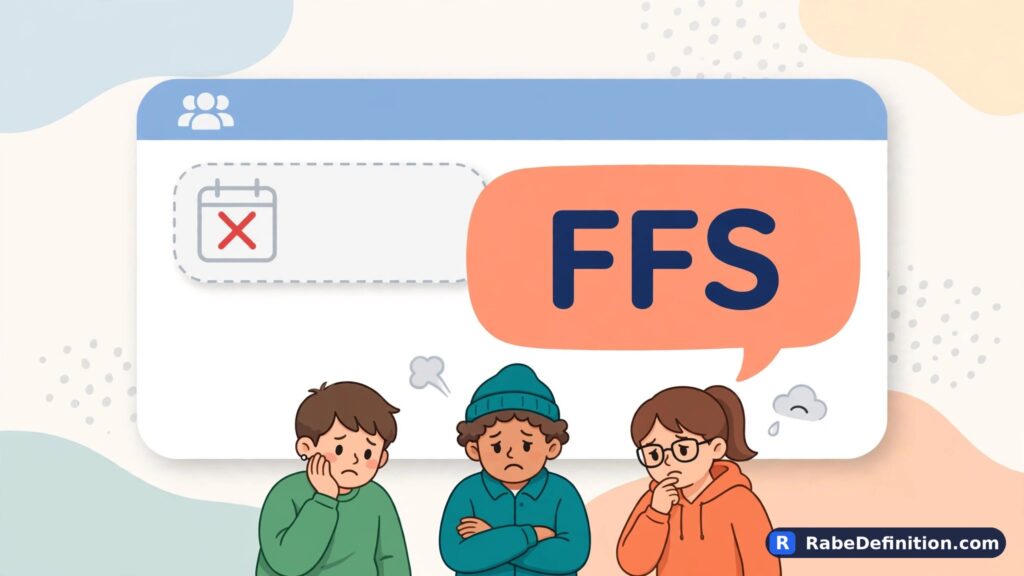
A travel delay
“My train just got pushed back another forty minutes, ffs.”
Meaning: Fed up with waiting again, not annoyed at the person reading it.
Tech trouble before a deadline
“FFS, the update restarted my laptop two minutes before my call.”
Meaning: Frustration at bad timing, with disbelief mixed in.
A group plan falling apart
“They gave away our table because we were ten minutes late, ffs.”
Meaning: Annoyance at a situation that feels unfair.
A near win in a game
“We had that match won, ffs. One more second and it was ours.”
Meaning: Venting about a painful near miss, half annoyed and half laughing.
How to Reply to FFS
Remember that the frustration is almost never about you. A short, sympathetic reply fits most cases: “Ugh, that’s the worst,” or “Again? What happened this time?”
If the message follows news you shared, a simple acknowledgment works well: “I know, I couldn’t believe it either.” When someone uses FFS during a disagreement with you, stay calm and answer the actual problem rather than the letters: “Fair enough, let me sort it out.” A warm compliment is a different kind of reply — the eyp meaning in text is usually “Enjoy Your Presence,” a friendly note rather than frustration.
FFS vs Similar Terms (Comparison Table)
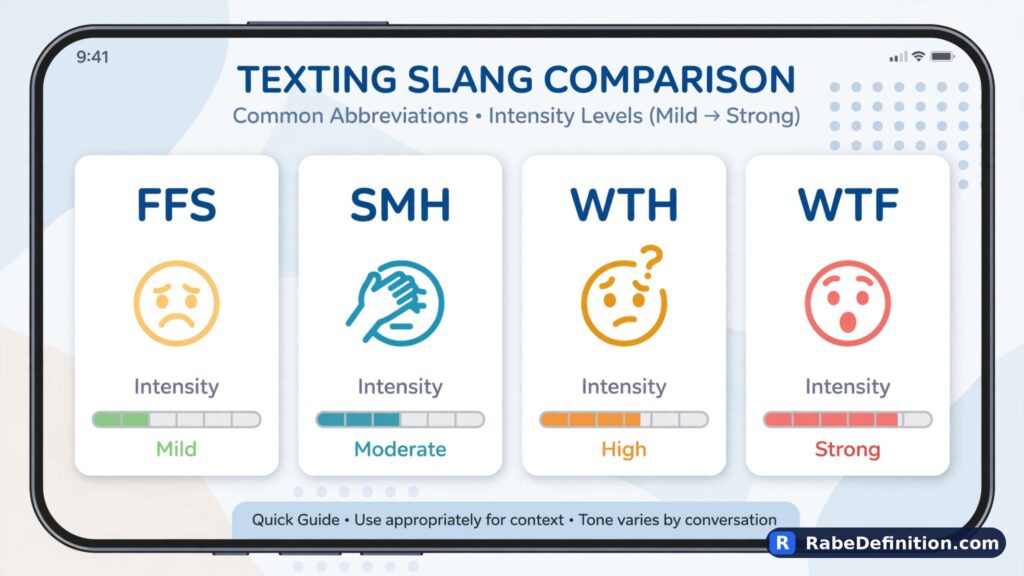
A few short reactions sit near FFS, but each one carries a different weight.
| Term | Meaning | How it feels |
|---|---|---|
| FFS | For F***’s Sake | Strong frustration about a situation |
| SMH | Shaking my head | Disappointment, softer than FFS |
| WTH | What the heck | Surprise and confusion, without swearing |
| WTF | A stronger profane question | Shock or outrage, the strongest here |
| FML | F*** my life | Frustration at your own bad luck |
FFS sits near the strong end of the scale. It is heavier than SMH or WTH, but because it targets a situation, it usually reads as venting rather than an attack. A reaction is different from venting — the tf meaning in text is a surprised reaction, not frustration.
When Should You Use FFS?
FFS fits in relaxed chats with people who already know your style. Close friends, siblings, private group chats, and regular gaming teammates are its natural audience.
Use it for small, passing frustrations: a delayed bus, a rained-out plan, a phone that dies at the worst moment.
Skip it in work messages and anything sent to a client, and avoid it with people you have just met. A simple test helps: if you’d hesitate to say the full phrase out loud in that setting, don’t type the short version either.
Tone and Context of FFS
FFS takes its tone from everything around it. The same letters can read as a tired joke between siblings or as genuine anger from a coworker.
Capital letters add volume. A lowercase “ffs” inside a longer sentence feels mild, while “FFS” sent on its own looks like the sender has properly lost patience. An emoji or a “lol” can soften the reading, though neither guarantees it. Swearing on a claim is different from venting — the onb meaning in text is “On Bro,” an oath people attach to a statement.
Common Misunderstandings About FFS
Thinking it is aimed at you. Most of the time it is not. FFS usually targets a delay, a rule, a device, or a piece of bad luck.
Thinking it always means real anger. Often the sender is closer to tired or mildly fed up, and friends use it while laughing.
Thinking the short form makes it polite. It doesn’t. Readers still know exactly which words the abbreviation stands for.
Thinking FFS and SMH are the same. They overlap, but SMH leans toward disappointment, while FFS carries the stronger charge of frustration.
Other Meanings of FFS
Outside chat, FFS most often stands for fee-for-service, a payment setup where each service is charged for separately, common in health care and insurance paperwork. In that world the letters are plain business language with no emotion attached.
Context settles the meaning quickly. After bad news in a friend’s message, it is the frustration phrase; in a plan description or price list, fee-for-service is the reading.
Pro Tips for Using FFS Correctly
- Add a few words of context, so the reader knows what went wrong.
- Keep it rare. Used for everything, it stops meaning anything.
- Match the other person’s style first. If they never swear, pick a cleaner reaction like WTH.
- Leave it out of public comments on business or school pages, where strangers judge the tone.
Final Thoughts
The ffs meaning is “For F***’s Sake,” a quick written reaction to frustration, annoyance, or disbelief in casual conversation. People aim it at situations far more often than at the person reading the message, so close friends usually read it as simple venting. Caps, punctuation, and repetition can make the same three letters sound funny, tired, or genuinely fed up.
Use FFS only in relaxed chats with people who know your style and share your comfort with mild swearing. Add brief context so readers can tell what went wrong and whether you are joking. Keep it out of work messages, formal writing, and talks with new contacts altogether. Read the message around it first, then answer the feeling behind SMH.
FAQs
What does FFS mean in a text message?
In a text, FFS means “For F***’s Sake,” typed when something frustrates or annoys the sender.
It is aimed at the situation far more often than at the person who receives the message.
Is FFS rude?
FFS can sound rude because it shortens a phrase that contains a swear word.
Between close friends it is usually treated as casual venting, but formal settings call for cleaner wording.
What does FFS mean in gaming?
In gaming, FFS is a fast reaction to a lost match, a freeze, or a mistake at a bad moment.
Teammates who play together often read it as ordinary venting and move on within seconds.
Can I use FFS in a work chat?
No, FFS does not belong in work chats, emails, or messages to clients.
The short form still carries profanity, and most readers in a professional setting will judge it that way.
What is the difference between FFS and SMH?
FFS expresses stronger frustration, while SMH shows quieter disappointment or disbelief.
People pick FFS when they are fed up and SMH when they are mostly just let down.