DW Meaning in Text: What Does DW Mean?
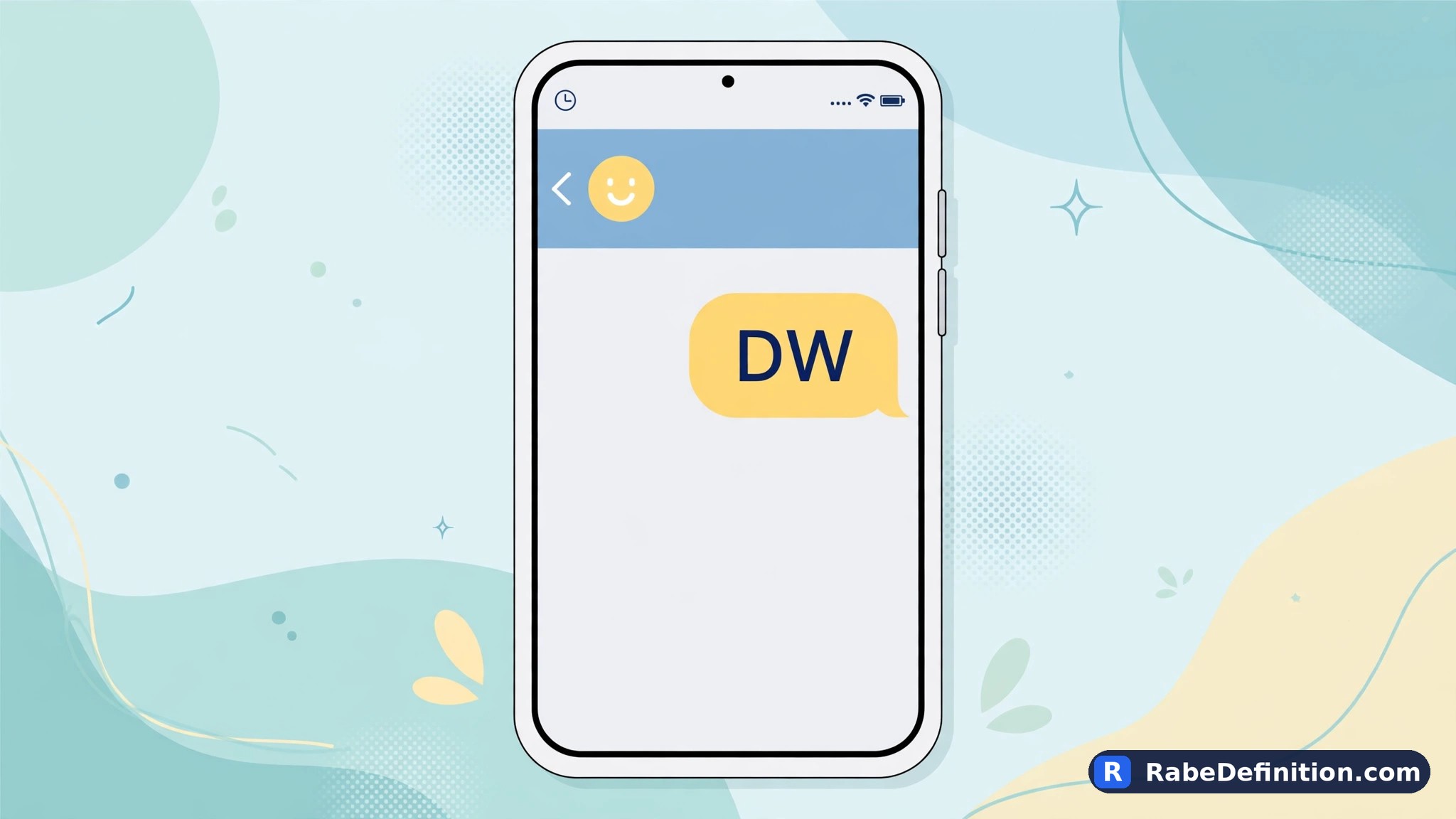
The dw meaning in chat is “don’t worry,” a short way to tell someone that everything is fine. People send it when they want to calm a friend down after a small mistake, a late reply, or a changed plan. It works like a quick reassurance, close in spirit to “no problem” or “it’s all good.”
DW appears most often in casual texts, group chats, and direct messages between people who already know each other well. Its tone is usually warm, although a bare “dw” can feel too short when the other person is genuinely upset. The relationship and the situation decide which reading fits, so the context around the message matters more than the two letters themselves.
This article explains what DW means in everyday texting and how people actually use it in real conversations. You will see original examples, simple ways to reply, and a clear comparison with similar terms such as NP and NBD. It also covers DW’s other meanings, common mistakes, and the moments when a full sentence works better.
What Does DW Mean in Text?
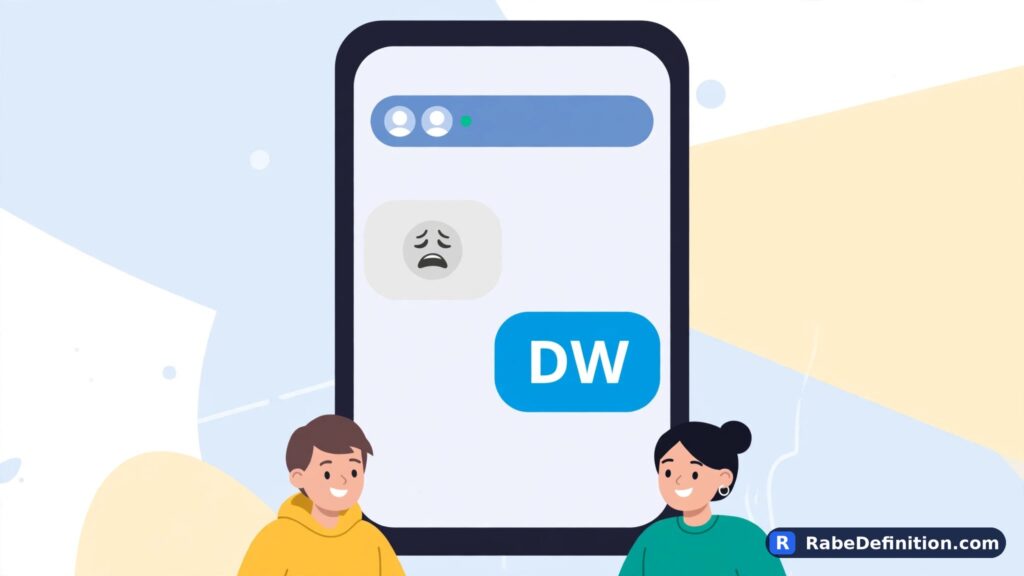
DW means “don’t worry.” It is a short reply people type when they want to reassure someone that a mistake, delay, or awkward moment is not a problem.
The phrase usually answers an apology or a worried message: a friend says sorry for replying late, and “dw” tells them no harm was done. It can also calm someone who is nervous about a plan or a result.
Case makes no difference either: DW, Dw, and dw all mean the same thing.
Simple Meaning (In Easy Words)
Stripped down, DW can mean “it’s fine,” “I’m not upset,” “you don’t need to explain,” or “let’s move on,” depending on what was said right before it.
“dw about it” is the most common pattern: the sender closes the topic gently, with nothing left to feel bad about.
Where Is DW Used?
DW lives in fast, informal digital conversation. You will see it in texts, WhatsApp and Messenger chats, Instagram DMs, Snapchat, Discord, and TikTok or X comments.
It shows up anywhere people type quickly and know each other well, including family group chats. Formal writing is the exception: DW does not belong in work emails, school assignments, or client messages, where “don’t worry” written in full looks far more professional.
Why Do People Use DW?
Speed is the obvious reason: two letters do a full sentence’s job and land while the other person is still staring at their apology.
There is a softer reason too. A long explanation can make a small mistake feel bigger than it is, while a short “dw” closes the moment lightly and tells the other person their guilt is not needed here. One short reply also settles a tiny delay without a five-message exchange about it. A check-in is different from reassurance — the hru meaning in text is “how are you,” a friendly question rather than comfort.
Real-Life Examples of DW in Text
A late reply
Nadia: “Sorry, just saw your message from this morning.”
Leo: “dw, I figured you were at work.”
Meaning: Leo is not annoyed, and no apology is needed.
A small mistake
“You sent the photo to the wrong chat lol”
“Sorry! Deleting it now”
“dw, it was only the grocery list”
Meaning: The mistake was harmless, and the sender can relax.
Changed plans
Omar: “I can’t make it to the game tonight, something came up.”
Priya: “dw, we’ll save you a seat next week instead.”
Meaning: Priya accepts the change without adding any guilt.
How to Reply to DW
Match the energy of the reassurance: a short, warm answer fits best, because the other person has just closed the matter. A quick yes works the same way — the yh meaning in text is a fast “yeah” for agreeing in a chat.
- If a friend says “dw” after your apology: “Thanks, appreciate it” or “Okay good, I felt bad for a sec” both work.
- If it follows a plan change, accept and move on: “Perfect, see you Saturday then.”
- If you still feel unsure: one light question is fine, like “You sure?” After that, believe them and drop the topic.
- Do not keep apologizing afterward. A long chain of sorries can undo the calm the other person was offering.
DW vs Similar Terms
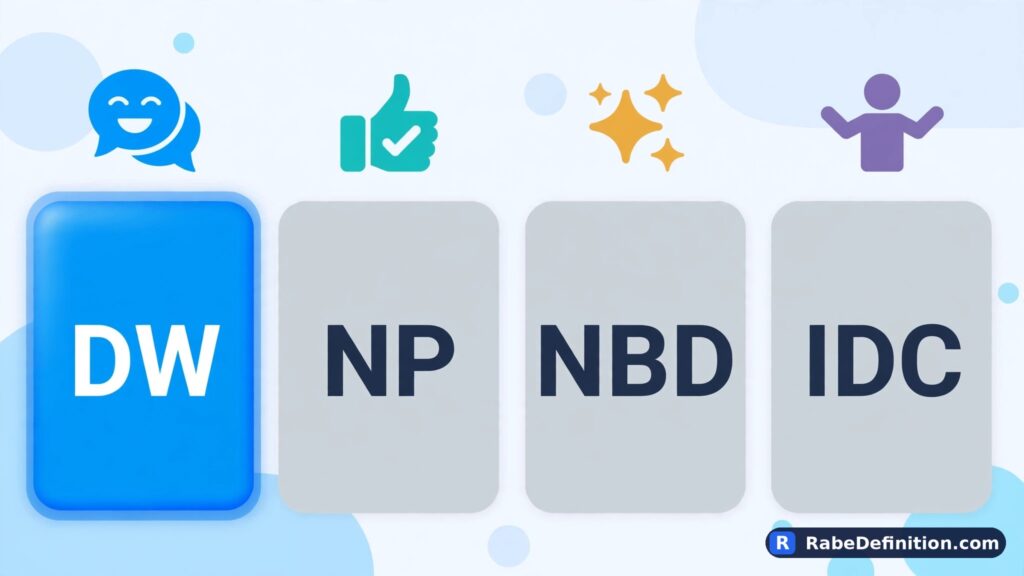
A few short replies sit near DW, but each does a different job.
| Term | Stands for | How it differs from DW |
|---|---|---|
| DW | Don’t worry | Reassures someone who feels bad or nervous |
| NP | No problem | Answers a thank-you or a small favor |
| NBD | No big deal | Says the matter is minor; a touch more casual |
| IDC | I don’t care | Shows indifference and can sound cold |
Choose by what the other person needs: someone who feels guilty needs DW, while someone who just thanked you is better matched with NP.
Tone and Context
Between close friends, DW nearly always reads as kind: the texting version of a shrug and a smile.
The same letters land differently when the problem is not small. If a friend shares real bad news, a bare “dw” can feel like their feelings were brushed aside, because the reply is too short for the moment.
Punctuation and small additions change the temperature. “dw!” feels cheerful, “dw, seriously, it’s fine” feels thoughtful, and a flat “dw.” after a long, emotional message can read as distant, even if meant kindly. A frustrated reaction is different from reassurance — the ffs meaning in text is “For F***’s Sake,” a vent for annoyance rather than comfort.
When Should You Use DW?
DW works best for small, everyday moments: a friend apologizing for a late reply, a plan that moved by an hour, a photo sent to the wrong chat, or a teammate embarrassed about a minor error. In those spots, it is quick and warm.
Skip it when the situation needs a real discussion: if money, health, or real feelings are involved, a full sentence shows more care, and formal messages deserve one too.
DW on Social Media
DW on Snapchat
Snapchat chats are quick, so DW appears as a fast reply to an apology snap or a changed plan, usually lowercase and on its own.
DW on Instagram
In Instagram DMs, DW works like ordinary texting: a friend apologizes for a late reply to a story, and “dw” closes it. Public comments see it less, since reassurance is usually private.
DW on TikTok
Under TikTok videos, “dw” appears in friendly comment threads, reassuring a creator or another commenter about a small mistake in a video or caption. In DMs, it returns to its everyday texting job.
Other Meanings of DW
In a normal chat, “don’t worry” is the meaning to reach for first, but DW is not exclusive to texting. On older web forums and in marriage or parenting communities, DW is a long-running shorthand for “dear wife” when someone mentions their spouse in a post. That reading only fits a story about family life, never a reply to an apology.
In fandom spaces, DW can also stand for Doctor Who in tags and usernames. Context settles it: a reply in your messages is reassurance; a forum post or fan tag points elsewhere.
Common Misunderstandings About DW
Reading DW as “I don’t care.” That meaning belongs to IDC; DW is sent to comfort someone, not to dismiss them.
Assuming it is always warm. A one-word reply to a serious message can feel dismissive, so judge DW by the whole conversation, not the letters alone.
Using it to end every apology. If a mistake actually hurt someone, “dw” solves nothing. The person affected decides whether it is fine, not the person who caused the problem.
Thinking only teenagers use it. Adults use DW constantly with friends, partners, and coworkers; it is a general texting habit, not an age marker. An oath is different from reassurance — the onb meaning in text is “On Bro,” an oath people attach to a claim.
Pro Tips for Using DW Correctly
Add a few words when you want the reassurance to land softly. “dw, I get it” or “dw about it, seriously” feels more thoughtful than the bare letters.
Match the other person’s style. A friend who texts in short bursts reads “dw” as normal, while a friend who writes full sentences may appreciate “don’t worry about it” written out.
Do not stack it after everything: if every reply is “dw,” it looks automatic and the comfort wears off. Warm words work in both directions — the eyp meaning in text is usually “Enjoy Your Presence,” a compliment for good company.
FAQs
What does DW mean in a text from a guy or a girl?
DW means “don’t worry,” no matter who sends it.
The conversation around it decides whether it feels warm or too short.
Is DW rude to say?
DW is not rude in an ordinary casual chat between friends.
It can feel dismissive only when the situation is serious and needs a fuller answer.
Can I use DW in a professional text?
You can use DW in a relaxed chat with a coworker you know well.
In emails or client messages, write “don’t worry” in full so it looks professional.
What is the difference between DW and NP?
DW comforts someone who feels bad about a mistake or a delay.
NP answers a thank-you or a small favor, so the two replies do different jobs.
Conclusion
The dw meaning in chat is “don’t worry,” a short reply people use after small mistakes, delays, or awkward moments. It tells the other person that you are not upset and that the matter is settled without more stress or explanations. Read in context, it sounds warm and friendly, especially between people who know each other well and text casually.
Use DW when the problem is minor and you want the chat to move on without guilt, pressure, or extra fuss. Add a few words when the topic is serious, because two letters can feel too light for a heavy moment there. Save full sentences for formal messages, and write no worries in full when clarity matters more than speed.