HRU Meaning in Text: What Does HRU Mean?
The hru meaning in texting is How Are You, a casual question people use to check in on someone. HRU is a shortened spelling built from the sounds of that phrase, where the letter R does the job of the word are. The letter U does the same job for the word you, which is why it looks strange at first glance.
Most people send HRU at the start of a conversation, or when they have not talked to someone in a while. It usually sounds friendly and relaxed, closer to a warm hello than a serious question about health. The same letters can feel caring from a close friend and routine from someone you barely know, so the relationship sets the tone.
This article explains what HRU means in different chat situations and how much weight an answer should carry. You will see realistic texting examples, simple ways to reply, and how HRU differs from terms like WYD, SUP, and HBU. It also covers where HRU fits, where the full phrase works better, and how to read its tone.
What Does HRU Mean In Chat?
HRU means “How Are You.” People send it to check in, open a chat, or restart one that went quiet.
Unlike WYD, which asks what you are doing, HRU asks how you are: the focus is the person, not their plans. Sometimes “good, you?” is enough, and other times HRU opens the door to an honest update.
Simple Meaning (In Easy Words)
HRU is the texting version of asking how someone is at the door: a friendly check-in in three letters, and nobody expects a long report back. They are saying hello warmly or genuinely asking how life is treating you, and your reply can match either level.
HRU Full Form
The full form of HRU is “How Are You,” but the letters do not match word by word. H is “How,” while R and U are the sounds of “are” and “you.”
This sound-based spelling is common in texting shorthand. People write it the way it sounds spoken quickly, which is why “hru” feels obvious once said aloud.
Where Is HRU Used?
HRU shows up anywhere people chat informally:
- Text messages and apps like WhatsApp
- DMs on Instagram and Snapchat
- Group chats with friends or family
- Gaming chats between matches
- Casual comments and replies online
In a group chat it is aimed at everyone at once; one-to-one, it is more personal and a real answer matters more.
Group chats have their own short forms — the gng meaning in text is gang, for a close circle of friends.
HRU on Social Media
HRU on Snapchat
Snapchat chats move fast, and HRU fits that pace. It often opens a chat with a friend, usually lowercase, and reads as routine warmth, not a deep question.
HRU on Instagram
In Instagram DMs, HRU often follows a story reply. Someone sees your post, thinks of you, and opens with “hru” to start a real conversation.
HRU on TikTok
On TikTok, HRU appears in comments and messages between followers. Public comments keep it light, like a friendly wave; a private message reads as it would in a text.
Why Do People Use HRU?
Speed is part of it: three letters beat a full question in a fast chat.
Tone is the bigger reason. Written in full, “How are you?” can look stiff or even worried in a casual chat, while “hru” keeps it light and easy.
Short replies work the same way — the yh meaning in text is a quick “yeah” for agreeing fast.
Real-Life Examples Of HRU

A morning check-in
Lena: “Morning! Hru today?”
Tom: “Better. Slept through the night for once.”
Meaning: A light daily check-in between friends.
Catching up after a quiet spell
“Hey stranger, hru? Feels like we haven’t talked in weeks.”
Meaning: HRU reopens the chat and invites a real update.
A supportive message
Dana: “Heard the exam results came out. Hru holding up?”
Meaning: Dana knows the day was stressful, so this one carries genuine concern.
HRU vs Similar Terms
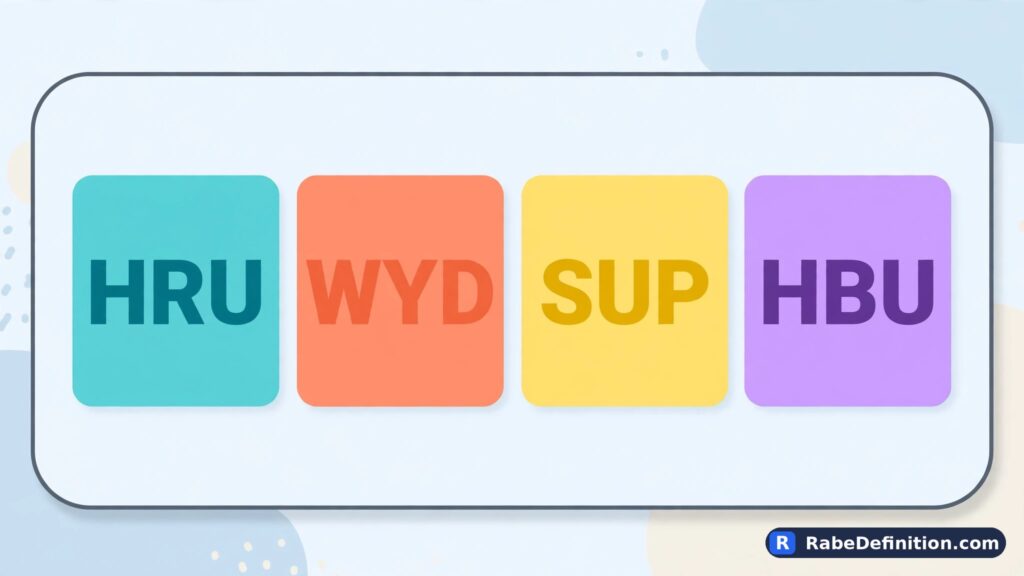
Several short openers look alike, but each one asks something different.
| Term | Stands for | What it really asks |
|---|---|---|
| HRU | How Are You | How you are doing or feeling |
| WYD | What You Doing | What you are doing right now |
| SUP | What’s Up | A general greeting |
| HBU | How About You | Sends the question back |
| WSG | What’s Good | A casual greeting, similar to SUP |
The key difference is focus. HRU is about wellbeing, WYD is about activity, and HBU only works as a return question.
WYD’s close cousin is WYO — the wyo meaning in text is “what you on,” asking what someone is doing rather than checking in.
When Should You Use HRU?
HRU fits relaxed conversations: texting a friend, messaging a sibling, or checking in with a classmate. It also reopens a quiet chat kindly, asking about the person instead of demanding news.
Spell it out when the moment carries weight: for someone grieving, ill, or having a hard week, full words show more care than three letters, and the same applies at work.
A different short reply is OFC — the ofc meaning in text is “of course,” used when you agree rather than checking in.
Common Misunderstandings About HRU
Thinking it is always lazy. HRU is short, but short is not careless, and between people who understand each other it carries the full question’s warmth.
Thinking it always needs a deep answer. Sometimes it is just a greeting, and a one-word reply is fine.
Thinking a short reply is rude. “Good, hbu?” is a complete, normal texting answer, as long as you respond properly when the question proves serious.
Thinking only teenagers use it. Plenty of adults use HRU in casual chats now, not just teenagers.
What Does HRU Mean From a Guy or a Girl?
It means the same thing from anyone: “How Are You.” A guy sending HRU and a girl sending HRU are both just checking in.
What changes is your history with the sender, not their gender. A daily “hru” from your best friend is routine. From someone new it may carry more interest, and what follows will show which it is.
Is HRU Flirty or Just Friendly?
On its own, HRU is friendly, not flirty. It is a standard opener in texting, sent to friends and classmates with no romantic meaning.
Context can warm it up. A late-night HRU from someone who messages you daily, with compliments and long replies, reads differently from one in a group chat. Judge the whole pattern.
Pro Tips For Using HRU The Right Way
Add a small detail to make your HRU feel genuine. “Hru? How did the interview go?” shows you remembered something real, and it gets a better answer than a bare “hru.”
Answer the reply you get. If someone answers honestly, do not change the subject; a short follow-up keeps the check-in from feeling scripted.
Where Did HRU Come From?
There is no recorded moment when HRU was invented, and its exact origin is not documented. It developed naturally as written chat became everyday, with people squeezing common spoken phrases into shorter forms.
“How are you” is among the most used English greetings, so it was an obvious candidate for shortening, alongside sound-based shortcuts like U for “you.”
How To Reply When Someone Uses HRU
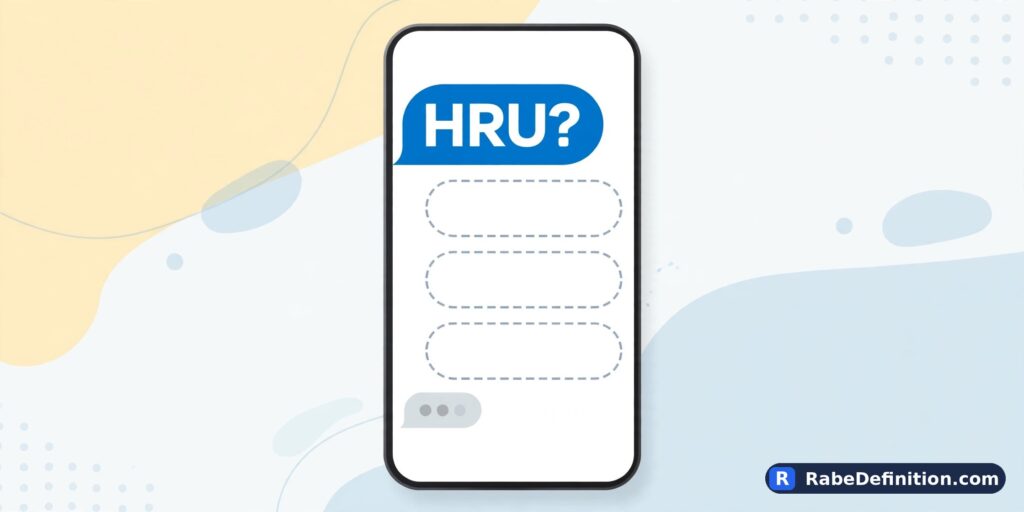
Match your reply to how you are actually doing, and keep it short.
- Doing well: “Good, thanks! Hbu?”
- Having a rough day: “Honestly not great today. You?”
- Busy but fine: “Good, just swamped with work. You?”
- Keeping the chat going: “Good! Finally finished my exams. What about you?”
If the HRU comes from concern, a slightly fuller answer is kind.
A reaction is different from a check-in — the tf meaning in text is a surprised reaction, not a greeting.
Final Thoughts
The hru meaning is How Are You, a friendly question people send to check in during casual chats. It can open a conversation, restart one after a quiet spell, or show real care when a friend has had a hard week. Context decides its weight, because the three letters can act as a light greeting or a genuine question.
Reply briefly, and send the question back when you want the chat to keep moving. Use HRU with friends, family, and anyone who texts in short forms with you. Write the full phrase in formal or serious messages, where extra words show more care. Answer simply, and this check-in stays a way to look out for people you care about daily.
FAQ Section
What does HRU mean in chat?
HRU means “How Are You” in a chat or text message.
People send it to check in on someone or to start a friendly conversation.
Is HRU just a greeting, or does it need a real answer?
HRU can work as a light greeting that only needs a short reply.
If the sender follows up or knows you have had a rough time, a real update fits better.
How do you reply to HRU?
Answer with a short, honest update about how you are doing.
Add “hbu?” at the end if you want to ask the same question back.
Is HRU rude?
HRU is not rude in casual chats with friends or family.
In formal messages or serious moments, writing “how are you” in full is the better choice.
Can HRU sound flirty?
HRU on its own is a friendly check-in, not a flirty line.
Late-night timing, frequent messages, and the rest of the chat can give it a warmer feel.
What is the difference between HRU and HBU?
HRU opens the exchange and means “How Are You.”
HBU means “How About You” and sends that same question back to the other person.