EVB Meaning in Text: What Does EVB Mean?
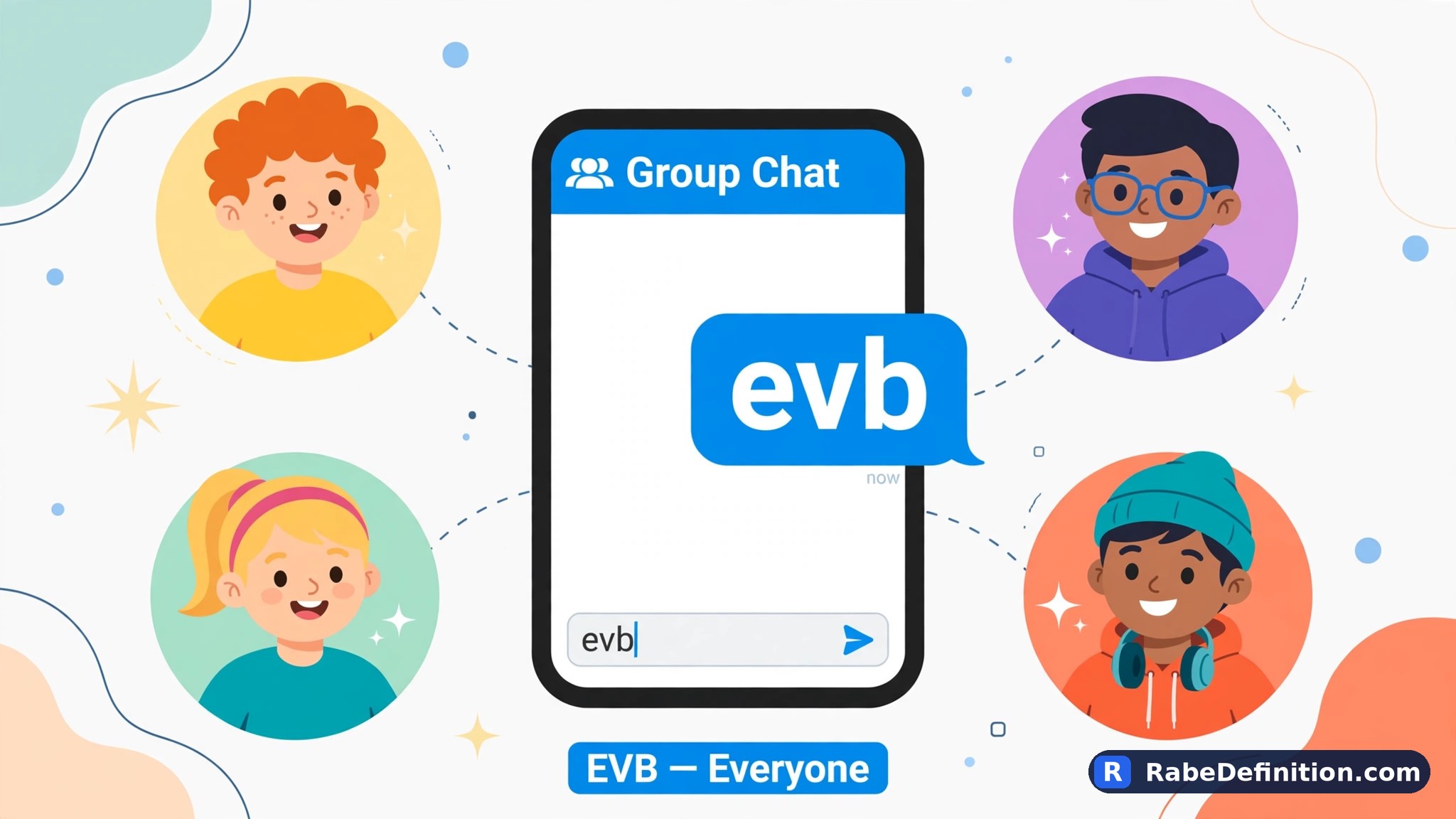
The evb meaning in text is everybody. EVB is a short, casual spelling that people use when they are talking about a whole group at once. It drops into a sentence in exactly the same spot where the full word everybody would go.
You will see EVB most often in group chats, captions, and quick comments between friends. Its tone is light and friendly, and it usually signals that a message is meant for everyone in the group, not one single person. Because it is pure slang, though, it can confuse readers who are not used to texting shorthand.
This guide explains where EVB shows up, why people type it, and how to read it without guessing. You will also see real examples, a comparison with similar slang, and simple tips for using it well. By the end, you will know when EVB fits a message and when the full word is the safer choice.
What Does EVB Mean?
EVB means “everybody” in texting and online chat. It is a quick shorthand for the whole group, whether that means your friends, your followers, or everyone in one chat thread.
The letters come straight from the word itself. EVB keeps the E, the V, and the B from “everybody” and drops the rest, much like “ppl” keeps the key letters of “people.”
Simple Meaning (In Plain Words)
Read EVB as a squished-down spelling of a word you already know. It is not a code, and it carries no hidden message behind it.
If a friend texts “evb come look at this,” they are simply saying “everybody come look at this.” Swap the full word in, and the sentence reads exactly the same.
Like SMTH, EVB is a compressed spelling of one everyday word.
How to Pronounce EVB
EVB is almost never spoken out loud. In a voice note or a real conversation, people just say the full word “everybody,” because saying three loose letters sounds awkward.
If someone does spell it while quoting a message, they say the letters one by one: “E-V-B.” That only happens when a person is asking about the term itself, not when they are using it naturally.
Where Is EVB Used?

EVB lives in fast, casual spaces where people type quickly and skip full spellings. You will run into it most on:
- TikTok — in captions and comment threads under trending videos
- Snapchat — in quick back-and-forth chats between friends
- Instagram — in Reel comments, story replies, and DMs
- Group chats and Discord servers — when one person addresses the whole group at once
You will rarely see it in work email, school assignments, or anything formal. Those settings call for the full word.
Group chats that open with a WSP greeting run on shorthand like this.
Why Do People Use EVB?
The biggest reason is speed. “Everybody” is a long word to type on a phone keyboard, and EVB gets the same idea across in three taps.
Tone matters too. Short spellings match the relaxed feel of a casual chat, and typing the way your friends type helps you blend in. After a while it becomes habit, and people reach for EVB without thinking about it.
Real-Life Examples
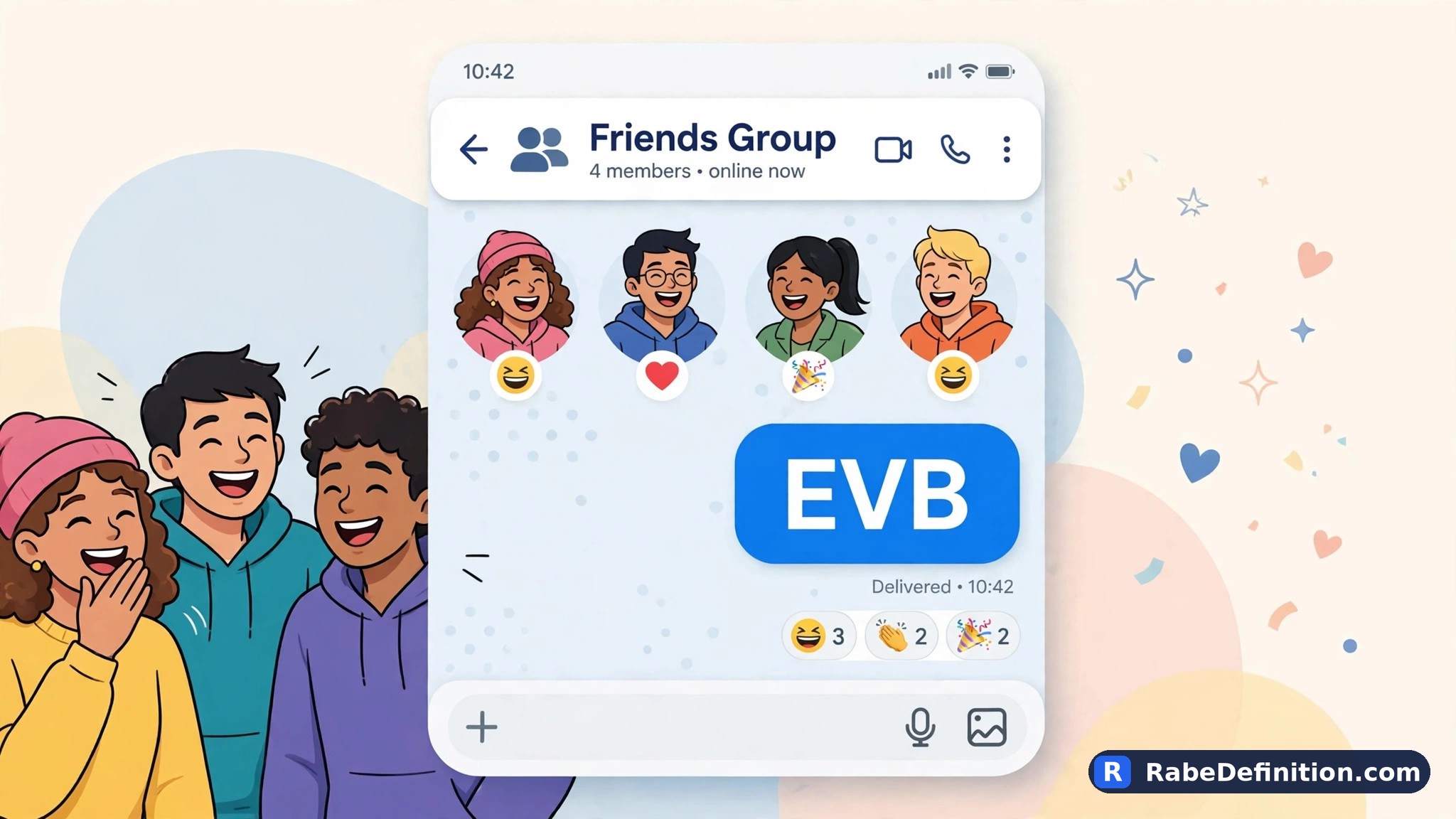
A few everyday messages show how naturally EVB drops into a sentence:
- “evb still coming to Maya’s on Saturday?” — asking whether the whole group is coming
- “ok evb needs to try this filter, it’s too funny” — a caption aimed at everyone watching
- “miss u evb, group chat has been dead all week” — a warm message to the whole friend group
- “evb bring your own snacks tonight, house rule” — one announcement for everyone attending
Notice that EVB always sits where “everybody” would sit. That swap test is the fastest way to confirm you are reading it right.
How to Reply to a Message With EVB
Reply the way you would reply to the word “everybody.” If the message asks the group a question, answer for yourself and keep it short, like “I’m in” or “can’t, working late.”
If the message is an announcement, a simple reaction or a short “got it” is enough. You do not need to use EVB back, though matching the casual tone with a “kk” or “bet” feels natural among close friends.
EVB vs Similar Texting Slang
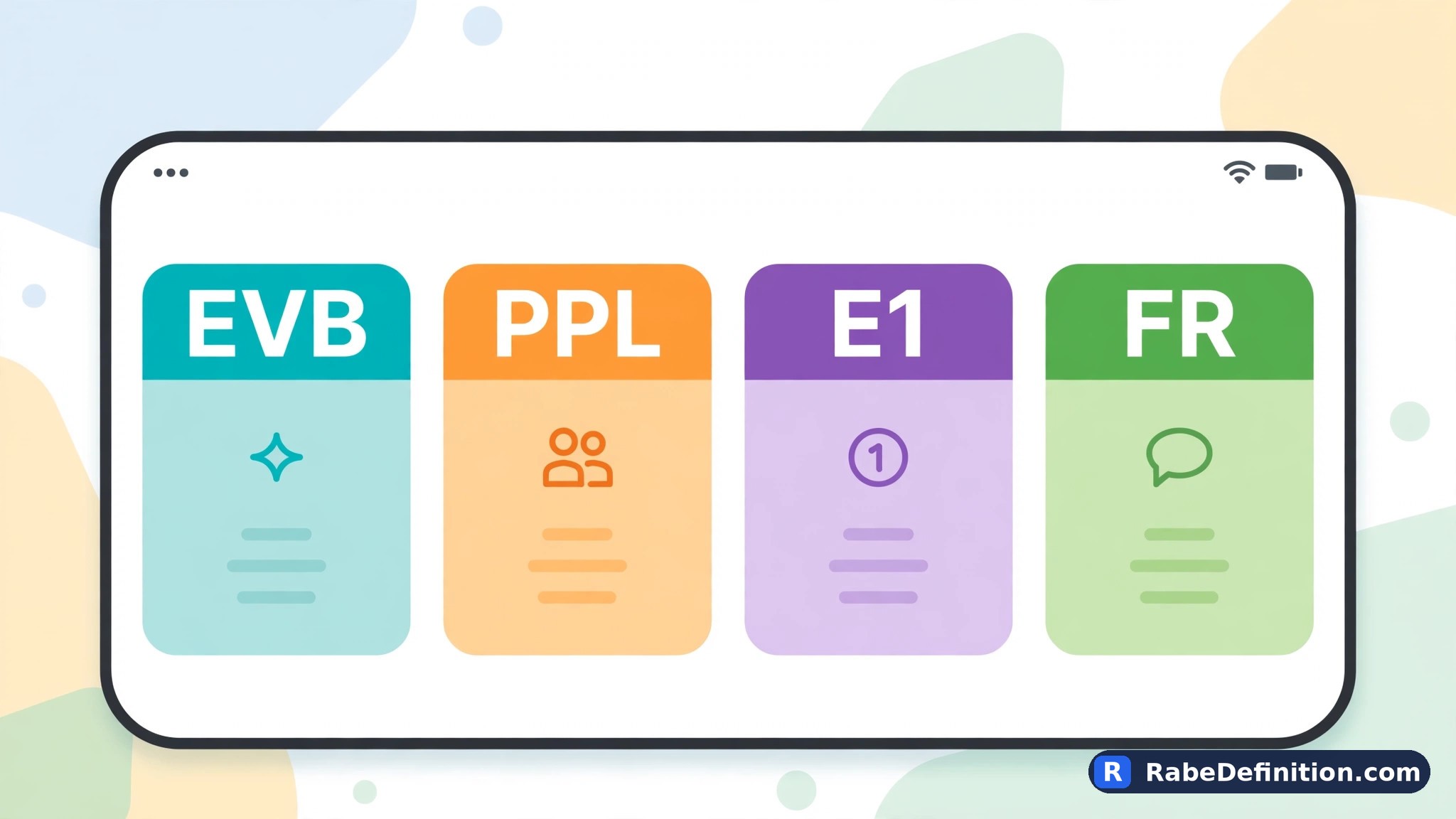
EVB belongs to a family of shortened everyday words. The table below shows how it differs from the ones it appears next to most often.
| Slang | Meaning | Typical use |
|---|---|---|
| EVB | Everybody | Addressing a whole group in chats and captions |
| PPL | People | Talking about people in general, not one set group |
| E1 | Everyone | A similar group word, often seen in gaming chat |
| FR | For real | Stressing that something is true |
| NGL | Not gonna lie | Starting an honest or blunt statement |
| ILY | I love you | Showing affection to a person |
The key difference is scope. EVB names the whole group at once, while terms like FR and NGL comment on feelings or honesty instead.
When Should You Use EVB?
EVB works well when the chat is already casual and everyone in it knows slang. Good moments include texting close friends, commenting under a friend’s post, or sending one message to your whole group chat.
Skip it when you write to a teacher, a boss, or a client. Also skip it when the message carries important details, like times or addresses, because clarity matters more than speed there.
It shares the same casual spaces where a DNI boundary note fits.
Tone and Context
EVB sounds warm and inclusive in most chats, since it pulls everyone into the message at once. A caption like “love u evb” reads as friendly because the group already shares that shorthand.
The same letters can fall flat with the wrong reader. Someone outside the group may read EVB as initials or a username and miss the point entirely, so context and audience decide how it lands.
Unlike ISTG, which adds emotional volume, EVB stays neutral.
Common Misunderstandings About EVB
One common mix-up is reading EVB as someone’s initials or a random username. In the middle of a normal sentence, though, it nearly always means “everybody.”
Another is treating EVB like a true acronym where each letter stands for its own word. It is not built that way; it is a compressed spelling of one single word.
Some readers also assume the meaning changes between guys and girls. It does not. Whoever sends it, EVB points to the group, never to the sender.
Short forms like IMO get misread the same way when readers meet them cold.
Other Meanings of EVB
Outside texting, EVB can appear as plain initials for a person’s name, a small business, or a local group, and in those cases it has nothing to do with slang. Capital letters alone do not tell you which one you are looking at.
Inside a chat, caption, or comment, though, “everybody” is the meaning to assume first. Only look for another meaning when the group reading makes no sense at all.
Pro Tips for Using EVB
- Test with the swap. If “everybody” fits the sentence, EVB fits too.
- Keep it casual. Save EVB for friends and social apps, not formal writing.
- Do not overdo it. Using it in every message looks forced; once in a while feels natural.
- Ask when unsure. A quick “what does evb mean?” gets a friendly answer in most chats.
Final Thoughts
The evb meaning is simple once you see it in a real chat. EVB is just a fast way to type “everybody,” and it points to a whole group instead of one person. You will mostly meet it in group chats, captions, and comments on TikTok, Snapchat, and Instagram. It fits anywhere the full word “everybody” would fit in the sentence.
Use EVB only with people who already text in casual slang, and keep it out of work messages and school work. If a message confuses you, swap in “everybody” and read the sentence again. That one check clears up almost every case. With a little practice, you will spot and use EVB naturally in your everyday chats with everyone.
FAQ
What does EVB mean in a text message?
EVB means “everybody” in a text message. People use it to talk about a whole group at once instead of naming each person.
Is EVB used the same way on every platform?
Yes, the evb meaning stays the same on TikTok, Snapchat, Instagram, and regular texts. Only the setting changes, since some apps move faster and lean on slang more than others.
Can I use EVB in a professional message?
No, EVB is casual slang and looks out of place in professional messages. Write out “everybody” or “everyone” in work emails, school work, and formal writing instead.
Why do people shorten “everybody” to EVB instead of just typing it out?
Typing EVB is faster, and it matches the relaxed tone of casual chats. It also feels natural to people who text in shorthand with their friends every day.