ISTG Meaning in Text: What Does ISTG Mean in Texting?
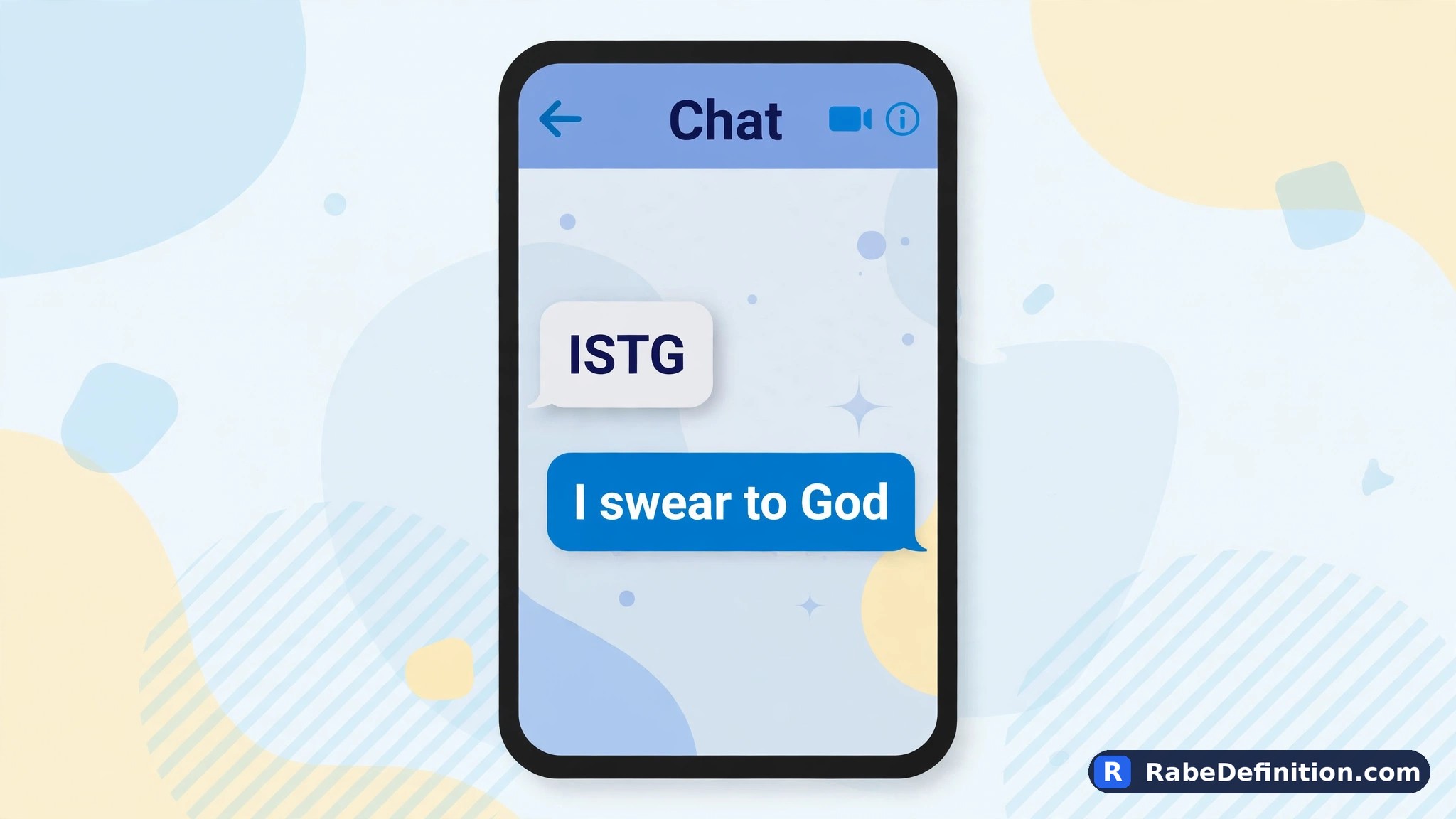
The istg meaning in text is “I swear to God,” a short form people type to stress that a statement is honest or strongly felt. It usually appears right before or after the claim it supports, like a spoken promise folded into a chat message. Readers treat it as an emotion marker, so it changes how a sentence feels without changing what the sentence says.
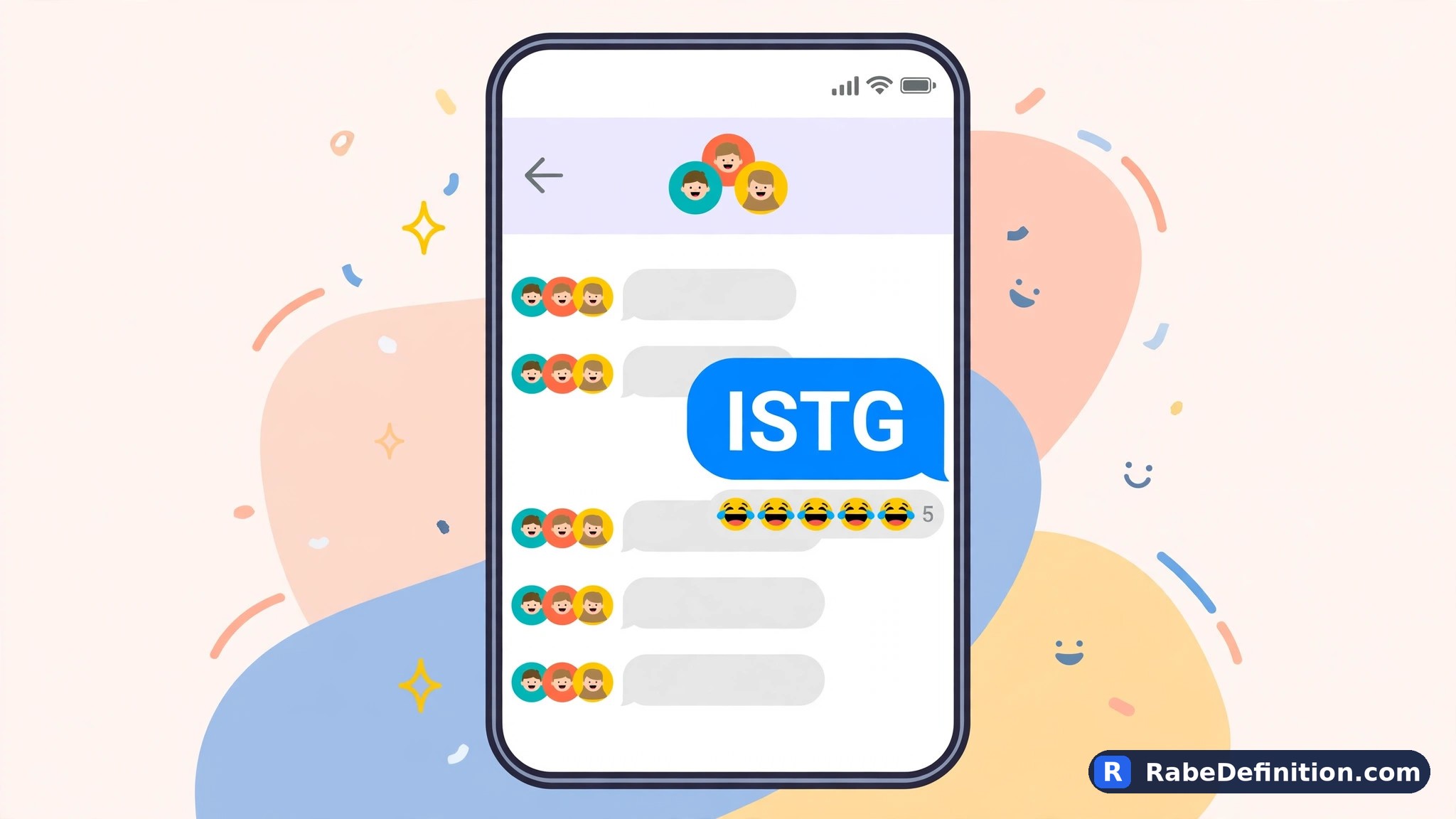
You will see ISTG most often in casual chats between friends, in group chats, and in comments under social posts. The tone shifts with the moment, so the same letters can carry real anger, open excitement, simple shock, or a calm and sincere promise. Many people use it as pure emphasis with no religious thought behind it, while others still hear the full phrase and take it seriously.
This guide covers the meaning of ISTG, the places it appears, and the signals that reveal how a sender really means it. You will find original chat examples, a comparison with close slang terms, and short replies that fit serious and playful uses. It also explains the moments when ISTG works well, the moments when it misfires, and the misunderstandings that follow it around online.
What Does ISTG Mean in Chat?
ISTG means “I swear to God.” It is a texting abbreviation people attach to a statement to show they mean it, with real feeling behind it.
The letters shorten a phrase people have said out loud for years, and the short form keeps a fast chat moving. In a message, ISTG rarely works alone. It leans on the sentence next to it, which tells you whether the sender is upset, amazed, thrilled, or promising something.
Because the phrase names God, a few readers treat it as stronger than most slang. Others read it as everyday emphasis and barely notice the words behind the letters, which is why audience and setting matter below.
Simple Meaning (Explained in Easy Words)
Put in easy words, ISTG means “I really mean this.” When someone writes “the train istg never comes on time,” the letters tell you the complaint is fully felt. Remove ISTG and the sentence still works, but it lands softer.
Think of it as volume, not vocabulary. ISTG does not add facts to a message. It raises the emotional volume of facts that are already there.
Unlike a neutral shortcut like SMTH, ISTG adds feeling, not just speed.
Where Is ISTG Used?
ISTG lives in fast, informal writing. You will run into it in:
- Text messages and private chats between friends
- Group chats where jokes and complaints move quickly
- Comments and captions on social apps
- Gaming chats and Discord servers in heated or funny moments
It shows up far less in email, schoolwork, or anything written for strangers, where tone is harder to guess.
It lives in the same informal spaces where a boundary note like DNI appears.
ISTG on Social Media
On Snapchat and in Instagram direct messages, ISTG usually reacts to something the sender just saw: a photo, a story, or news from a friend. In TikTok comments, it works as a public reaction that shows every reader the moment hit hard.
Screenshots and short clips carry the letters across apps in minutes. A private ISTG between friends can stay soft, while the same letters under a viral post read louder and more dramatic.
Why Do People Use It?
Plain text hides the voice. A sentence gives no hint of a grin, a sigh, or a raised eyebrow, so writers borrow tools that put feeling back.
ISTG is one of those tools. It is quick to type, easy to recognize, and strong enough to mark a sentence as heartfelt in under a second. The same letters can warn, promise, celebrate, or complain, and the chat supplies the flavor.
Openers like WSP start chats; ISTG strengthens what follows.
Real-Life Examples (With Explanations)
A roommate writes: “istg the dishes are still in the sink.” Nothing playful sits in that line; it underlines a complaint made many times before.
In a chat about borrowed money, “ISTG you’ll have it back on Friday” works as a spoken-style promise, and the letters carry the weight of a vow.
“ISTG that final episode broke me,” posted under a show clip, is hype rather than anger. The sender is praising the episode by overstating the effect it had.
A friend texts, “istg my bus drove past my stop again.” The letters turn disbelief at bad luck into a shared joke.
Tone and Context
Tone decides what ISTG means in practice. Capital letters and words like “again” or “stop” push it toward frustration, while laughing words, praise, and excited details push it toward play.
Punctuation helps too. A flat “istg.” with a period can feel annoyed, while the same letters inside a long, excited sentence usually feel warm. When the tone is unclear, the safest reading is strong feeling without a fixed emotion; the rest of the chat will name it.
What Does ISTG Mean From a Guy or a Girl?
The meaning does not change with the sender. A guy typing ISTG and a girl typing ISTG are using the same phrase for the same job: emphasis.
What can change is the situation around it. In a close friendship it may sound teasing or dramatic. In an argument it may sound like a warning. In a newer or dating chat, a sincere “ISTG I had a great time” reads as a compliment with weight behind it. Read the relationship and the moment, not the gender.
ISTG vs Similar Terms
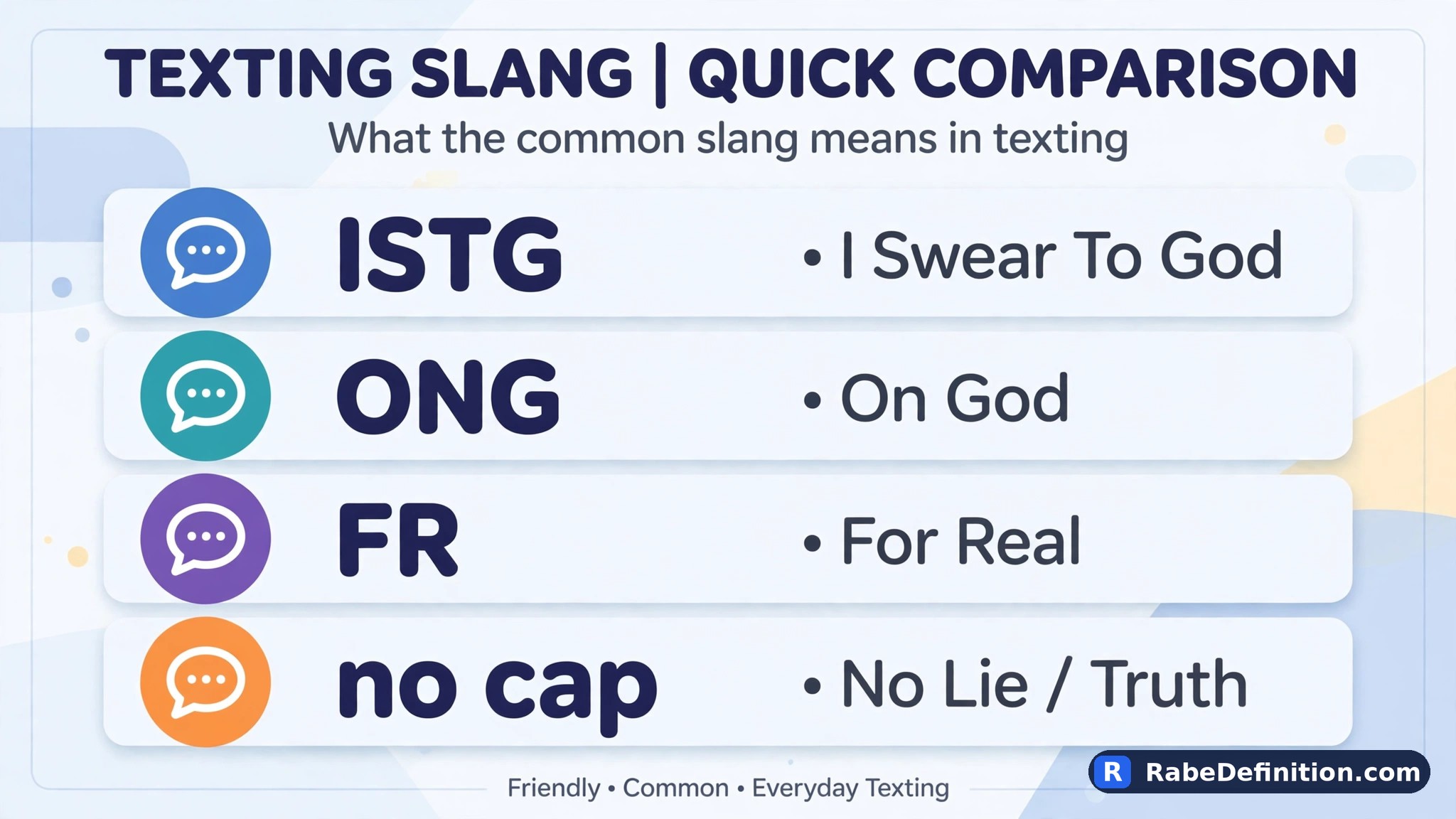
Several short forms add honesty or emphasis to a chat, but each leans a different way.
| Term | Meaning | Typical tone |
|---|---|---|
| ISTG | I swear to God | Strong emphasis; serious or playful |
| ONG | On God | Very close to ISTG; stresses truth |
| FR | For real | Agreement, or asking someone to be serious |
| No cap | No lie | Casual honesty, often light |
| NGL | Not gonna lie | Leads into an honest opinion |
| OMG | Oh my God | Surprise or shock, not a promise |
ISTG and ONG sit closest together, since both borrow the weight of an oath. FR and no cap stay lighter, and OMG reacts to a surprise instead of backing up a claim.
When Should You Use It?
ISTG fits chats where the other person already knows your style. Friends, siblings, and regular group chats can read your tone from very little, so the emphasis lands the way you meant it.
Save it for moments that truly carry feeling: a real promise, a sharp complaint, a big reaction. Used once in a while, it keeps its strength. Used in every other message, it fades into background noise and stops standing out.
How to Reply to ISTG
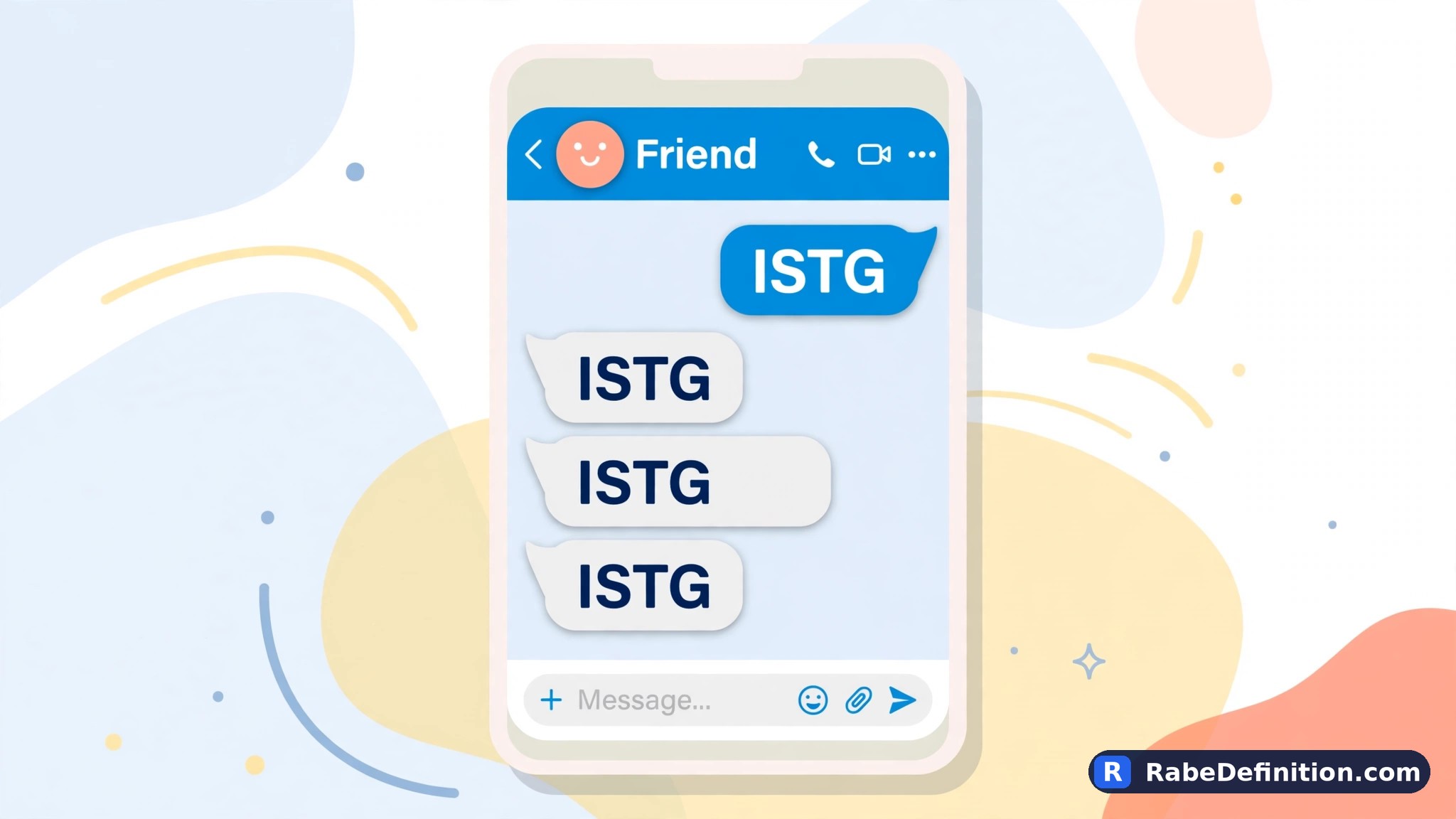
Match your reply to the feeling, not the letters. If the message sounds frustrated, a calm answer works best: “Okay, I hear you. Let’s fix it tonight.” If it sounds playful, answer in the same light spirit: “Ha, that big a deal? Tell me everything.”
When ISTG carries a promise, reply to the promise. A plain “I believe you” or “Friday works, thanks” closes the loop cleanly. When the tone is hard to read, asking one short question is safer than guessing wrong.
Answer the feeling, then close politely, much like replying to a GTS sign-off.
Common Misunderstandings
One common mix-up is reading ISTG as anger every time. Anger is only one of its flavors; excitement, disbelief, and sincere promises use it just as often.
Another mix-up is treating it as a formal oath. In chat, the phrase is mostly an emphasis habit, closer to underlining a sentence than to swearing in a courtroom.
A third problem runs the other way: some readers take the God reference seriously and find the term disrespectful. The sender may mean nothing by it, but the reader’s reaction is still real.
Like an opinion marker such as IMO, ISTG says more about the sender’s feeling than the facts.
Pro Tips for Using ISTG Correctly
A few habits keep ISTG working for you instead of against you:
- Use it with people who already know your tone.
- Let one use carry the feeling; stacking it in every line weakens it.
- Pair it with clear words, so readers need not guess the emotion.
- Skip it in work, school, and formal messages.
- Drop it with anyone who finds religious wording uncomfortable.
Final Thoughts
ISTG is casual shorthand with a clear meaning and a flexible tone. The istg meaning in text stays the same in every chat: the sender swears the statement is true or deeply felt. Around that core meaning, context does the rest. Capital letters, emojis, and the topic of the chat show whether the feeling is anger, shock, excitement, or sincerity.
Use ISTG only with people who know you well enough to read your tone. Keep it out of work messages, school emails, and talks where a religious reference could land badly. When someone sends it to you, answer the feeling behind the words rather than the letters themselves. Read carefully, reply calmly, and answer the swear with easy, honest clarity.
FAQ Section
What does ISTG mean in a text message?
ISTG stands for “I swear to God” and adds real weight to a statement. People use it in casual chats to show honesty, frustration, excitement, or surprise.
Is ISTG always meant seriously?
No, ISTG is often playful exaggeration rather than a serious oath. The words, emojis, and situation around it show the sender’s real tone.
Is it okay to use ISTG in professional messages?
ISTG is better kept out of professional messages and work chats. Its slang tone and religious reference can feel out of place at work or school.
How do I know if someone means ISTG seriously or jokingly?
Read the full message instead of judging the four letters alone. Context, wording, and emojis usually make the serious or joking tone clear.