
Elope Meaning: What Does Elope Mean in Text and Conversation
The elope meaning, at its core, is marrying in private: a couple slips away and weds without the big ceremony most people picture. In its older, stricter sense, the word meant running off in secret, usually without parental consent, and that runaway flavor still clings to it. Merriam-Webster still leads with that secret sense, while newer dictionary entries also record the small-ceremony reading that dominates today.
In everyday talk, the word now covers a wide middle ground between a secret dash to the courthouse and a planned weekend wedding for ten guests. A couple might announce the plan months ahead, book a photographer, and still call the day an elopement because the guest list stayed tiny. Tone does the rest: said with a grin it sounds like an escape plan, while said plainly it is simply a wedding choice.
This page walks through both readings of the word, the older secret one and the modern small-wedding one, so you can tell which a speaker means. It covers the word across chat threads and social feeds, fresh examples of it in real conversations, and the replies that fit when somebody shares the news. It also traces how the word reached English, the further senses dictionaries still record for it, and the mix-ups readers trip over.
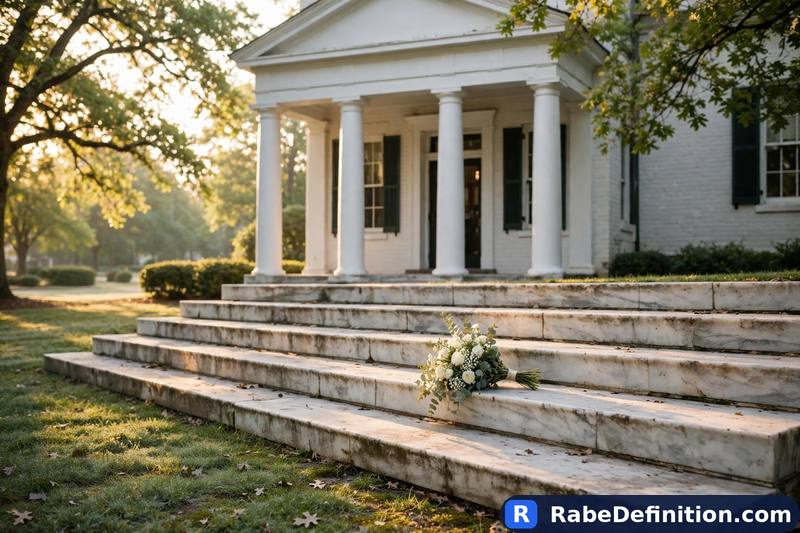
What Does Elope Mean?
Elope means to marry in private — classically by slipping away in secret, and today often just by choosing a tiny ceremony over a big traditional wedding.
| Detail | Explanation |
|---|---|
| Most Common Meaning | Marrying quietly and privately, with few or no guests |
| Traditional Meaning | Slipping away in secret to wed, sometimes against the family’s wishes |
| Tone | Neutral; turns romantic or playful with context |
| Full Form | None — a complete word, never an abbreviation |
| Formal or Informal | Standard English, fine in casual and formal settings alike |
Dictionaries draw the same picture from two angles. Merriam-Webster’s first sense is the runaway one: slipping off in secret to marry, usually without parental consent. Oxford’s learner dictionary phrases it as running away with somebody in order to marry them secretly, and Dictionary.com now adds a second, calmer sense — marrying in a small ceremony with few or no guests.
One fresh example shows the modern end of the range: “We skipped the ballroom entirely and eloped at the county clerk’s office on a Tuesday.” Nothing there is hidden — the couple told everyone afterward — yet the word fits, because the wedding stayed small, quick, and centered on the two of them.
The word is a verb, and its family is small: the noun is elopement, and the people doing it are elopers. Both forms keep the same double flavor of privacy and escape.
How to Pronounce Elope
Say it as ih-LOHP: two syllables, with the weight landing on the second. Oxford writes the sound as /ɪˈləʊp/ in British English and /ɪˈloʊp/ in American English; the vowel in the first syllable shifts slightly and nothing else changes. The opening syllable is a quick, soft “ih” — not “ee” and not “eh” — which is why the word sometimes gets misread as “ee-lope” by people who have only seen it in print.
The related noun keeps the same stress: elopement is ih-LOHP-ment. Once you hear the rhythm, the spelling stops looking odd — the final e is silent, exactly as it is in “lope,” the older running word hiding inside it.
What Is the Main Elope Meaning?
Strip the word to its center and one idea does the work: the couple marries away from the crowd. Everything else — the secrecy, the travel, the tiny guest list — is decoration that changes from one use to the next. What never changes is the contrast with the expected production of a wedding: the venue, the invitations, the two hundred chairs.
The older usage loaded the word with secrecy because secrecy was usually the point. Couples ran off when a parent disapproved, when money for a wedding was missing, or when waiting was impossible, and the flight itself became part of the story. Merriam-Webster’s own example for the noun “eloper” nods at Las Vegas, long the capital of the quick, quiet wedding.
Modern usage keeps the smallness and drops the hiding. Wikipedia’s article on elopement notes the word is now applied, controversially in some eyes, to almost any small, inexpensive wedding — even one the parents knew about well in advance. The ceremony can be announced, photographed, and celebrated afterward; what makes it an elopement is the scale, not the secret.
Does Elope Always Mean Getting Married Secretly?
No — and the gap between the old answer and the new one is where most confusion about this word lives.
The traditional reading. A couple leaves home quietly, tells nobody, and returns married. Secrecy is not decoration here; it is the mechanism, usually because permission would not have been given.
The modern reading. A couple plans a wedding for themselves and perhaps a handful of guests, tells whoever they like, and still calls it eloping. The privacy is about size, not about hiding.
The destination reading. A couple travels somewhere meaningful — a beach, a mountain town, another country — and marries there with few or no guests. Travel replaces secrecy as the word’s flavor, and the trip becomes part of the announcement.
So when somebody says “we’re eloping,” the only safe first assumption is a small wedding. Whether it is also a secret one is a separate question, and the rest of the conversation usually answers it.

How Context Changes the Meaning of Elope
The word itself stays put; the sentences around it point at one reading or the other. Four settings cover most of what you will actually hear.
1: Secret marriage
“Tell no one yet — we elope on Friday, and my parents find out after.”
The hush is the message here. “Tell no one” plus a near date puts the word back in its oldest sense: a marriage arranged quietly because telling first would invite a fight.
2: Small wedding
“Two hundred guests? No. We’d rather elope and spend the money on the house.”
Nothing is being hidden in this one. The contrast is cost and scale — the couple is rejecting the production, not the witnesses.
3: Destination wedding
“They’re eloping to a lighthouse in Maine, just the two of them and a photographer.”
A named faraway place signals the travel reading. The wedding is small because it is elsewhere, and the location does the announcing afterward.
4: Romantic or playful usage
“This seating chart is cursed. Elope with me instead?”
Said mid-planning, the word is often half a joke — a pressure valve. Whether it is a real proposal depends on what the couple does next, not on the sentence itself.
Punctuation and emoji tilt these readings further: a laughing emoji after “let’s elope” marks the joke, while a full stop keeps it serious. The same skill serves you with plain trade words, too — reading whether inseam means a seam or a measurement is also pure context work.
Elope Meaning in Text and Chat
In a chat thread the word behaves exactly as it does out loud. It is typed in full, never shortened, and nobody needs a decoder for it — a sharp contrast with clipped forms like asl, which really do change meaning from one app to the next.
A typical exchange runs like this: “Big wedding still on?” — “Nope. Courthouse, Friday, just us.” — “You two really eloped your way out of the seating chart.” The last line shows the word stretching into a joking verb for escaping the whole production.
Because the word can announce real news, tone markers matter in text. Unlike a flag such as icl, which promises the sender’s honest, unedited take, “we eloped” hides nothing — it is either news or a joke, and the emoji usually settles which. A bare announcement in a family group chat will be read as genuine news, because it almost always is.
Elope Meaning on TikTok, Instagram, and Snapchat
On social platforms the word works as an announcement label. “We eloped!” under a photo of two people holding a marriage license is the standard caption form, and the picture supplies everything the word leaves open — the place, the outfits, the witnesses or lack of them.
The feeds also grade the style of the day, the way a comment thread might call an outfit zesty — but the word elope itself is never the slang being graded. It stays a plain label for a small wedding while the slang swirls around it.
Advice posts use it in the imperative — “just elope” — aimed at couples drowning in planning. Read those as genre shorthand for “make it small and yours,” not as instructions to keep a secret.
Real Conversation Examples
1: Friends
Priya: Your save-the-dates never arrived. Everything okay?
Marcus: Better than okay. We scrapped the hall and eloped at city hall last month.
Priya: Just like that? Who was there?
Marcus: Us, a clerk, and two witnesses off the street. Best decision we ever made.
Meaning: A planned, open elopement — small and quick rather than secret.
2: Family
Aunt Rosa: Your mother says you married in Denver. When were the rest of us going to hear?
Jonah: That is exactly why we eloped, Aunt Rosa. We wanted the day first and the opinions after.
Meaning: The couple kept the ceremony private on purpose and announced it once it was done.
3: Social media
Caption on a mountaintop photo: “Said yes at 9, married by noon. We eloped.”
First comment: “No guests, no drama, that view. Perfect.”
Meaning: A destination elopement announced after the fact, with the photo doing the explaining.

Is Elope Rude?
The word itself, no. It is a neutral verb for a way of marrying, and dictionaries attach no label of rudeness or slang to it.
Friction, when it comes, comes from the decision the word reports. A parent who expected a seat at the ceremony may hear “we eloped” as exclusion, but that sting belongs to the guest list, not the vocabulary. Delivered as a taunt — “at least we didn’t elope like them” — any word can bruise; that is delivery, not definition.
Is Elope Romantic?
It often sounds that way, and the association is old: two people, a decision, and a door closing on everyone else’s plans. Sunrise ceremonies and faraway places in the announcement photos keep feeding that picture.
Still, romance is the lighting, not the meaning. Plenty of elopements are pure logistics — a deployment date, a visa deadline, a courthouse lunch break. For couples carrying a hard season into the wedding, though, the small day can also be a solace: the one part of the process that asks nothing of them but each other.
How to Reply to Elope
Match your reply to which thing you have actually been told: real news, a plan, or a joke wearing a wedding word. Warmth first covers all three; the follow-up question sorts out the rest.
Friendly Replies
- “That’s wonderful — congratulations to you both!”
- “A small wedding sounds exactly like you two.”
- “I’m so glad you did it your way.”
- “Tell me everything — where, when, who cried?”
Funny Replies
- “No seating chart casualties. A flawless victory.”
- “You skipped the group chat planning committee entirely. Respect.”
- “Bold of you to marry without a single folding chair involved.”
When You Are Confused
If the announcement could be either reading, ask the sorting question out loud instead of guessing:
- “Amazing — was it a secret mission, or a small wedding you planned?”
- “Who knew beforehand? I need the full story in order.”
Both questions invite the story rather than an apology, which is why they land well.
When to Use the Word Elope
The word earns its place whenever a marriage is, or might be, deliberately small: planning talks, family updates, captions, and the “how we did it” story afterward. It is precise enough for a newspaper announcement and easy enough for a group chat, which is a rare double.
Use it also as the gentle suggestion. “You could always elope” has ended many a planning meltdown because it names the exit clearly — fewer people, less production, same marriage at the end.
When to Avoid the Word Elope
Skip it when the secrecy reading would actively mislead. In a formal announcement to relatives who still hear the word as “ran away,” spelling out “a private ceremony with immediate family” prevents a misunderstanding the couple never intended.
Precision matters in official writing as well: a form, a contract, or a news report that needs the facts will do better with “married in a private civil ceremony” than with a word that invites readers to guess at secrets.
How to Announce an Elopement Afterward
Most modern elopements end with an announcement, and the wording of it does real work. The standard shape is simple: the fact, the date, the place, and one warm line for the people who were not there — “Married in a private ceremony on June 6 in Boulder; we can’t wait to celebrate with everyone this fall.”
That shape defuses the two questions every listener has — was it secret, and am I in trouble for missing it — in a single breath. Couples who send the announcement quickly, with a photo and a promise of a later gathering, rarely meet the hurt feelings the word used to predict.
Elope vs. a Courthouse Wedding and a Micro-Wedding
Three labels now share the small-wedding shelf, and they split along different lines. A courthouse wedding is defined by its venue: a civil ceremony in a government building, performed by an official — The Knot’s guide describes exactly that, a ceremony at a courthouse, city hall, or similar building led by a judge, clerk, or justice of the peace.
A micro-wedding keeps the traditional shape — ceremony, guests, some kind of reception — and simply shrinks the headcount. An elopement is defined by privacy and intention instead: it can happen at a courthouse, on a beach, or in a backyard, and its guest list can be zero. The three overlap freely; one Friday at city hall can be all three at once.
Common Mistakes About Elope
Assuming the marriage must be secret. That was the historical core, and it is the first thing modern usage dropped. A couple can announce their elopement in advance, invite both mothers, and still be using the word correctly.
Treating the word as slang or shorthand. Elope is a complete standard verb with centuries of dictionary history. There is nothing to expand and no platform where it secretly means something else.
Assuming nobody may attend. Privacy is a dial, not a switch. Many elopements include witnesses, an officiant, a photographer, or a few closest people; the legal ceremony requires at least the officiant anyway.
Assuming it must be impulsive. The runaway image suggests a midnight decision, but most modern elopements are planned like any wedding — booked, budgeted, and scheduled weeks or months out. The planning is quiet; the marriage is not an accident.
Similar Terms to Elope
| Term | Meaning | Main Difference |
|---|---|---|
| Marry | To become someone’s legal spouse | The general act; says nothing about the ceremony’s size |
| Elopement | The act or event of eloping | The noun form; names the small or secret wedding itself |
| Courthouse wedding | A civil ceremony held in a government building | Defined by the venue, not by secrecy or size |
| Destination wedding | A wedding held away from the couple’s home area | Can be huge; travel is the only requirement |
| Micro-wedding | A full wedding kept to a very small guest list | Keeps the traditional shape, only smaller |
The labels mix in real life. A couple can hold a micro-wedding at a courthouse, call the whole thing an elopement, and be right on all three counts.
What to Say Instead of Elope
- “We married in a private ceremony.” — the formal swap, clear to every listener.
- “We had a small wedding.” — the plainest version, with no runaway echo at all.
- “We tied the knot at city hall.” — names the venue when the venue is the story.
- “Just the two of us, plus witnesses.” — answers the guest question before it is asked.
Each swap trades the word’s hint of adventure for plain clarity — the right trade in announcements, formal writing, and any room where the secrecy reading would start the wrong conversation.
Elope in Other Senses: Slipping Away and Leaving Care
Marriage owns the word in everyday life, but Merriam-Webster still lists two further senses. The older of them is general: to slip away, to escape — the sense in Washington Irving’s line about a scarecrow that had “eloped” from a cornfield, quoted in the dictionary’s entry.
The newest sense belongs to care settings: to leave a health-care or educational facility without permission or authorization. News reports use it when a patient leaves a hospital ward unnoticed, and schools and care homes write it into safety policies for the same reason. Context separates this sense instantly — nobody hears a hospital report and thinks of a wedding.
Origin and Usage of Elope
The word entered English in the late 1500s from Anglo-French aloper (also esloper), meaning to abduct or run away. Merriam-Webster gives 1593 as the word’s first known use — and, strikingly, that first record is the spouse sense: running off from a marriage with a lover, the meaning Charles Dickens later used when a wife “eloped with a younger man.”
The marry-in-secret sense became the headline meaning as the practice became a stock story: young couples, disapproving parents, a quick journey to somewhere the rules were looser. Oxford’s word-origin note confirms the order of events — the word began in the general sense of absconding or running away, and the marriage senses grew out of that flight.
Modern usage has completed the softening. Dictionary.com now prints the small-ceremony definition as a full second sense, and Wikipedia records the word being applied to nearly any small wedding, planned openly or not. What survives from 1593 is the shape of the act — a couple, a departure from the expected script — with the scandal quietly removed.

Frequently Asked Questions
What does elope mean in text?
In a text it means marrying privately — a courthouse stop or a tiny ceremony instead of the big day.
Read the chat around it to tell whether the plan is secret or simply small.
Is elope rude?
No. Elope is a neutral verb, and dictionaries give it no rude or slang label.
Feelings can still sting if family expected invitations, but that is about the guest list.
What does elope mean on TikTok?
On TikTok it announces a small, private wedding, usually under a photo or a story-time video.
The word keeps its dictionary meaning there; the captions just add the pictures.
How should you reply to elope?
Congratulate the couple first, then ask for the story — where, when, and who was there.
If it sounded like a joke, laugh and ask whether any part of them means it.
Can elope have different meanings?
Yes — beyond weddings, dictionaries list slipping away generally and leaving a care facility without permission.
In everyday talk, though, marriage is the meaning to reach for first.
Final Thoughts
The elope meaning comes down to marrying privately: at its oldest, a couple slipped away in secret, usually without parental consent, and today the same word covers a small ceremony planned openly with a handful of invited guests. Secrecy turned optional while smallness stayed essential, so context — the place, the guest list, the tone — tells you plainly which reading a speaker intends.
Treat the word as good news delivered compactly: congratulate them first, then ask how the couple chose to do it. Whether the day was a quiet courthouse stop or a planned elopement on a mountainside, the marriage counts exactly the same, and the couple’s reasons always deserve the same respect as any two-hundred-guest celebration would receive.






One Comment