
POS Meaning: What Does POS Mean in Text and Slang?
When people ask what pos usage means, the honest answer is that the three letters hold two slang jobs at once. In teen chats, POS is a warning — parent over shoulder — typed the moment a parent walks in and the conversation has to go quiet. Everywhere else, the same letters usually work as an insult for a person or thing judged worthless, and which reading a message carries depends on who sent it.
The warning reading lives in private chats, where being fast matters more than being formal. The insult reading turns up in public comments, gaming chats, and product reviews, aimed at broken devices, bad days, and people who let somebody down. A third family of uses is not slang at all: shops, clinics, and classrooms use the same letters for point of sale, positive, and part of speech.
This page separates the readings one by one, with the dictionary record behind each and fresh examples of both slang senses in real chats. It also maps the platforms where each reading rules, the replies that fit each one, and the mix-ups that happen when a warning gets read as an insult. The questions readers ask most about POS are answered at the end.

Quick Answer
| Element | Details |
|---|---|
| Meaning | Parent over shoulder (a warning) or a vulgar insult for a person or thing |
| Context | Texting, social media, gaming, online chat |
| Usage | Warning that a parent is near, or venting frustration at a person, device, or day |
| Platforms | WhatsApp, Snapchat, Instagram, TikTok, gaming chats, text messages |
| Example | A bare “POS” dropped mid-chat (warning) or “my car is a POS” (insult) |
| Tone | Urgent and cautious, or angry and frustrated |
What Does POS Mean in Slang?
In slang, POS carries two main meanings: “parent over shoulder,” a warning that a parent is close enough to read the screen, and “piece of shit,” a vulgar insult for a person or thing judged worthless.
Neither reading cancels the other out. The same three letters do both jobs every day, sometimes inside the same group chat, and the only thing that separates them is the situation around the message. Read the sections below as two different tools that happen to share a handle.
Parent Over Shoulder
Typed alone, usually mid-conversation and without warning, POS tells the other side of the chat to stop, switch topics, or go quiet: a parent, guardian, or similar authority figure has come within sight of the screen. The message is not really about the parent. It is an instruction about the conversation — whatever was being said a second ago is now on hold.
Piece of Shit
Attached to a person, a product, or a whole situation, POS works as a verdict: worthless, broken, contemptible. It appears in reviews, in gaming chats, and in venting between friends, and it is the reading adults reach for most. The Full Definition section below handles this sense at the strength the dictionaries give it.
How to Pronounce POS
Spell it out as three letter names in a row: “pee-oh-ess.” The letters never merge into a word of their own, and no rival pronunciation appears in the record.
In practice, the warning sense is barely spoken at all — it exists to be typed quickly and read silently. The insult, when it is said out loud, is usually spoken as the full phrase rather than as letters, which is one reason the written initials feel slightly softer than the words behind them.
Full Definition of POS Slang
POS as “Parent Over Shoulder”
Full form: Parent over shoulder. Type: initialism, warning code. Recorded in: Wiktionary’s Internet and text-messaging entry, and the American Heritage Dictionary’s abbreviation list, which gives “parent over shoulder” as its first sense. Used by: teenagers and young adults, mostly. Found on: texts, WhatsApp, Snapchat, Instagram DMs, gaming chats.
The warning belongs to a whole family of privacy codes. NetLingo’s chat-code glossary “The Code,” dated November 2006, already lists POS as “parent over shoulder” alongside PIR (parent in room), PAW (parents are watching), and P911 — so the code was established in chat glossaries years before smartphones made it everyday. Wiktionary’s example line catches its rhythm exactly: “Hang on, POS … can you tell me about it later?”
The code works because it is short enough to type with one thumb and vague enough to look harmless on a lock screen. It asks for three things at once: stop the current topic, switch to something safe, and wait until the coast is clear.
POS as “Piece of Shit”
Full form: the insult phrase itself. Type: initialism, insult. Recorded in: Dictionary.com, which labels it Slang and calls the initials a “euphemistic initialism” for dodging explicit vulgarity, and Wiktionary, which marks the sense “(vulgar, of a person or thing).” Used by: older teens and adults. Found on: texts, comments, reviews, gaming chats, forums.
Wiktionary’s citations for the insult run from a 1997 film line — Agent J in Men in Black calling the car a “Ford P.O.S.” — through uses in 2011, 2014, 2015, and 2019, which makes it the better-documented of the two slang senses on paper. Urban Dictionary’s top entries aim it the way most people meet it: at a person who ditched his friends mid-project, and at a phone whose battery barely lasts.
The target decides the weight. Aimed at an object, it is a quality verdict; aimed at a situation, it is a complaint; aimed at a person, it becomes a character judgment, and it is the use most likely to start a fight. A car with an endless appetite for repair bills is the classic object case — the letters say the thing costs more patience than it returns.
One record note is worth making plainly: the dictionaries document the insult sense without dating its coinage, and no fetched source supports a tidy origin story for the initials. What the record shows is use, in print and film, from the late 1990s onward.

Context and Usage of POS
How to Determine the Meaning
| Factor | Parent Over Shoulder | Insult Reading |
|---|---|---|
| Sender | Usually a teenager or young adult | Anyone; more common from older teens and adults |
| Tone | Urgent, cautious, a warning | Angry, frustrated, insulting |
| Conversation | About something private or personal | About something broken, frustrating, or a person who did wrong |
| Response | Change the subject or stop talking | Agree, vent back, or push back |
| Platform | Private texts and DMs, mostly | Everywhere, including public comments and reviews |
Two quick tests settle most cases. First, look at what stands around the letters: a bare “POS” dropped into a running chat, with nothing attached to it, is nearly always the warning. Second, look for a target: the insult needs something to hit, so “this phone is a POS” or “he’s a POS” announces itself, while the warning never names anybody.
When to Use POS
Use POS (Parent Over Shoulder) when:
- A parent or guardian walks in while you are mid-chat and the topic is not for them.
- The conversation is about to turn private and the other side needs a fast warning.
- You need the chat to pause without writing an explanation anyone could read over your shoulder.
Use POS (Piece of Shit) when:
- A device or product has failed you once too often and the company around you is casual.
- You are venting about a bad experience among friends whose chat already runs that way.
- The target is a thing or a situation, not a person you have to face tomorrow.
Avoid POS when:
- The setting is professional, formal, or recorded.
- Children, strangers, or anyone easily offended is part of the audience.
- You cannot predict which reading the other person will take from it.
Real-Life Examples of POS in Conversations
1: Parent Over Shoulder (Teen Texting)
Maya: “Mr. Ortiz moved the quiz to Friday and nobody told me.”
Leo: “Wait, seriously? That is so unfair.”
Maya: “POS. Door just opened.”
Leo: “Got it. Homework talk only.”
Context: Maya’s three letters end the complaint mid-sentence. Leo reads the warning, drops the topic, and answers with something a parent could safely read.
2: Piece of Shit (Frustration with a Device)
Dan: “The printer jammed again, right before my meeting.”
Ruth: “Third time this week?”
Dan: “Third time today. The thing is a total POS.”
Context: Dan aims the letters at the machine, not at any person. Ruth answers the frustration rather than the wording, which is how the insult reading usually passes between adults.
3: Piece of Shit (Insulting a Person)
Ana: “Did you hear about Cole and the group fund?”
Ben: “Only that the money is gone.”
Ana: “He spent it and lied about it for a month. Total POS move.”
Context: Here the letters judge a person’s behaviour, which is the harshest use on this page. The verdict is about character, not quality, and it is the version that tends to get repeated to the person it describes.
4: Parent Over Shoulder (Group Chat Warning)
Sam: “Wait till you hear what happened at lunch.”
Jo: “Go on.”
Sam: “POS guys, mum’s behind me with the laundry.”
Jo: “Say no more. Later.”
Context: One warning covers the whole group at once. Everyone stops together, which is exactly what the code is built to do.
5: Piece of Shit (Product Review)
Reviewer: “Bought the budget earbuds because the ratings looked fine.”
Reply: “And?”
Reviewer: “Left one died in a week. POS, honestly — spend more.”
Context: In reviews, the letters work as a one-word quality verdict. Shoppers meet this reading far more often than the warning, because review pages are public by design.

Platform-Specific Meaning of POS
WhatsApp runs on family and friend chats, so both readings live there. The warning appears when a teen is typing inside a chat a parent might physically approach; the insult appears in adult group chats where venting about products, traffic, and landlords is the normal register.
Snapchat
Snapchat’s private, fast-moving chats make it warning territory first. The letters arrive as a brake: stop sending, stop describing, wait. The insult shows up too, but the platform’s one-to-one shape favours the code over the verdict.
TikTok
TikTok is public by default, and public space belongs to the insult reading. Comment sections under product fails, bad dates, and worse haircuts are full of the letters used as a verdict, while the warning has little work to do where nobody expects privacy.
Instagram splits along its own seam. In DMs between young users, POS can be the warning; in public comments under a post, it is the insult nearly every time. Which surface you are standing on tells you which reading to expect.
Gaming Chats
Gaming chats belong to the insult reading almost completely. It is aimed at the game itself, at a piece of gear, at a teammate who wandered off — or at an opp on the other side who keeps winning rounds. The warning makes little sense in a lobby full of strangers.
Text Messages
Plain texting hosts both readings at full strength, which is why it produces the most confusion. A parent who receives a bare “POS” from their teenager is almost certainly being told, politely and in code, that they themselves just walked into the conversation.
Alternative Meanings of POS
Point of Sale
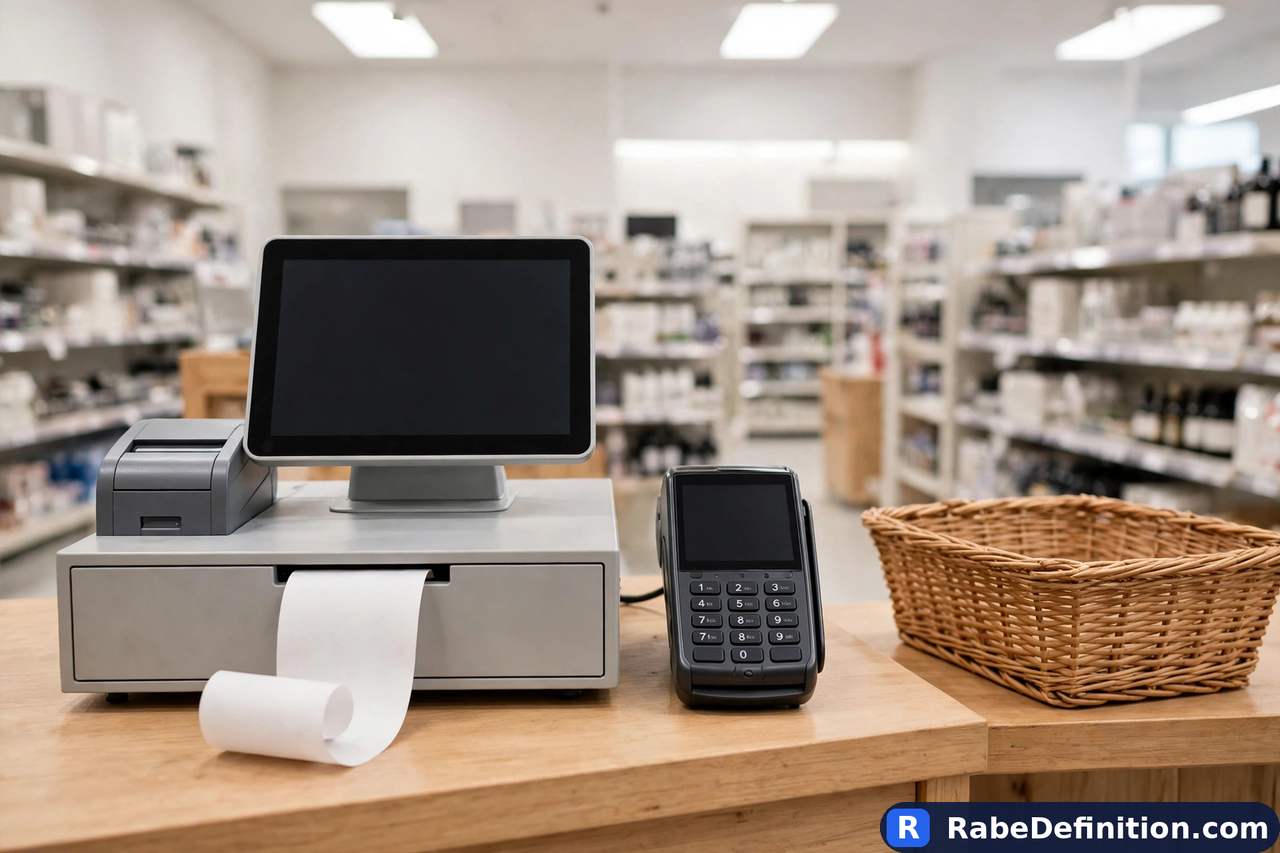
In retail, POS names the place and the system where a sale is completed. Cambridge defines point of sale as “a place where something is sold to the public, or the place where someone pays for something,” and Dictionary.com lists the same expansion. Registers, card terminals, and the software behind them all travel under these letters: “The café swapped its old till for a POS that takes cards and phones.”
Point of Service
In health insurance, POS is point of service: Merriam-Webster gives “point-of-service” as an abbreviation sense and repeats it in its medical entry, and Dictionary.com pairs it with point of sale on the same line. A point-of-service plan is the healthcare use — the kind that lets members step outside the network at a higher cost.
Positive
The dictionaries also record the quiet laboratory sense. Merriam-Webster’s “pos” entry lists “positive” as its second abbreviation sense, and Dictionary.com’s lowercase “pos.” entry does the same. On charts and result slips, “pos.” is simply the short way of writing that a test came back positive.
Position
“Position” comes first for the lowercase form in Merriam-Webster, and Dictionary.com agrees. In sports and gaming talk the capitalised letters borrow the same job, naming where a player stands or the role they fill on a team: “Hold your POS until the call comes.”
Part of Speech
In grammar, POS is part of speech — the category a word belongs to — noun, verb, adjective, and the rest of the grammar shelf. Wiktionary files it as the linguistics initialism and quotes corpus researchers defining eight POSs in traditional English grammar; Dictionary.com’s British entry lists part of speech as well. This is the POS of English class and language software, and none of it belongs to chat.
Related Terms and NLP Variations
Privacy Warning Acronyms
PWOS — parents watching over shoulder; the warning with the watching spelled out. PWOMS — the longest form, parents watching over my shoulder, spelled out in full. SOS — someone over shoulder, for the watcher who is not a parent. The older glossaries add MOS (mom over shoulder), PAW (parents are watching), and PIR (parent in room) — the whole shelf exists because three or four letters are faster than any explanation.
Insult Synonyms
Junk — the mildest swap, for a thing that barely works. Crap — the everyday informal verdict, a step softer than the letters. Trash — worthlessness with the person-or-thing question left open. Garbage — the American twin of trash, aimed mostly at things and takes. Lemon — the specialist: a defective product, above all a car, that was broken from the day it was bought. Short chat reactions like ts do nearby work in the same threads — pure reaction, typed at a thing, where POS delivers a verdict on it.
Tone Modifiers
The slash changes everything. Written as /pos, the letters stop being an abbreviation entirely and become a tone tag: Wikipedia’s list of tone indicators records “/pos or /pc — positive; positive connotation,” used to mark that a statement is meant kindly. A message ending in /pos is asking to be read warmly — nearly the opposite job from every other sense on this page.
How to Respond When Someone Says POS
Responding to “Parent Over Shoulder”
Treat the warning as an instruction, not a topic. Stop the sensitive thread at once, land on something neutral, and close politely if the moment calls for it:
- “Got it — talk later.”
- “Switching topics. How was practice?”
- “No worries, message me when you’re free.”
Do not ask what they were hiding, and do not keep the old subject alive in code. The warning only works if the screen suddenly looks boring.
Responding to “Piece of Shit”
Match your answer to the target. If the letters were aimed at a thing, sympathy is the whole job:
- “That’s the third time. Take it back while you still can.”
- “Ugh. Warranty, or is it just old?”
If they were aimed at a person, you can agree, soften it, or stay out of it — “What did he actually do?” buys facts before verdicts. If they were aimed at you, the honest options are to answer the charge or let it go; repeating the insult back has never repaired one of these conversations.
Responding to Uncertainty
Asking beats guessing. If you joined the thread late, treat the gap the way you would an icymi note — catch up first, then check the reading: “POS as in parent nearby, or the other one?” One short question costs less than repairing a reply built on the wrong sense.
POS From a Guy vs. a Girl
The fetched record never divides these letters by the sender’s gender, and everyday use does not divide them either. Guys and girls send the warning in the same situation — a parent entering the room — and reach for the insult in the same situations too: a broken phone, a lost match, a person who behaved badly.
What actually does the sorting is age and setting. A fifteen-year-old of any gender, typing fast in a private chat, is probably warning. An adult of any gender, typing in a public comment, is probably insulting. Read the room and the birth year, not the name on the account.
POS in Dating and Relationships
Inside dating talk, the two readings pull in opposite directions. The warning is harmless and common in young relationships: a partner who types POS is managing a parent’s presence, not hiding the relationship itself — though the distinction is worth a conversation if it keeps happening.
The insult is the dangerous one. Aimed at a partner, POS stops being slang shorthand and becomes a character verdict delivered in anger, and it tends to outlast the argument that produced it. Couples who would never say the full phrase to each other’s faces sometimes type the initials; the initials do not make it smaller.
Is POS Slang?
Partly — and, like several other double-job abbreviations, the line between them follows the senses exactly. The warning is internet slang by any test: Wiktionary files it under Internet and text messaging, and it appears in neither Dictionary.com nor Merriam-Webster. The insult is labelled Slang by Dictionary.com itself and vulgar by Wiktionary, so it sits on the slang shelf with paperwork.
The other senses are not slang by any test. Point of sale, part of speech, positive, and point of service are plain abbreviations doing clerical work in shops, classrooms, labs, and insurance forms. A word like serendipity carries one meaning into every room it enters; POS changes jobs between the group chat, the shop counter, and the grammar lesson, which is why no single label fits the whole entry.
Misinterpretations of POS
The Parent Trap
A teenager fires off the warning, and the friend on the other end reads an insult. The friend, stung, fires back — sometimes loudly enough to attract the very parent the warning was about. One bare abbreviation, read wrong, manufactures the exact scene it was sent to prevent.
The Insult Mistake
An adult complains that a phone is a POS, and a younger reader takes it as a warning and goes quiet, waiting for a parent who does not exist in the conversation. The chat stalls for the opposite reason: a verdict was mistaken for a code, and nobody says anything until someone asks what happened.
The Professional Confusion
A manager writes “the POS upgrade lands Friday” in a team email, meaning the checkout system. A colleague who knows only the slang reads an insult aimed at nobody in particular and spends the morning wondering what went wrong. Workplace POS should travel spelled out — point of sale — precisely because the slang is louder than the business sense.
How to Avoid Misinterpretation
- Weigh the sender. A teenager in a private chat and an adult in a public thread are sending different letters.
- Weigh the surface. DMs favour the warning; public comments favour the insult; office mail favours the checkout.
- Weigh the shape. A bare “POS” with nothing attached is a code; “a POS” attached to a noun is a verdict.
- Ask when it matters. If a wrong guess would cost you a friendship or a scene, one question is cheaper than either.
When NOT to Use POS
Professional Settings
Work email, meetings, and formal documents are no place for either slang sense, and even the business sense is safer spelled out. The insult is obviously out; the warning is meaningless to colleagues; and “point of sale” written in full removes the one reading nobody wants in a report.
Around Children
The insult expansion is vulgar, and children who learn the letters learn the phrase behind them quickly. Keep the insult reading out of family spaces, school runs, and anywhere a young reader is part of the audience — the warning, ironically, exists because children already know this.
With Strangers
A stranger holds no context for you: no age, no habits, no shared history of how you talk. The insult can offend, the warning can baffle, and neither can be repaired with someone who can simply close the conversation and keep the worst reading.
In Sensitive Conversations
Grief, apologies, breakups, and bad news are the wrong soil for a blunt verdict word. Calling a person or their situation a POS mid-crisis escalates exactly when escalation costs most. Say the specific thing — what broke, what hurt, what you need — instead of reaching for the initials.
On Public Platforms
Public comments and reviews keep receipts. The insult reading, attached to your name, reads as aggression to everyone who was not in the original mood, including future employers. Describe the fault instead: a review that says what failed helps the next buyer more than the letters do.
Usage Tips for POS
1: Know Your Audience
Decide which reading your audience will take before you send the letters. Teenagers in private chats hear the warning first; adults in public threads hear the insult first. If your reader could take either, your message is not finished yet.
2: Provide Context
Give the letters a frame. “POS, door just opened” can only be the warning; “this update is a POS” can only be the insult. One or two extra words do the disambiguating work that tone of voice would do in person.
3: Use Tone Indicators
Where tone tags are understood, they settle intent on the record. Ending a kind message with /pos marks it as warmly meant — the tag exists for exactly the sentences that could be misread. Tags only work where the audience knows them, so treat them as a local tool, not a universal one.
4: Be Aware of Platform Norms
Each surface has a house reading. Snapchat and private DMs lean warning; TikTok comments and gaming lobbies lean insult; retail and office spaces lean checkout. Sending against the house reading is how most misunderstandings on this page begin.
5: Use Sparingly
Save the insult for the failures that earn it. A reviewer who calls everything a POS starts to sound insatiable — impossible to please — and readers quietly stop trusting the verdict. Used rarely, the letters keep their force; used daily, they become punctuation.
What to Say Instead of POS
- Heads up, can’t talk freely right now — the warning with the code removed; safe with any reader.
- Pause this till later — the same instruction, for chats where even a heads-up is too much.
- Useless / hopeless / not worth the money — the insult’s information without its vulgarity, for reviews and mixed company.
- A lemon — for the defective product specifically; precise, printable, and understood everywhere.
- Checkout or register — for the shop sense in speech, where the letters invite the wrong reading.
- Meant kindly — the plain-words version of the /pos tag, for readers who do not know tone tags.
FAQs About POS Meaning Slang
1. What does POS mean in text from a guy?
From a guy, the letters usually carry the insult reading when he is complaining about a thing or a person. From a teenage guy mid-chat, they can just as easily be the parent warning — age and topic decide.
2. What does POS mean on Snapchat?
On Snapchat the warning rules: a parent is near, so the chat needs to stop or go safe. The insult appears there too, but private fast chats favour the code.
3. What does POS mean in gaming?
In gaming, the insult reading: a verdict on the game, the gear, or a player. The parent warning has almost no work to do in a public lobby.
4. What does POS mean on Instagram?
In DMs between young users, it can be the warning; in public comments, it is the insult. The surface you are standing on decides which reading to expect.
5. What does POS mean in a relationship?
As an insult aimed at a partner, it is a serious put-down — a character verdict, not a complaint. The warning sense also appears, when one partner is typing within a parent’s sight.
6. Is POS a bad word?
The letters themselves are initials; one of the phrases behind them is vulgar. Dictionary.com calls the initials a euphemistic way to avoid saying that phrase outright.
7. What does POS mean in school?
In English class, POS is part of speech — noun, verb, adjective, and the rest. In student chats, it can be the warning when a teacher, rather than a parent, is nearby.
8. What does POS mean in business?
In business, POS is point of sale: where a customer pays, and the system that takes the payment. Cambridge defines it as the place where something is sold to the public.
9. What does /pos mean?
With a slash, /pos is a tone tag meaning positive connotation — the message is meant kindly. Wikipedia’s tone-indicator list records it alongside its twin, /pc.
10. What is the difference between POS and P.O.S.?
None — they are the same initialism with and without its periods. Wiktionary lists P.O.S. as an alternative form of the same entry.
11. Can POS be used positively?
Only outside the slang senses: a positive test result, and the /pos tone tag. The two slang readings are a warning and an insult, so neither one is a compliment.
12. Why do teens use POS?
Three letters warn faster than any sentence, and they look harmless on a screen a parent might glance at. Chat glossaries were already listing the code by 2006, so it is an old habit, not a new one.
13. What should I do if my child uses POS?
It most likely means you were nearby: the code tells their friends to switch topics, nothing more sinister. Parent guides have treated it as ordinary teen privacy behaviour for years.
14. Is POS used in the UK?
Yes — the senses travel across English-speaking chats, and the abbreviation family is in British dictionaries too. Dictionary.com’s British entry lists point of sale and part of speech under the same letters.
15. What does POS mean in medical terms?
In medical use it can shorten “positive,” as on a test result. Merriam-Webster also gives point-of-service, the health-insurance sense, as its medical entry.
Conclusion
The pos usage means two opposite things in slang, and the room always decides which one arrived. Typed by a teenager mid-chat, it warns that a parent is over their shoulder and the topic has to change. Typed almost anywhere else, it works as a blunt insult for a person, a device, or a day that deserved no better.
Read the sender first, then the platform, then the words wrapped around the letters, and ask one quick question when a wrong guess would cost you. In a shop or an office, the same three letters calmly just name the point of sale — proof that context, not spelling, gives this abbreviation its meaning every single time it is typed anywhere.




One Comment