Hoodies for BJJ and Everyday Wear: How to Pick One You’ll Keep Reaching For
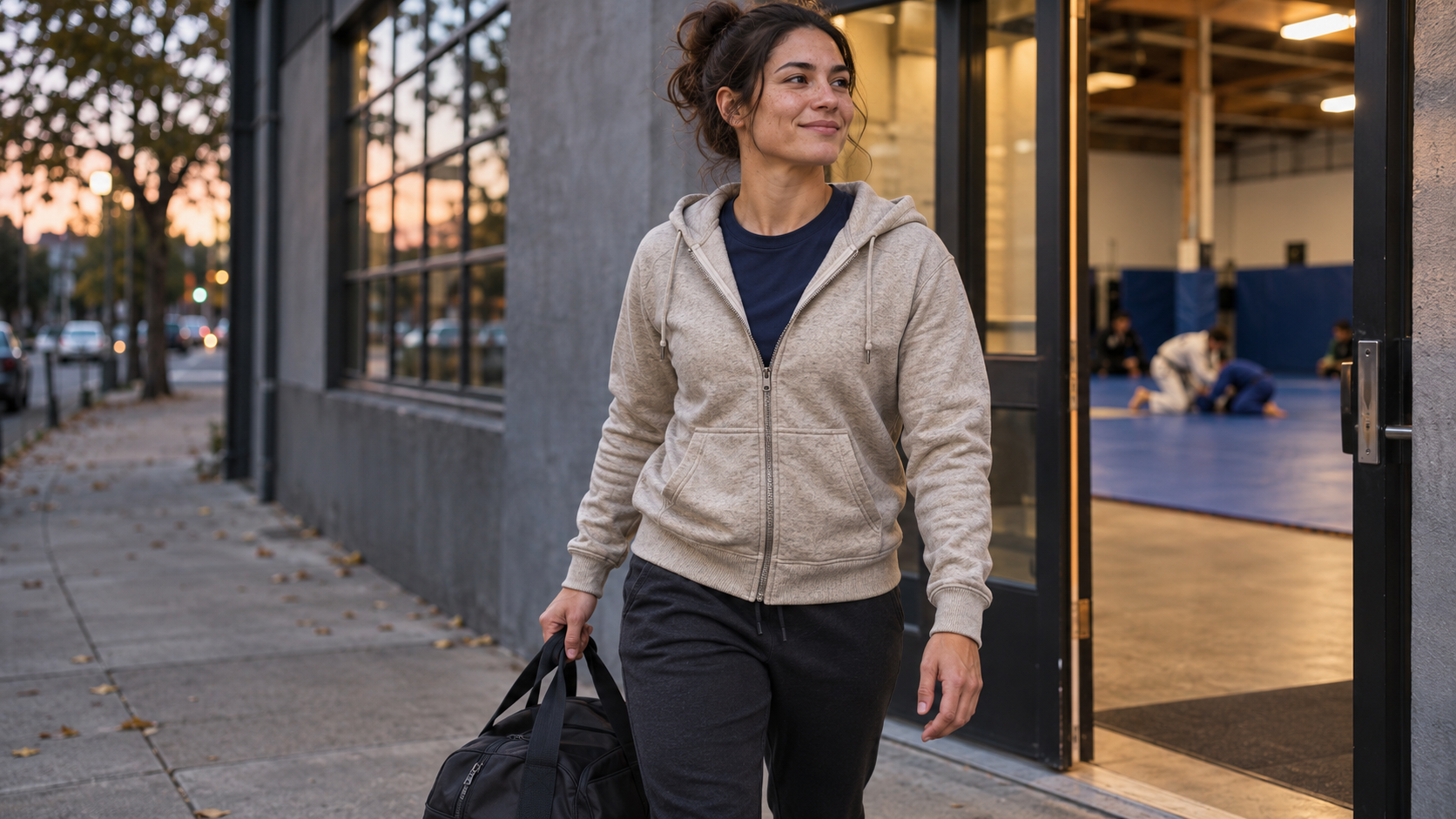
You’re leaving the gym after an evening class. Your gi is in the laundry bag, your water bottle is nearly empty, and the walk to the car feels colder than it did on the way in. A good hoodie takes about three seconds to put on and gives you something dry and comfortable for the trip home. If it fits the rest of your week, it can also be the layer you wear on a coffee run, a weekend flight, or a morning spent watching teammates compete.
The details that make a hoodie work are easy to miss on a product page. A thick sweatshirt can feel right until you try to fit it under a coat. A zip-up can be convenient until the zipper presses against your chin. And an oversized cut might look exactly as you want on its own but leave too much fabric under a backpack. Start with how you’ll wear it and use the fabric, fit, and construction to narrow your options.
Choose the hoodie for the trip you make most often
Think about where you spend time before and after training. If you walk to class in the cold, you may want a layer with a substantial hood, cuffs that close around your wrists, and enough room for the shirt you wear underneath. If most of your trip is in a car or on a warm train, you might prefer a hoodie that’s easy to open or take off. Those are two different jobs, even if you end up looking at the same colors.
A gym hoodie can also earn its space in your rotation on rest days. Picture the pants and jacket you already wear most often. A longer, relaxed hoodie can sit nicely over joggers but bunch under a shorter jacket. A closer fit may slide under that jacket easily, while a wider cut can be more comfortable if you usually wear several layers. Try to match the hoodie to clothes you actually own.
If you’re packing for a tournament, think about when you’ll put it on. You might wear it on the way there, take it off when called to the warm-up area, and throw it back on once you’ve changed. Choose something you can move in and pack away without using most of the room in your bag. Keep your dry hoodie away from gear you’ve already worn so it’s still comfortable when it’s time to head home.
Pullover or zip-up hoodie?
A pullover has a continuous front and often a single pouch pocket. That gives graphics across the chest room to stand on their own, and the front lies smoothly under a jacket. If you like to tuck both hands into one pocket while you wait outside, this is the style to try. Check the neck opening before you buy. It should be easy to pull over your head without leaving the collar looser than you want.
A full-zip hoodie is convenient when you’re adding or removing a layer often. You can open it on the train, close it when you step outside, and take it off without pulling it over your head. Look at the zipper when the shirt is closed. It should sit flat across the chest, and the top end should feel comfortable against your neck. Check pocket depth as well. Two smaller pockets can feel very different from the single pouch on a pullover.
Think about what you carry. If you often walk with your phone in a front pocket, test whether it stays put when you sit and stand. If you wear a backpack, try both styles with the straps in place. A hood that feels fine on its own can collect fabric at the back of your neck once you add a pack or a second hood.
Fleece, French terry, and fabric weight
When you shop for hoodies, fleece often describes a sweatshirt fabric with a soft, brushed inside. That texture can make a layer feel cozy when you’re standing outdoors or spending an evening in a cool room. Check whether the sleeves have the same lining as the body. If you like to push your sleeves up, see how easily the fabric gathers above your wrists. A thick sleeve and a firm cuff can feel warm outside but bulky at your desk.
French terry has loops on the inside and generally gives you a less plush feel than brushed sweatshirt fleece. It can be a comfortable choice if you want a hoodie for mild weather or for adding a layer beneath a coat. Turn the garment inside out to look at the texture, or check the listing for a close-up. Two French terry hoodies may feel different because the yarn, fabric weight, and cut all affect the way the finished piece hangs.
Some brands publish fabric weight in GSM, short for grams per square meter. The figure tells you what a set area of fabric weighs. It helps when you’re comparing similar fabrics, especially if you already know one sweatshirt you find too thick. The hood lining, cuffs, and zipper also add to the weight of a finished garment. If you travel often or carry a small training bag, check how much space the whole hoodie takes up.
Get the fit right at the shoulders, cuffs, and hem
Start with a sweatshirt you already like. Lay it flat and measure across the chest from underarm to underarm. Check the length from a consistent point near the shoulder to the bottom hem. For the sleeves, find out how the brand measures. Some use the shoulder seam as the starting point, while others measure from the center back. The second method can help when you compare a dropped shoulder with a more traditional cut.
Check whether the brand’s chart gives you body measurements or finished garment measurements. A chest circumference on a size chart and a flat width across a hoodie describe different things. If you’re close to the upper end of a size, consider what you’ll wear underneath and how much room you like. For a relaxed fit, look at the shape of the body and sleeves together. Going up a size can give you a wider chest and sleeves that extend farther than you want.
Try the hoodie on with the shirt you expect to wear underneath. Reach forward as if you’re driving, then raise your arms to see how far the hem moves. Fold your arms and check for pulling across the shoulders. If you’ll wear it under a coat, add the coat and sit down. A comfortable standing fit can feel different once the cuffs stack up and the hem folds under you.
Give the hood, cuffs, and pockets a closer look
A hood should sit comfortably whether it’s up or down. With it up, turn your head as you would when crossing a street. Check how far the front edge comes over your face and whether the neckline pulls. With it down, lean back against a chair. If the hood is bulky or heavily lined, make sure it feels comfortable in the places you’ll spend time wearing it.
Cuffs and hems help give the hoodie its shape. A close cuff keeps the sleeve from creeping over your hands, while a looser one can be easier to push up. At the waist, check whether the hem rests where you want it or catches on your hips. Look at the pocket stitching too, especially at the upper corners where your hands pull against it. A deeper pocket may hold your hands comfortably but still need a better opening if you carry keys or a phone.
Pick a design you’ll wear away from the gym
A small chest logo can fit easily into a week when you switch between jeans, joggers, and track pants. A large back print or embroidered graphic can make the hoodie the main piece of an outfit. Picture the design with the jacket and bag you usually wear. A backpack can cover most of a back graphic, while an open jacket may leave a chest print on display.
It helps to consider how the decoration feels as well as how it looks. Embroidery can feel raised, and a large printed area may drape differently from the fabric around it. If the detail sits where a strap rests, check how the two feel together. If you shop online, use the close-up photos to see how large the graphic is and where it sits on the garment.
Wash it the way you plan to wear it
Read the care label before you put the hoodie in with your training gear. Turn it inside out if the label allows, especially if you want to protect a print. Close the zipper before washing if the garment instructions call for it, and keep exposed hook-and-loop fasteners from catching on the cloth. Dry it using the method on the label. The hood, cuffs, and pouch pocket can stay damp after the body feels dry, so check those areas before you fold it.
If a hoodie already fits close at the waist or sleeves, keep that in mind when choosing a drying method. If you wear it after class, change out of your sweaty rash guard first and keep the hoodie in a clean section of your bag. It’s a small habit that makes the layer more pleasant to put on for the ride home.
What to check before you buy
When you compare hoodies at Strikers BJJ, choose a style based on where you’ll wear it most. A pullover can suit a cold walk home and a zip-up can be easier to manage on a commute with several stops. Compare the chest and length with a layer you own, then check whether the hood, cuffs, and pockets make sense for your routine. If you’re between two options, try picturing the same hoodie under your usual jacket and on its own.
The best choice will feel familiar quickly. You’ll know where the sleeves sit when you reach, whether your hands fit in the pockets, and how easily it goes over the shirt you just changed into. If those details work for you on a training night and on a day off, you’ve found a hoodie with a place in your regular rotation.