IDM Meaning in Text: What Does IDM Mean in Texting?
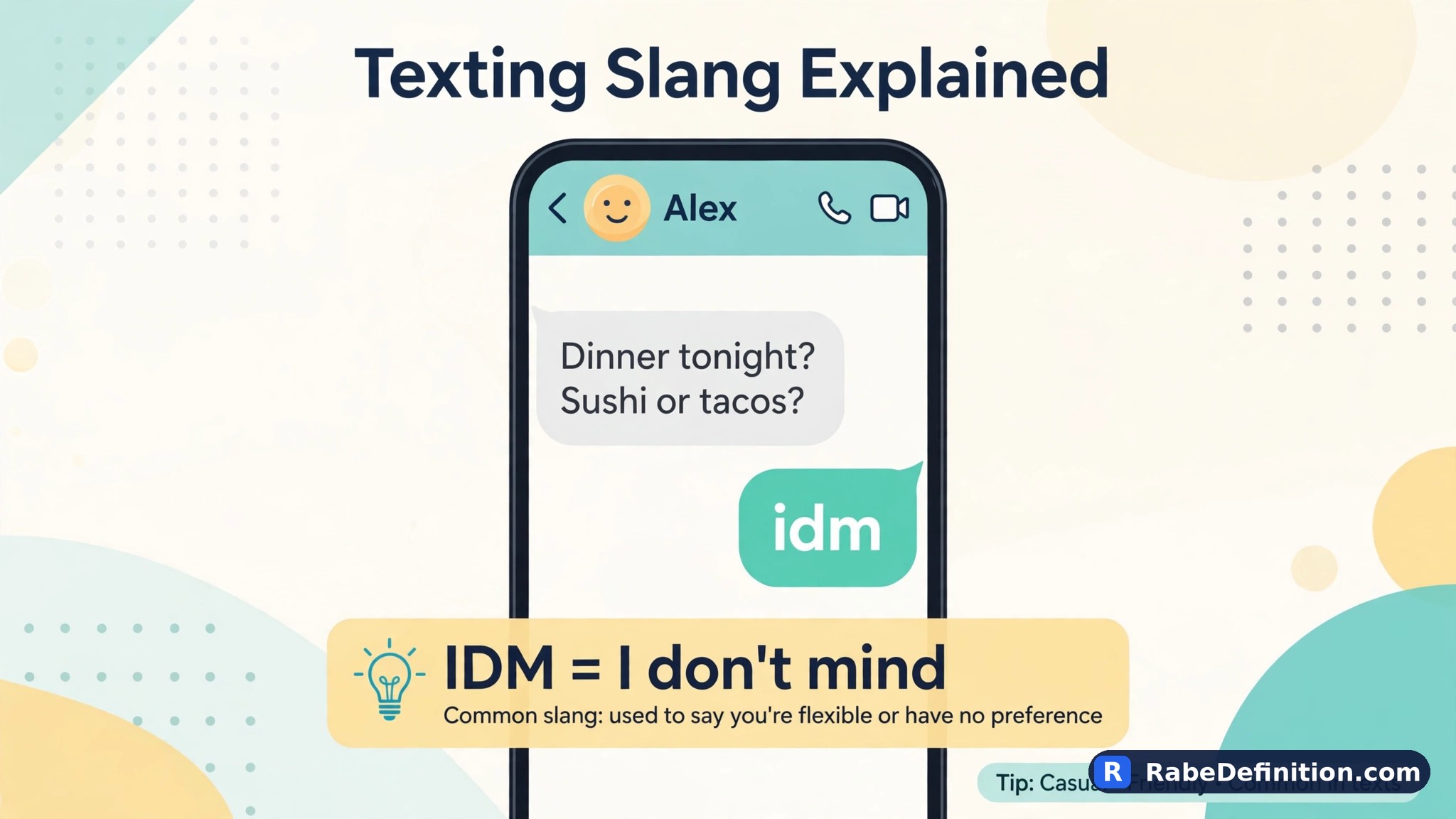
If you are searching for the idm meaning in text, IDM stands for “I don’t mind.” People send it when they are happy with either option and want the other person to choose. It is a short, relaxed reply that keeps a chat moving without a long explanation.
You will see IDM most often in casual chats about food, plans, times, and small everyday choices. It usually sounds easygoing and cooperative, because the sender is saying both options work fine. Still, a bare “idm” sent after a serious or emotional question can feel flat, so the situation decides how it lands.
This guide explains what IDM means, where people use it, and how its tone changes from chat to chat. You will see real conversation examples, simple replies you can send back, and a clear comparison with similar terms like IDC. You will also learn when IDM sounds friendly, when it can sound distant, and what else these letters can mean outside texting.
What Does IDM Mean in Text?
IDM means “I don’t mind.” It tells the other person you are fine with their suggestion and have no strong preference either way.
Friends reach for IDM when a decision is small and either result works, like picking a restaurant or choosing a meeting time. Instead of typing a full sentence, they send three letters and hand the choice over. The reply feels positive in a quiet way, because it agrees without adding pressure.
Simple Meaning (In Easy Words)
In plain words, IDM means “either one is fine with me” or “you pick, I am happy both ways.” It is the texting version of an easy shrug, the kind you give when both choices sound good to you.
Say a friend asks if you want tea or coffee. Answering “idm” tells them you will enjoy whichever one they make. Nothing is hidden behind the reply.
How to Pronounce IDM
IDM is read as three separate letters: I-D-M. Most people only spell it out when they are reading a message aloud or asking what the letters stand for.
In normal speech, nobody really says the letters. They just say the full phrase, “I don’t mind,” because that is faster and clearer out loud. The short form belongs to typing, where saving time matters more than sounding polished.
Where Is IDM Used?
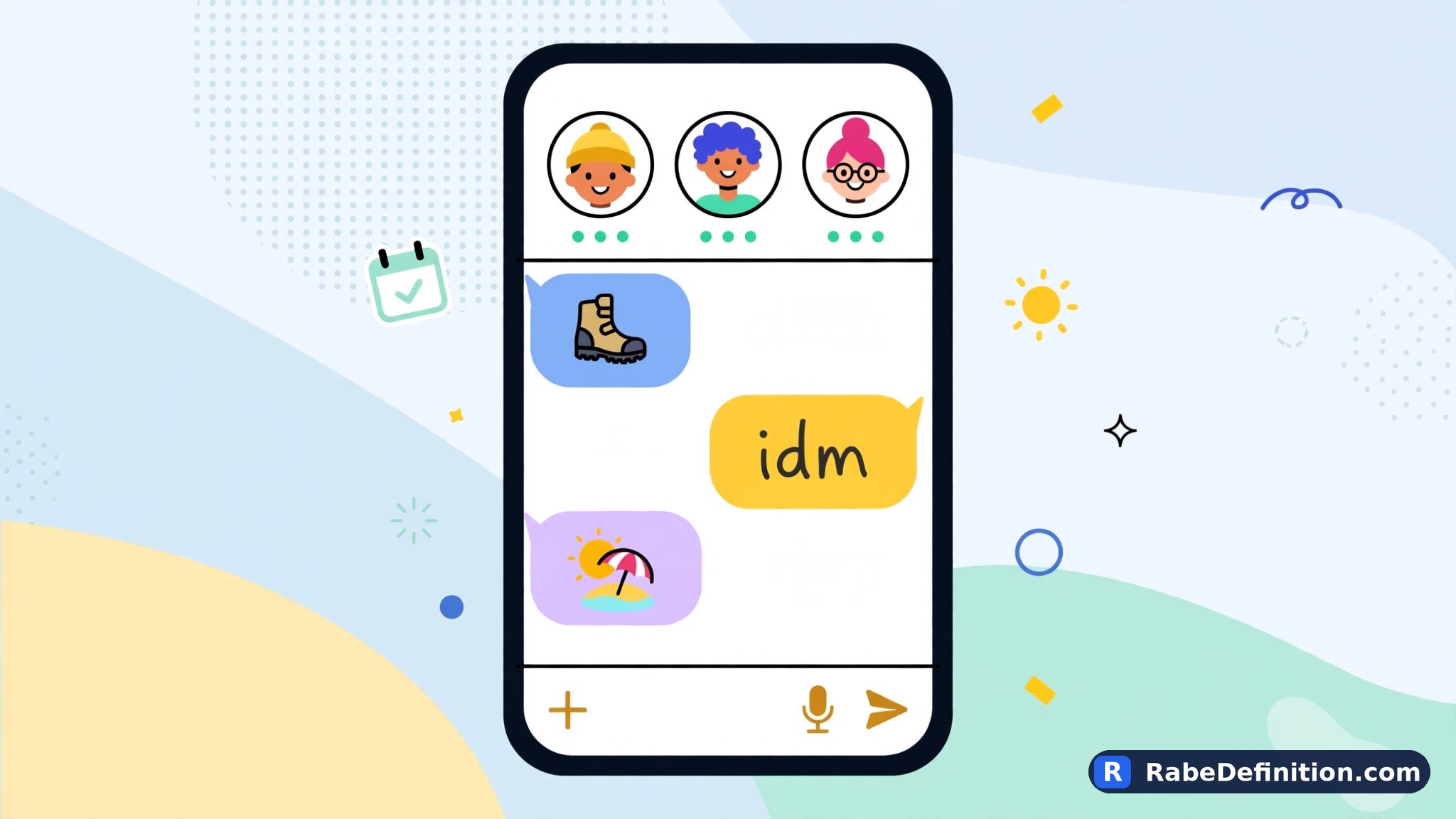
IDM shows up anywhere people chat casually. You will see it in WhatsApp threads with family, Instagram and Snapchat DMs between friends, and group chats where a plan is being decided. It also appears in gaming chats when players pick a map, a mode, or a time to start.
You will almost never see IDM in a work email or formal message. There, the full sentence looks better and leaves no room for confusion. It appears in plain SMS threads as often as in app chats.
Why Do People Use It?
The biggest reason is speed. Typing “idm” takes a second, while the full sentence takes more effort than a tiny decision deserves.
It also shows flexibility without making the sender look unsure. A person who answers “idm” is not stuck or confused; they are happy with every option on the table. That keeps plans moving, because the other person can decide quickly. It is the natural answer to a WYD-style question about plans.
Real-Life Examples (With Explanations)
Here is how IDM looks in everyday chats:
Group chats that address EVB — everybody — at once run on short replies like this.
Choosing food:
Maya: “Tacos or pasta tonight?”
Jon: “idm, both sound great”
Jon has no favorite here, so he happily leaves the pick to Maya.
Setting a time:
“Should we leave at five or six?” “idm, I will be ready either way”
Either departure time works, so the other person can choose freely.
Sharing a playlist:
Priya dropped a new playlist in the group chat, and Sam answered, “idm who picks the songs tonight, just press play.”
Here IDM works like gentle permission, saying the choice does not matter to him.
A flatter reply:
“Do you even want to come on Saturday?” “idm”
The same letters feel cooler here because the question carries feelings, and the short answer gives very little warmth back.
How to Reply to IDM
When someone sends you IDM, the ball is in your court, so the simplest reply is to make the choice and confirm it. “Okay, tacos it is” or “Six o’clock then” keeps things moving.
If you wanted a real opinion, ask one follow-up, like “No favorite at all?” Sometimes the person does have a small preference and will share it once asked. And if the reply feels distant after a bigger question, saying “Are you sure? It matters to me” can warm the conversation back up. A warm ikrr-style reaction keeps the easy tone going.
IDM vs Similar Terms
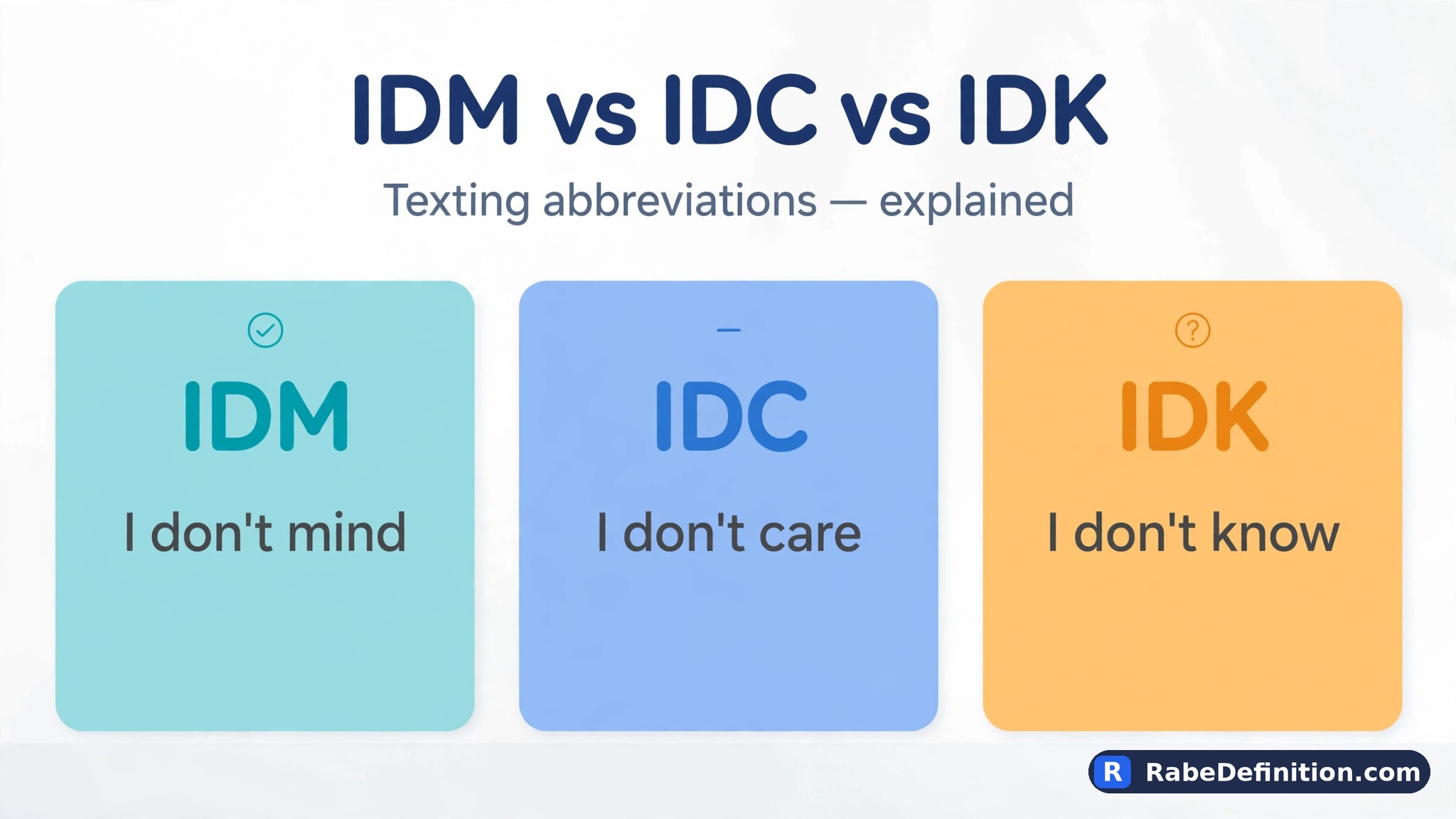
Several short replies look alike but carry different feelings:
| Term | Meaning | How It Feels |
|---|---|---|
| IDM | I don’t mind | Easygoing, fine with either option |
| IDC | I don’t care | Blunter, can sound dismissive |
| IDK | I don’t know | No answer yet, not a preference |
| NP | No problem | Reassuring, often follows a thank-you |
| Up to you | The choice is yours | Hands the decision over completely |
The gap that matters most is IDM versus IDC. IDM sounds cooperative, while IDC can suggest the person is not interested at all, and that difference changes how a reply feels.
When Should You Use It?
IDM fits well when the choice is small, the mood is casual, and you truly have no preference. Dinner plans, meeting times, and movie picks are its natural home.
Think twice before using it in a few situations. A one-word “idm” can feel cold when someone asks about something emotional or important to them. It also looks out of place in professional messages, and it may confuse people who rarely text in slang. With them, the full sentence is safer.
What Does IDM Mean From a Guy or a Girl?
The meaning does not change with the sender. From a guy or a girl, IDM still says the same thing: “I don’t mind, you can choose.”
What changes is how the reply feels inside a particular relationship. In a close, comfortable chat, a short “idm” is usually read as relaxed and trusting. In a new or tense conversation, the same three letters might be read as low interest, because there is not much history to soften them. Wording, timing, and the question itself shape the reading far more than who typed it. Unlike ISTG, which announces its feeling, IDM stays quiet and needs context.
Common Misunderstandings
One common mistake is assuming IDM always means the sender is annoyed or uninterested. Most of the time, it simply means what it says: the person has no preference and is happy either way.
Another mix-up is treating IDM and IDC as identical. They sit close together, but IDM sounds friendlier and more agreeable, while IDC leans toward indifference. People also confuse IDM with IDK, although IDK means the person has no answer, not that every answer is acceptable.
And a short reply is not automatically rude. Many people naturally text in short bursts, and their “idm” carries no hidden message.
Other Meanings of IDM
Outside texting, the same three letters can stand for other things. In the software world, IDM often refers to Internet Download Manager, a well-known download program. In music, IDM can mean Intelligent Dance Music, a style of electronic music. In business and IT, it may stand for identity management, the systems companies use to control accounts and access.
Context makes the meaning clear almost every time. In a friendly chat about plans, IDM means “I don’t mind,” while a tech or music discussion points to the other meanings.
Pro Tips for Using IDM the Right Way
Add a few words when the moment matters. “Idm, both sound good” lands warmer than the bare letters, and it takes no extra effort.
Match the reply to the weight of the question, since small choices deserve small answers and bigger topics deserve real thought. Keep IDM out of work emails, where the full phrase reads more clearly. And when you receive an “idm,” take it at face value unless the conversation suggests otherwise.
FAQ Section
What does IDM mean in a text message?
IDM means “I don’t mind,” so the sender is fine with either option. It is a relaxed reply that leaves the final choice to the other person.
Is IDM the same as IDC?
No, IDM sounds more agreeable, because it says both options are fine. IDC means “I don’t care,” which can feel blunter and less interested.
Is it rude to reply with only “idm”?
In a casual chat it is not rude, and friends use it every day. It can feel distant after a serious question, so context matters.
Does IDM have other meanings besides “I don’t mind”?
Yes, in tech it can mean Internet Download Manager or identity management. In music it can mean Intelligent Dance Music, but in chats it means “I don’t mind.”
Final Thoughts
The idm meaning in text is simple and steady across almost every casual chat. IDM means “I don’t mind,” a relaxed way to say either option works and the other person can choose. It fits small decisions about food, plans, and timing. Its tone stays friendly when the question is light and the relationship is comfortable and familiar.
Use IDM when you truly feel fine with both choices, and add a few words when the moment matters more. A reply like “idm, both sound good” sounds warmer and clearer than the letters alone. Keep it for friends and casual chats, and write the full sentence in formal messages. Read it kindly from others, since it usually signals flexibility, no problem.