ICL Meaning: Understanding the Acronym and Its Usage
If you have seen “ICL” in a text, TikTok comment, Instagram caption, or group chat, you may have wondered what those three letters mean. Like many texting abbreviations, ICL can be confusing when you encounter it for the first time.
In casual online conversations, ICL most commonly means “I Can’t Lie.” People use it when they want to be honest about an opinion, reaction, feeling, or admission. For example, someone might text, “ICL, that was actually pretty funny.”
However, ICL can have other interpretations, so the surrounding conversation matters. This guide explains the ICL meaning, how it is used in texting and social media, how to respond to it, and how it compares with similar expressions.
Quick Answer
ICL usually means “I Can’t Lie” in texting and social media. It is an informal abbreviation people use before making an honest statement, giving an opinion, or admitting something.
For example: “ICL, I really liked that movie.” Here, ICL signals that the speaker is being straightforward about their opinion.
In some contexts, ICL can mean something else, including “I Care Less,” so always consider the conversation before deciding what the abbreviation means.
TL;DR
- ICL usually means “I Can’t Lie.”
- It is commonly used in casual texts, chats, comments, and social media.
- People use it to introduce an honest opinion, reaction, confession, or admission.
- ICL is informal and is generally better suited to casual communication than professional writing.
- Context can matter because ICL has other possible meanings.
What Does ICL Mean?
So, what does ICL mean? In everyday texting, ICL stands for “I Can’t Lie.”
The phrase is used to signal that the person is about to say what they genuinely think or feel. It can introduce a compliment, criticism, confession, surprise, or simple personal opinion.
For example:
“ICL, this is the best pizza I’ve had in a while.”
The speaker is essentially saying, “I have to be honest: this pizza is really good.”
ICL is an informal abbreviation. You are more likely to see it in text messages, group chats, social media posts, gaming conversations, and online comments than in formal writing.
ICL Meaning in Texting
The ICL meaning in text is usually straightforward: “I Can’t Lie.”
It can be placed at the beginning of a sentence:
“ICL, I was nervous before the interview.”
It can also appear as part of a longer casual message:
“I thought I would hate the show, but ICL it was pretty good.”
The expression does not automatically indicate a serious confession. Depending on the conversation, it can sound sincere, humorous, dramatic, or playful.
ICL in Texting
When someone uses ICL in a text, they are usually emphasizing honesty.
A person might use it to:
- Admit something they previously avoided saying
- Give an honest opinion
- Agree with someone
- Make a compliment sound more genuine
- Express surprise
- Introduce an unpopular opinion
- Make a casual confession
For example:
Friend: “Do you actually like that song?”
You: “ICL, I’ve had it on repeat all week.”
Here, ICL makes the response feel more conversational and emphasizes that the speaker is being honest.
Because ICL is slang-like internet language, its tone depends heavily on the relationship between the people communicating. Among friends, it may sound completely natural. In a formal email, however, writing “I can’t lie” or simply stating the point directly would usually be clearer.
Common Uses of ICL
| Situation | What ICL Means |
|---|---|
| Giving an opinion | “I Can’t Lie” before an honest opinion |
| Admitting something | Introducing a personal admission |
| Complimenting someone | Emphasizing that the compliment is genuine |
| Reacting to something | Introducing an honest reaction |
| Casual disagreement | Signaling a straightforward opinion |
| Social media comments | Adding emphasis to a personal take |
Giving an Honest Opinion
ICL can introduce an opinion that the speaker wants to present honestly.
“ICL, I think the first season was better.”
Making an Admission
It can also introduce something the person is admitting.
“ICL, I forgot to send the message.”
Giving a Compliment
Someone might use ICL before saying something positive.
“ICL, your new haircut looks really good.”
Sharing a Reaction
ICL can make a reaction feel more direct.
“ICL, I did not expect that ending.”
Real Texting Examples
Seeing ICL in actual conversations makes its meaning easier to understand. Here are some original examples.
Example 1: Talking About Food
Person A: “Was the new burger place worth trying?”
Person B: “ICL, the fries were better than the burger.”
Here, ICL introduces an honest opinion.
Example 2: Talking About a Movie
Person A: “Did you like the movie?”
Person B: “ICL, I thought it was way better than I expected.”
The speaker is emphasizing their genuine reaction.
Example 3: A Casual Confession
Person A: “You said you weren’t nervous.”
Person B: “ICL, I was stressing the whole morning.”
ICL introduces an admission.
Example 4: Complimenting a Friend
Person A: “I wasn’t sure about this outfit.”
Person B: “ICL, it looks great on you.”
Here, the abbreviation emphasizes sincerity.
Example 5: Discussing Music
Person A: “Have you listened to their new album?”
Person B: “ICL, I didn’t think I’d like it, but it’s actually really good.”
ICL introduces an honest change of opinion.
Example 6: A Funny Reaction
Person A: “I accidentally sent the message to the wrong group.”
Person B: “ICL, I would have deleted my whole account.”
The phrase adds a playful, exaggerated reaction.
Example 7: Giving a Different Opinion
Person A: “Everyone says this is the best restaurant in town.”
Person B: “ICL, I wasn’t that impressed.”
The speaker uses ICL to make their personal opinion clear.
See Also : Snowball Kiss Meaning: What It Really Means
How to Reply to ICL
How you respond to ICL depends on what comes after it. Since ICL generally introduces an honest statement, you can respond directly to the opinion or admission.
Casual Response
“Honestly, same.”
Friendly Response
“I get what you mean.”
Short Response
“Fair enough.”
Funny or Playful Response
“Finally, someone said it 😂”
If You Agree
“ICL, I was thinking the exact same thing.”
If You Disagree
“I see your point, but I actually liked it.”
You do not need a special response just because someone says ICL. Treat it as an introduction to what they are honestly trying to say.
Tone and Context
The ICL meaning generally stays the same, but its tone can change depending on the situation.
| Context | Possible Tone |
|---|---|
| Talking with close friends | Casual and relaxed |
| Giving an opinion | Honest and direct |
| Making a confession | Sincere or slightly vulnerable |
| Commenting online | Casual or humorous |
| Making a joke | Playful or exaggerated |
| Disagreeing | Blunt but conversational |
For example, compare these messages:
“ICL, that was amazing.”
and
“ICL, that was not good.”
Both use ICL to signal honesty, but the first expresses approval while the second expresses criticism.
Punctuation can also affect the feel of a message. “ICL…” may create a more dramatic pause, while “ICL, that was fun” feels more straightforward.
When to Use It
ICL works best when the conversation is informal and the other person is familiar with texting abbreviations.
You can naturally use it in:
- Messages with friends
- Group chats
- Casual conversations
- Social media comments
- Gaming chats
- Informal online communities
For example:
“ICL, I’m glad we went.”
or:
“ICL, you were right about that.”
The key is knowing your audience. If the person regularly uses abbreviations, ICL will probably feel natural. If they rarely use slang, spelling out the phrase may avoid confusion.
When Not to Use It
ICL is not necessarily inappropriate everywhere, but it is generally informal.
You may want to avoid it in:
- Formal emails
- Academic assignments
- Job applications
- Business proposals
- Official documents
- Professional messages to unfamiliar recipients
For example, instead of writing:
“ICL, I think we should change the plan.”
in a professional email, you could simply write:
“I believe we should consider changing the plan.”
The issue is not that ICL is inherently rude. It is that an informal abbreviation may not fit the communication style expected in a professional setting.
Social Media Usage
ICL is well suited to informal social media language because users often rely on short abbreviations to express reactions and opinions quickly.
You may encounter it in:
- TikTok: Comments and captions expressing an honest reaction
- Instagram: Comments, DMs, Stories, and casual captions
- Snapchat: Direct messages and conversations with friends
- WhatsApp: Private chats and group conversations
- Facebook: Informal comments and Messenger conversations
- Gaming and online communities: Quick reactions and opinions
For example, a social media comment might say:
“ICL, this might be my favorite version.”
Another person could write:
“ICL, I wasn’t expecting that at all.”
The exact platform does not change the usual slang definition. The context of the message is still the best clue.
Similar Terms and Comparisons
Several expressions are closely related to ICL, particularly when someone wants to emphasize honesty.
| Term | Meaning | Main Difference |
|---|---|---|
| ICL | I Can’t Lie | Informal abbreviation for introducing an honest statement |
| NGL | Not Gonna Lie | Very similar function; emphasizes honesty |
| TBH | To Be Honest | Common abbreviation for expressing an honest opinion |
| Honestly | Speaking truthfully | Full word rather than an abbreviation |
| To be honest | Introducing a sincere opinion | More explicit and widely understood |
ICL vs. NGL
ICL and NGL are particularly similar.
- ICL: “I Can’t Lie”
- NGL: “Not Gonna Lie”
Both can introduce an honest reaction or opinion.
For example:
“ICL, that game was fun.”
and:
“NGL, that game was fun.”
The overall meaning is very similar.
ICL vs. TBH
TBH means “To Be Honest.” Like ICL, it can introduce an opinion or admission.
“TBH, I prefer the old version.”
“ICL, I prefer the old version.”
Both communicate honesty, although individual speakers may have different preferences for which abbreviation sounds more natural.
Other Meanings
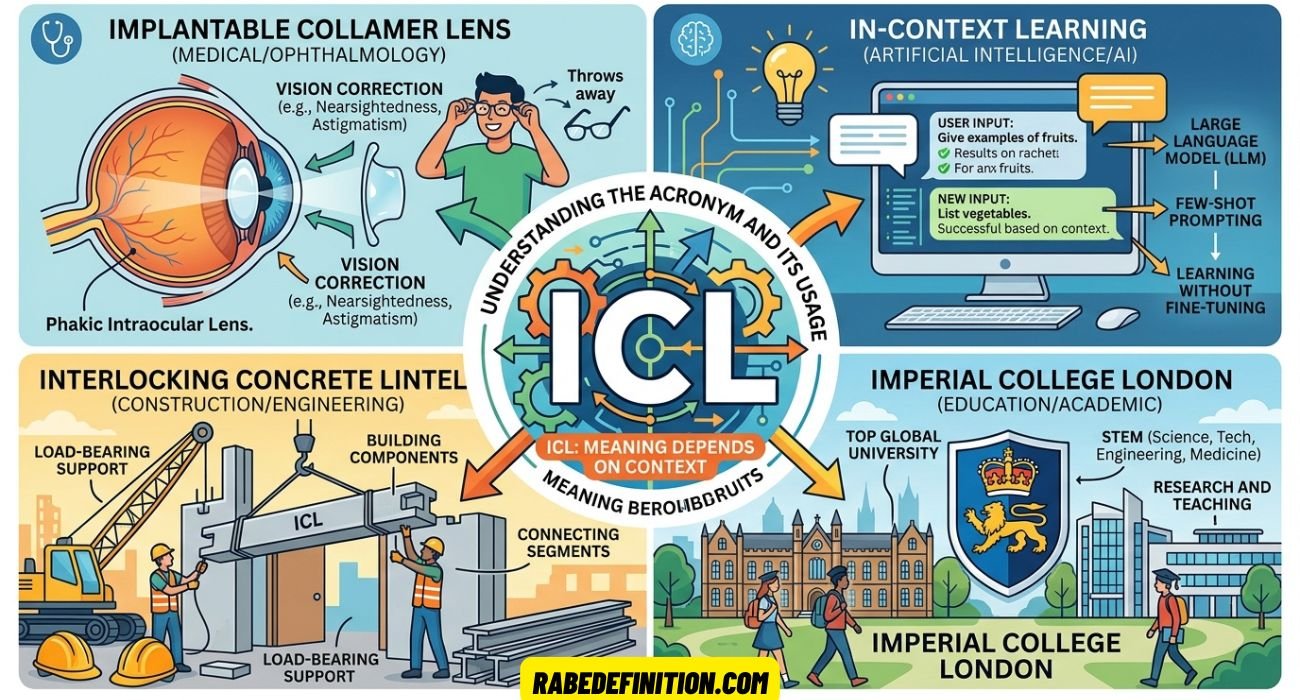
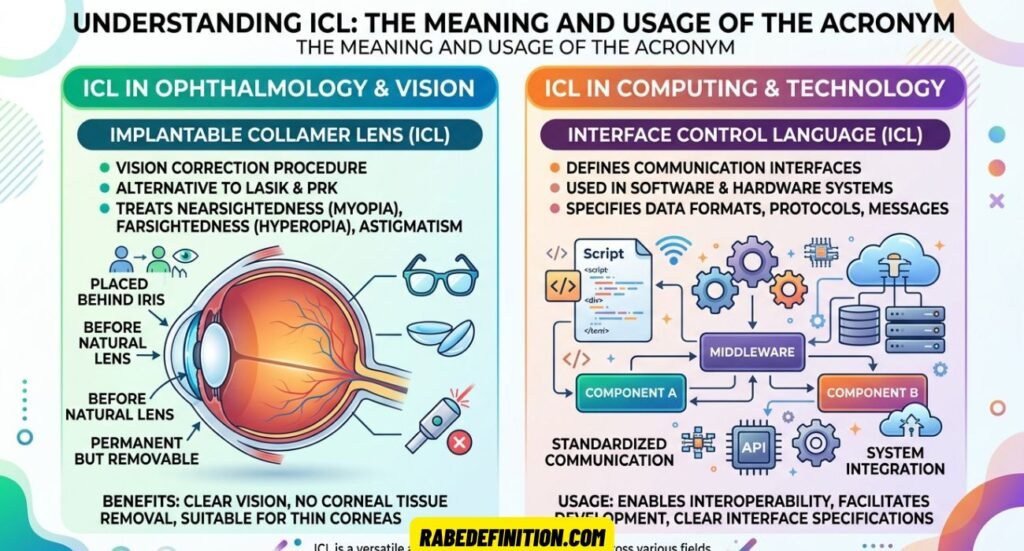
Although “I Can’t Lie” is the common texting interpretation, ICL is not limited to internet slang.
Depending on the field or conversation, ICL can be used as an abbreviation for other names, phrases, organizations, or technical terms. The intended meaning may therefore be completely unrelated to texting.
This is especially important when you see ICL in:
- Workplace documents
- Technical material
- Academic content
- Organization names
- Industry-specific conversations
If ICL appears in a casual message such as “ICL, I actually liked it,” “I Can’t Lie” is a strong interpretation.
If it appears in a technical report or an organization’s name, you should not automatically assume it means “I Can’t Lie.”
See Also : WYA Meaning Explained With Examples and Texting Uses
Common Mistakes
A few mistakes can make ICL confusing.
Assuming Every ICL Means “I Can’t Lie”
The texting meaning is common, but acronyms can have different meanings in different environments. Look at the surrounding words before deciding.
Confusing ICL With NGL
ICL and NGL often perform the same conversational function, but they are different abbreviations:
- ICL = I Can’t Lie
- NGL = Not Gonna Lie
Using It in Formal Writing
Because ICL is informal, it may not be the best choice for professional or academic communication.
Thinking It Always Signals a Serious Confession
ICL can introduce something completely ordinary, such as an opinion about food, music, movies, or clothing. The phrase does not necessarily mean the speaker is about to reveal something dramatic.
Why Do People Say ICL in Texts?
ICL is a quick way to make an opinion, reaction, or admission sound more honest. Instead of typing “I can’t lie,” people use the shorter version to keep their messages casual and easygoing.
You might see ICL before a compliment, criticism, surprising opinion, or personal confession. For example, “ICL, that outfit looks really good” simply emphasizes that the person genuinely means what they are saying.
Is ICL the Same as NGL?
ICL and NGL have very similar purposes in casual conversations. ICL means “I Can’t Lie,” while NGL means “Not Gonna Lie,” and both can be used when someone wants to introduce an honest thought or reaction.
For example, “ICL, I liked the movie” and “NGL, I liked the movie” communicate nearly the same idea. The main difference is simply the wording behind each abbreviation, so people may choose one based on their usual texting style.
Can ICL Be Used in a Funny Way?
Yes, ICL can be used in playful or humorous conversations as well as serious ones. Someone might use it before an exaggerated reaction, an unexpected opinion, or a joke to make the message feel more expressive.
For example, a friend might say, “ICL, I would never survive a day without coffee.” The statement is not necessarily a serious confession; ICL simply adds emphasis and gives the message a casual, conversational feel.
How to Know What ICL Means in a Conversation
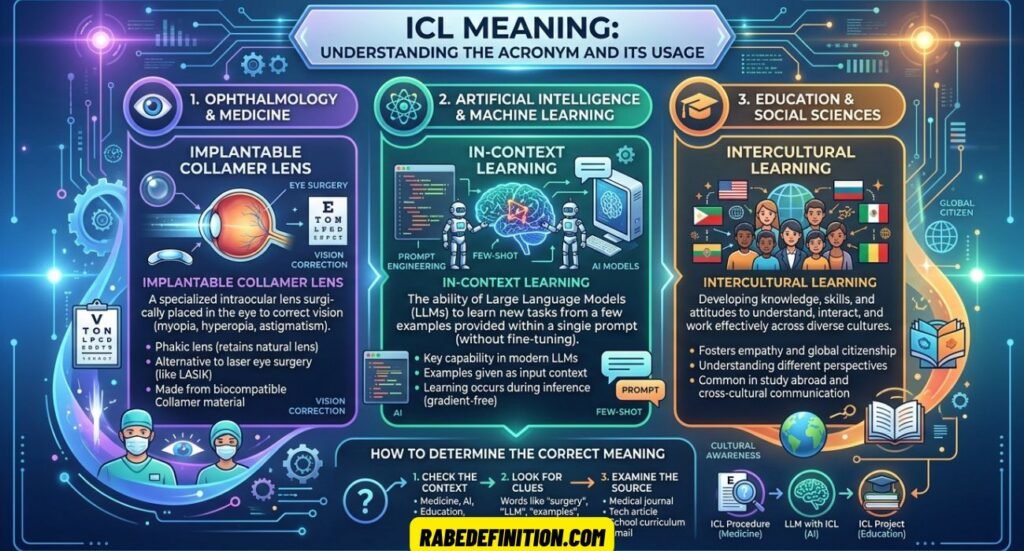
The easiest way to understand ICL is to look at the words surrounding it. If someone writes, “ICL, I actually loved that song,” the context strongly suggests that they mean “I Can’t Lie” and are sharing an honest opinion.
However, ICL can have other meanings outside casual texting. If you see it in a professional, technical, or specialized conversation, consider the subject and surrounding terminology before assuming that it means “I Can’t Lie.”
FAQ About ICL Meaning
What does ICL mean in texting?
In texting, ICL usually means “I Can’t Lie.” It is used to introduce an honest opinion, reaction, admission, or observation.
What does ICL stand for?
In casual internet and texting language, ICL stands for “I Can’t Lie.” Other meanings may exist in specialized contexts.
What is the ICL meaning in text?
The ICL meaning in text is generally “I Can’t Lie.” For example, “ICL, that was really good” means the speaker is honestly saying that they enjoyed something.
Is ICL formal or informal?
ICL is generally informal. It is most appropriate for texts, casual chats, social media, and other relaxed conversations.
Is ICL rude?
No, ICL is not inherently rude. It simply signals an honest statement. However, what follows ICL can sound blunt, critical, or complimentary depending on the message.
How do you respond to ICL?
Respond to the statement that follows ICL. Depending on the situation, you can say “same,” “fair enough,” “I agree,” or give your own opinion.
What does ICL mean on social media?
On social media, ICL generally means “I Can’t Lie.” People use it in comments, captions, and messages before sharing an honest reaction or opinion.
Is ICL the same as NGL?
They are very similar but not identical. ICL means “I Can’t Lie,” while NGL means “Not Gonna Lie.” Both are commonly used to introduce an honest statement.
Can I use ICL at work?
You can use it in a very casual workplace conversation if you know the audience and communication style, but it is usually better to avoid ICL in formal emails, reports, presentations, and other professional writing.
Understanding ICL Meaning
Understanding ICL meaning is mostly about recognizing the conversational purpose behind the abbreviation. In casual texting, ICL usually stands for “I Can’t Lie” and tells the reader that an honest thought or reaction is coming.
It can be used for something as simple as an opinion about a movie or as personal as a small confession. The expression is flexible, which is one reason it appears naturally in online conversations.
I Can’t Lie Meaning
The “I Can’t Lie” meaning is essentially an informal way of saying, “I want to be honest about this.”
For example:
“ICL, I was wrong.”
means the person is admitting that they were wrong.
Likewise:
“ICL, you did a great job.”
uses the phrase to emphasize that the compliment is sincere.
The words that follow ICL usually provide the real message; ICL simply sets up that message as an honest one.
I Care Less Meaning
Another possible interpretation of ICL is “I Care Less.” This meaning is much more dependent on context and is not the interpretation you should automatically assume when you encounter ICL in a casual text.
It can also create confusion with the established expression “I couldn’t care less,” which means that someone does not care at all about something.
Because abbreviations can be ambiguous, look at the rest of the message before deciding that ICL means “I Care Less.”
Other Interpretations of ICL
Outside slang and texting, ICL can represent completely different terms depending on the subject.
For that reason, the safest approach is to identify the setting first. If you see ICL in a conversation about everyday life, friends, entertainment, or social media, the slang interpretation may be appropriate.
If you see it in a specialized document, workplace discussion, or technical context, investigate the surrounding terminology instead of assuming it means “I Can’t Lie.”
The Importance of Context
Context is one of the most important parts of understanding any abbreviation.
Consider:
“ICL, I loved that episode.”
The casual setting and surrounding words make “I Can’t Lie” a natural interpretation.
But if ICL appears in a specialized document with other technical abbreviations, the same three letters could mean something entirely different.
When you are unsure, check:
- What is the conversation about?
- Is the person using casual slang?
- What words appear immediately before and after ICL?
- Is the communication personal or professional?
- Does another interpretation make more sense in that setting?
Alternatives to “I Can’t Lie”
If ICL does not fit your audience, you have several alternatives.
For casual conversations, you can use:
- Honestly
- NGL
- TBH
- For real
- To be honest
For slightly more polished communication, use:
- In all honesty
- Truthfully
- I have to admit
- If I’m being honest
The best option depends on how casual you want your message to sound.
Choosing the Right Expression
Choosing between ICL and a similar phrase is mainly a matter of audience and tone.
Use ICL when you are having a relaxed conversation and the other person understands texting slang. Use “to be honest” or “honestly” when you want the message to be clearer to a wider audience.
For professional or academic communication, avoid relying on texting abbreviations unless they are part of an established term or accepted style in that specific setting.
The simple rule is: if you would naturally use casual texting language with the person, ICL may fit. If the message needs to sound polished or formal, spell out your thought instead.
Conclusion
The most common ICL meaning in texting and social media is “I Can’t Lie.” It is an informal way to introduce an honest opinion, reaction, admission, or observation.
ICL is especially common in casual digital conversations, but context always matters because the abbreviation can have other meanings. When in doubt, look at the surrounding message and the setting before interpreting it.
For everyday texting, though, seeing “ICL” usually means the person is about to tell you what they genuinely think.