
Mashallah Meaning: What It Means in Text and Chat
The mashallah meaning comes straight from Arabic: mā shāʾ Allāh, “what God has willed,” is the phrase in full, word for word. People say it when they see something good, like a healthy newborn, a new home, or a friend’s success. In texts and captions, it works as warm praise that also gives God the credit for the good thing.
You’ll spot mashallah under baby photos, graduation posts, and pictures of a fresh haircut or a new car. It can sound like “wow,” like “congratulations,” or like a quiet thank-you, depending on the moment. That flexible tone is exactly why the word confuses people who only meet it online.
This guide walks through what mashallah means in text and chat, when people say it, and how its tone shifts with context. It also explains how to reply, where learners slip up, and how the word differs from inshallah, its closest relative. By the end, you’ll know when the word fits, when it doesn’t, and how to answer it with confidence.
What Does Mashallah Mean?
“What God has willed” is what mashallah means. Said slowly, it breaks into three parts: mā (what), shāʾa (has willed), and Allāh (God). Together they form a complete little sentence that Arabic speakers fold into a single word.
The phrase points backward, at something that already exists or has already happened. A baby is born healthy, a shop opens, an exam result lands well, and the word fits because the good thing is already there to be praised. Dictionaries describe its core job as gratitude for a blessing, paired with the recognition that God willed that blessing into being.
Reference works also note a tone of awe in it. The word marks something as great or beautiful, expresses respect for it, and keeps the praise humble at the same time. Single words often carry whole ceremonies of feeling this way, much like the elegy meaning, where one word holds an entire poem of mourning.
A few details clear up most early confusion. Writers spell it as one word (mashallah) or split it into its parts (ma sha Allah), and dictionaries class it as an interjection, a stand-alone expression rather than an ordinary sentence word. Its setting is religious, its language is Arabic, and its literal translation stays “what God has willed” in every spelling.
Mashallah Meaning in Text and Chat
In texting, mashallah is typed praise. It appears under photos, inside comment threads, and in replies to good news, and it always carries the same signal: this is wonderful, and God made it happen. A friend announces an engagement, and “mashallah” lands warmer than a plain “congrats” because it blesses the news while celebrating it.
The word also works as a complete reply on its own. In short chats it often stands alone, the way “wow” or “amazing” would in English, and nobody expects a longer sentence after it. Typed with a heart or a smiling emoji by some senders, it still reads as sincere rather than casual, because the faith inside the phrase keeps its weight even at chat speed.
What Does Mashallah Stand For?
Mashallah doesn’t stand for anything letter by letter. It is not an acronym, and there is no hidden expansion to memorise, even though English slang trains people to expect one. Each part of the word is simply a real Arabic word doing its normal job: what, has willed, God.
That last part deserves a note. Allāh is the Arabic word for God, and Arabic speakers of more than one faith use it, including Arab Christians. So the phrase belongs to the Arabic language first, even though its deepest roots and widest use sit inside Islamic practice.
When Do People Say Mashallah?
People say mashallah at good news and good sights. New babies hear it constantly, and so do newlyweds, graduates, new homeowners, and anyone sharing a result they worked hard for. A promotion, a passed driving test, a recovered patient, a safe return from a trip: each one can draw the word out of the people who hear about it.
The speaker is often an onlooker, but not always. People also say it over their own blessings, as a way of giving thanks out loud rather than taking the credit themselves. And many speakers attach it right after a compliment, so the praise arrives wrapped in good intention. That protective habit has its own story, told in full further down this page.
How Context Changes the Mashallah Meaning
The words never change, but the job they do changes with the moment. Context decides what short forms mean everywhere, in conversation and even in a doctor’s notes, where the prn meaning depends entirely on the situation around it. Four everyday contexts cover most uses of mashallah.
1. Admiration
A stunning view, a beautiful voice, a dress that stops the room: admiration is the word’s simplest setting. Here mashallah says “this is gorgeous” while quietly crediting the One who made it possible. The praise lands on the thing itself, and the tone stays soft rather than flashy.
2. Congratulations
At engagements, promotions, and passed exams, mashallah works as congratulations with a reminder folded inside it. Reference works note this use directly: the phrase congratulates the person while pointing out that, ultimately, God willed the outcome. The achiever hears both the applause and the gentle framing in a single word.
3. Appreciation for a Child
This is the classic case, the one most people meet first. A baby smiles, a toddler takes first steps, a child recites something clever, and the adults around them answer with mashallah. It praises the child warmly, and for many families it also guards the moment, a layer explained in the evil eye section below.
4. Appreciation for an Achievement
Degrees, businesses, sports wins, and finished projects all earn the word too. Here it recognises effort without letting the praise stop at the person, since the outcome is treated as willed as well as earned. Colleagues and relatives use it exactly this way when hard work finally shows a result.
Mashallah on Social Media and Different Platforms
Online, mashallah lives in captions and comment sections. It sits under baby photos, car reveals, house tours, exam results, and before-and-after pictures, and it collects under celebration hashtags as a ready-made blessing. Fast comment threads run on shorthand like this, much like the gng meaning slang that races through group chats.
Each platform bends the habit slightly. On TikTok the word flies through comments as quick praise at scrolling speed. On YouTube it appears under family and lifestyle videos, sometimes inside longer, warmer messages. On Instagram it often forms part of the caption itself, where the poster blesses their own milestone before anyone else can. The spelling stays casual online, but the meaning never thins out.
Real Conversation Examples
The examples below show the word doing its different jobs in everyday chat.
Example 1: Friends
Friend 1: “I finally passed my driving test!”
Friend 2: “Mashallah, brilliant! All that practice paid off.”
Here the word works as congratulations between friends, praise with the credit pointed upward.
Example 2: Family
Aunt: “Your daughter took her first steps today.”
Mother: “Mashallah, she’s growing so fast.”
Inside a family, the word praises a child and wraps the moment in gratitude at the same time.
Example 3: Social Media
Caption: “New keys, new chapter. Mashallah for everything.”
Comment: “Mashallah, the house looks beautiful.”
The poster blesses their own milestone in the caption, and a follower answers with the same word as a compliment.
Is Mashallah Rude?
No, mashallah is not a rude word at all. Said sincerely, it lands as a blessing, never as an insult. Nobody hears genuine praise as an attack, and this word is praise in its bones.
Rudeness can only sneak in through tone. Delivered as a joke at someone’s expense, or dripping with sarcasm, any warm word can turn cold, and mashallah is no exception. Aimed at sad news it would sound confused rather than cruel, since the phrase only fits good things. Used straight, though, it is one of the safest compliments you can give.
Is Mashallah a Compliment?
Yes, mashallah is a compliment, and one of the warmest in everyday use. It praises the blessing first and the person through it, which is why it suits babies, achievements, homes, and good looks alike. The person hearing it receives admiration and a blessing in the same breath.
What makes it different from a plain compliment is the direction of the credit. “You did brilliantly” stops at the person, while mashallah adds “and God willed it” without taking anything away from them. That extra layer is exactly why many people prefer receiving it over ordinary praise.
How to Reply to Mashallah
A reply doesn’t need Arabic or a long speech. Match the warmth, keep it short, and let the thanks sound real, the way friends answer unc meaning slang and other chat shorthand with easy, natural replies.
Friendly Replies
Plain English works perfectly with friends and colleagues. Try “Thank you so much,” “That means a lot,” or “Thanks, I’m really happy about it too.” A smile carries half the reply anyway, and nobody grades the wording.
Warm or Respectful Replies
With elders, relatives, or anyone who said the word as a blessing, a slightly warmer answer fits. “Thank you, that is very kind” works well, and many people answer with “Alhamdulillah,” praise be to God, when the blessing being praised is their own. Both replies accept the kindness and hand the credit back in the right direction.
When to Use Mashallah
Use mashallah when something good is already in front of you. A healthy baby, a friend’s engagement, a degree earned, a business opened, a patient recovering, a beautiful home or a beautiful voice: if the good thing exists now, the word fits. It belongs on compliments you genuinely mean, spoken at the moment the blessing is seen or announced.
It also fits your own good fortune. Posting your milestone with a mashallah of your own thanks God publicly and invites others to celebrate without envy. That is the phrase working exactly as it was built to work.
When to Avoid Mashallah
Keep mashallah away from the future. Hopes, plans, and promises take inshallah instead, because nothing has been willed into being yet. Keep it away from sad news too, where praise of any kind would sound wrong, and never fire it as a joke at someone’s expense.
It also sits oddly as self-praise. Repeating it over your own looks or possessions can sound boastful, the opposite of the humility inside the phrase. Save its full strength for honouring other people’s blessings, and it will never land wrong.
Common Mistakes About Mashallah
Treating it as empty slang. The phrase began as a statement of faith, not a filler word. Dropping it into mocking or careless chat strips out that weight, and listeners who hold it dear can hear the difference.
Aiming it at future events. Mashallah looks backward at what God has already willed. Tomorrow’s hopes need inshallah, and mixing the two is the most common learner error of all.
Confusing mashallah with inshallah. The two phrases are family, not twins. One celebrates what has happened, the other hopes for what might, and the table below keeps them straight.
Using it as self-praise. The word honours a blessing while crediting God, so aiming it at yourself again and again bends it out of shape. It shines brightest over someone else’s good news.
Similar Expressions and Their Differences
Three phrases travel together in everyday speech, and learners mix them up constantly. The table keeps the family straight.
| Expression | When to Use It | Literal Meaning |
|---|---|---|
| Mashallah | Praising something good that already exists | What God has willed |
| Alhamdulillah | Thanking God for blessings, relief, and good outcomes | Praise be to God |
| Inshallah | Hopes and plans about the future | If God wills |
| Subhanallah | Awe at creation, beauty, and wonders | Glory be to God |
Tense does most of the sorting. Mashallah looks at what has happened, inshallah at what might happen, alhamdulillah gives thanks for what has been received, and subhanallah reacts to wonder itself. Pick the one that matches the moment, and the family never confuses you again.
Origin and Meaning in Islamic Usage
The phrase is Quranic in form. A form of it appears in Surah Al-Kahf (18:39), where the owner of a garden is reminded that he should have said, in effect, “What God has willed has happened; there is no power except in God.” That verse fixed the pattern early: see a blessing, and name its real source before admiring it.
The grammar explains the habit. The verb shāʾa comes from an Arabic root meaning “to will,” and it sits in the completed tense, the tense of finished things. That is why the phrase hugs blessings that already exist, while inshallah, built for what has not happened yet, handles the future.
From Arabic, the expression spread across the Muslim world and beyond it. It is common throughout Arabic-speaking lands, including among Arabic-speaking Christians, and it travelled into Turkish, Persian, Urdu, Malay, and many other languages as those cultures made it their own.
How to Pronounce Mashallah
Say it in three beats: mah-SHAH-lah, with the emphasis on the middle beat. Dictionaries record the American sound as /mɑˈʃælə/, which matches that rhythm closely. The sh is a single sound, the same one that starts “ship,” and the ending flows into a soft “lah” rather than a hard stop.
English speakers often flatten the word to “muh-SHAH-luh,” and listeners still understand it without trouble. Confidence matters more than perfection here. Said warmly and at a natural pace, even an approximate version carries the compliment through.
Why People Say Mashallah: Warding Off the Evil Eye
One deep reason sits under the whole habit: praise can attract envy. Reference works note that the phrase is used to protect against the evil eye, because naming God as the giver shows the praise carries no jealousy. The compliment arrives, but the credit goes upward, and that is thought to keep the blessing safe.
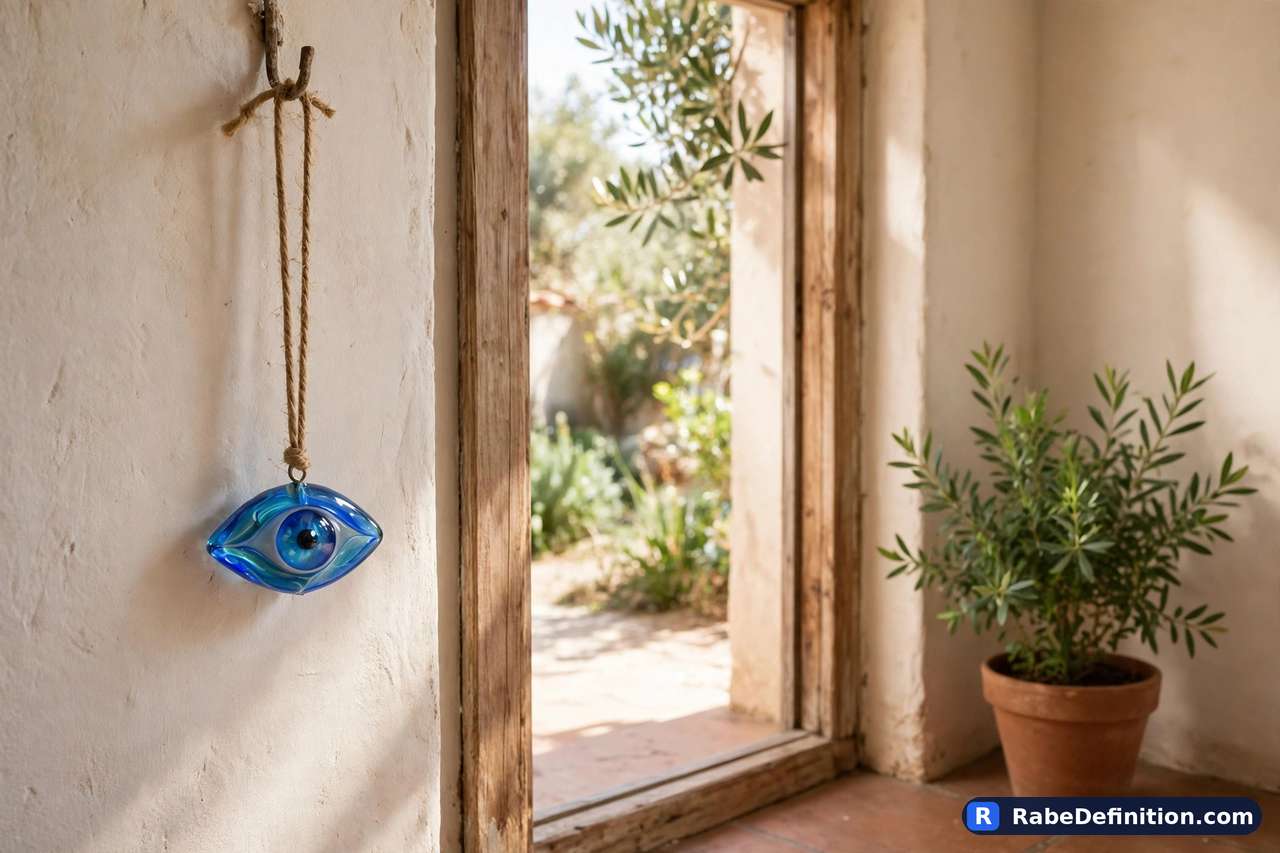
This is why mashallah follows compliments so closely, especially over children, who are praised the most and protected the hardest. In many regions the same protective idea shows up in blue glass eye beads hung by doors and pinned near baby clothes. The word and the bead do the same job in different forms: both stand guard over something good.
Can Non-Muslims Say Mashallah?
Yes, non-Muslims can say mashallah, and many do. Reference works record it as a general Arabic expression rather than a members-only phrase, and Arabic-speaking Christians use it in daily life. Shared vocabulary crosses community lines in both directions, much like the zionist meaning that readers look up to understand a term rooted in another tradition’s story.
The only caution is tone. Said with sincere warmth, the word is received as kindness almost everywhere. Used as a costume, a punchline, or a mock accent, it stops being a compliment and starts being a joke at someone’s expense. Mean it, and you are welcome to it.
How Mashallah Is Spelled in English
English spellings vary because Arabic sounds map loosely onto Latin letters. Mashallah, Ma Sha Allah, Masha Allah, Ma Shaa Allah, and Masha’Allah all write the same phrase, and none of them is the single official form. The Arabic original never changes; only the transcription does.
Mashallah Around the World
Other languages shaped the phrase to their own alphabets. Turkish and Azerbaijani write maşallah, Malaysia and Indonesia use Masya Allah, and Bosnia and Herzegovina has the shorter Mašala. Persian keeps the phrase close to its Arabic shape, and in South Asia it is everyday speech in Urdu. Same words, same blessing, local handwriting.
Frequently Asked Questions
What does mashallah mean in text?
In a text, mashallah carries its full meaning, “what God has willed,” and works as warm praise under good news or a photo.
It works like “wow” and “congratulations” together, with the credit given to God.
Is mashallah rude?
No. Mashallah is a polite, respectful phrase that people use to honour good things.
Only a mocking or sarcastic tone can make it land badly, like any praise word.
What does mashallah mean on TikTok?
On TikTok, mashallah is quick praise in the comments for babies, wins, makeovers, and new purchases.
It carries the same meaning as everywhere else, just at comment-section speed.
How should you reply to mashallah?
A simple “thank you” always works, and a warm “Alhamdulillah” fits when the blessing is yours.
Match the speaker’s warmth and keep the reply short and sincere.
Can mashallah have different meanings?
The literal meaning never changes, but the tone shifts: admiration, congratulations, gratitude, or protection.
Context tells you which job the word is doing in that moment.
Final Thoughts
Mashallah is one short phrase with a long memory. It praises a baby, a house, a recovery, or a hard-won result, and it hands the credit to God in the same breath. That double job is why the word feels warmer than a plain compliment. It also explains why the phrase travels so well between languages, faiths, and comment sections.
Say it when something good is already in front of you, and say it like you mean it. Keep it off sad news and future plans, where other phrases belong. Said with a clean heart, it honours the blessing, protects it from the evil eye, and leaves everyone in the conversation feeling thanked, credited, and quietly glad to be there.



One Comment