IMO Meaning in Text: What Does IMO Mean in Texting?
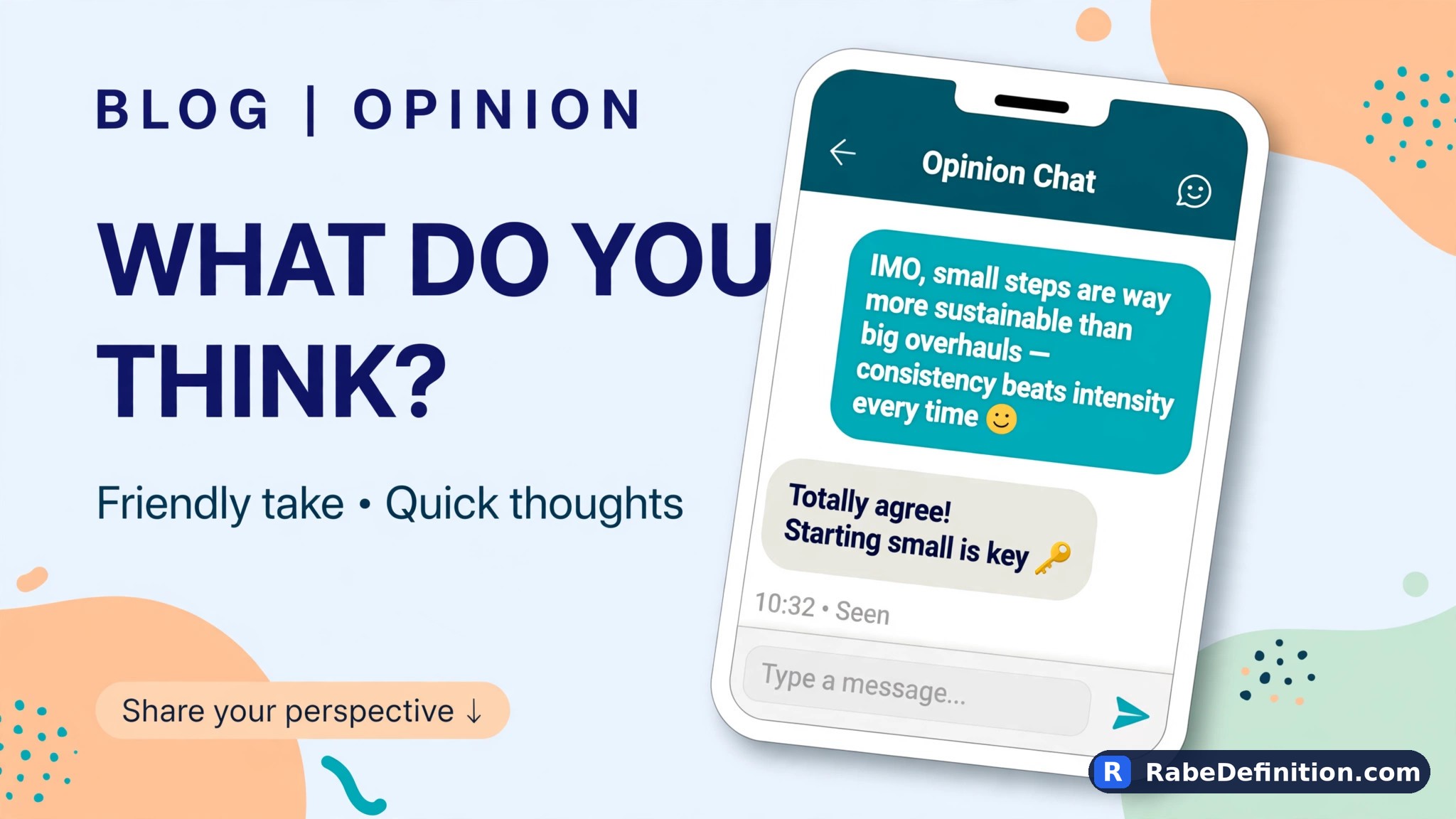
The imo meaning in text is “in my opinion,” a short way to mark a statement as your personal view. People place IMO before or after a claim so readers know it is a take, not a proven fact. It works like a small label that says the words around it belong to one person.
IMO shows up in group chats, comments, forums, and casual work messages where people trade opinions all day. It usually softens a statement, because the writer admits that others may see the same thing differently. Read carelessly, though, it can also sound dismissive, especially in an argument or next to strong wording.
This guide explains what IMO means in plain words and where you will see it most often. You will find original examples, simple ways to reply, and a clear comparison with IMHO and similar shortcuts. It also covers when IMO fits, when it sounds rude or vague, and how to use it without starting an argument.
What Does IMO Mean In Text?
IMO means “in my opinion.” People add it when sharing a personal view they do not want to present as fact.
The shortcut can sit at the start of a sentence, as in “IMO the sequel was better,” or at the end, as in “that ending was rushed, IMO.” Both placements do the same job. They tell the reader, “This is how I see it,” and leave room for a different view.
Simple Meaning (In Plain Words)
Strip away the letters and IMO just means, “Here is what I think.” “That restaurant is overpriced” announces. “IMO that restaurant is overpriced” offers it as one person’s experience, so a friend can push back without tension.
Where Is IMO Used?
You will run into IMO anywhere people swap opinions in writing. It is constant in group chats, where friends rank movies, argue about games, and plan weekends. It fills comment sections and forum threads where strangers debate new posts. It also appears in casual work chats, where a teammate floats a suggestion and wants it to land as an idea, not an order — anywhere a statement can be argued with.
What Does IMO Mean From a Guy or a Girl?
IMO means exactly the same thing from a guy or a girl: “in my opinion.” The letters carry no hidden romantic or gendered meaning, and intent lives in the opinion that follows, not in the shortcut.
If a guy texts “imo you did fine on that test,” he is offering reassurance. If a girl sends “imo he likes you,” she is sharing her reading of the situation. Either way, judge the words after IMO and your relationship, not a secret code hidden in three plain letters.
Why Do People Use IMO?
The biggest reason is softening. A bare opinion can read like a challenge, while the same opinion with IMO attached reads like an opening. It tells the group you know the topic is debatable and you are fine with disagreement.
Speed matters too. Three letters beat writing the full phrase every time. Habit helps as well: regular chat users absorb IMO early and use it without thinking, much like “lol” or “btw.” Shortcuts work the same way as sign-offs — the GTS meaning in text is “go to sleep,” a quick sign-off people send when a late-night chat is winding down.
Real-Life Examples Of IMO
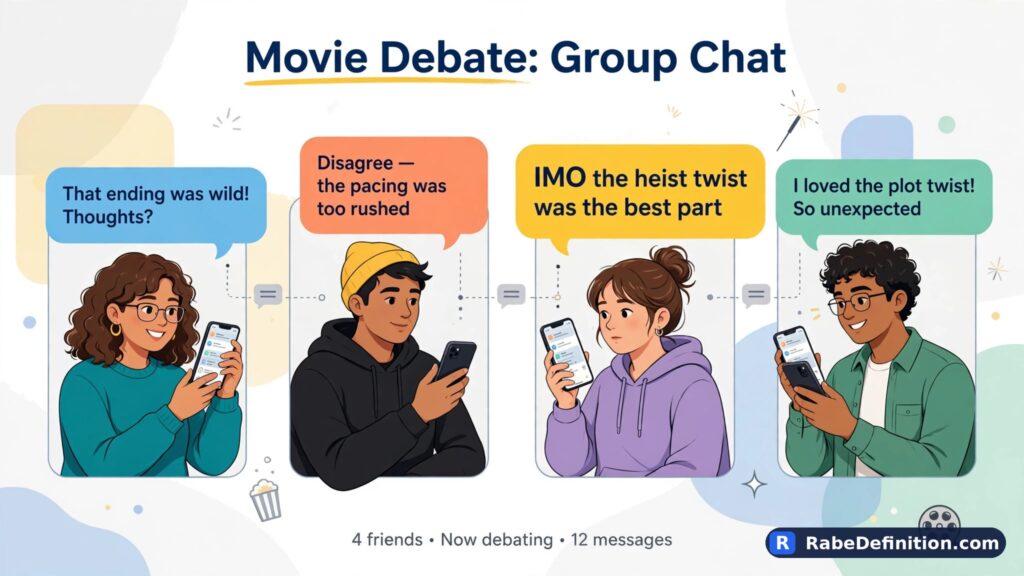
A movie argument in the group chat: “imo the villain carried that whole film, the hero was boring.” The opinion is strong, but the label keeps it friendly.
During a food debate, a friend writes: “pineapple on pizza is elite, IMO.” Short, playful, and clearly a matter of taste.
On a study server, someone posts, “Imo the practice questions help way more than rereading notes.” Someone else can disagree without feeling corrected.
A coworker writes: “IMO we should test the cheaper plan first before committing.” The suggestion sounds like teamwork rather than a command.
And a blunt one between siblings: “imo that haircut was a mistake lol.” Teasing, and the label keeps it a joke. A loyalty-flavored promise works the same way — ONB is “On Bro,” an oath people attach to a claim when they want to be believed.
How to Reply When Someone Says IMO
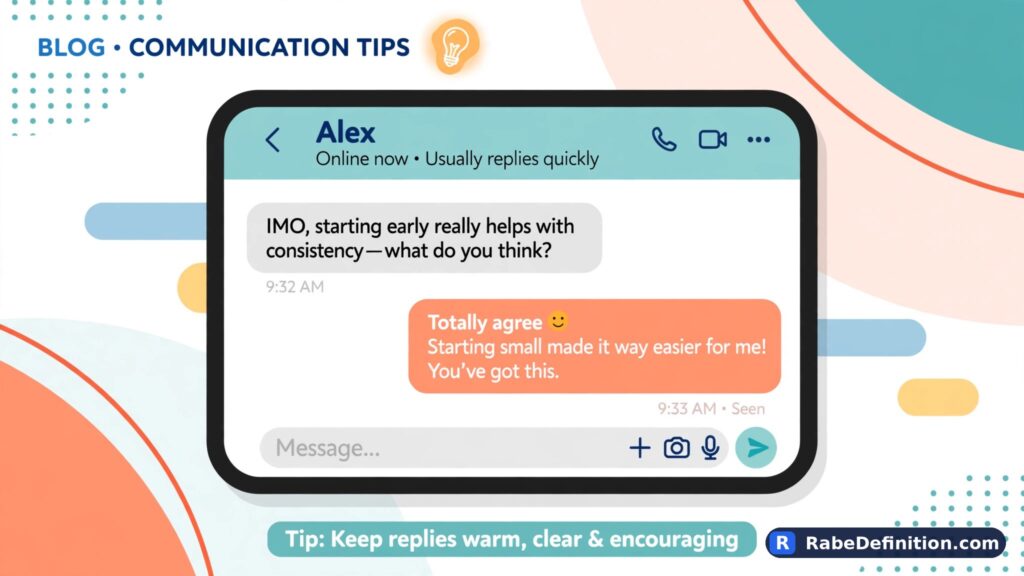
Start by replying to the opinion, not the shortcut. If you agree, say so plainly: “Agreed, that update slowed everything down.”
If you disagree, match the same energy: “Fair take, but I liked the second half more.” Asking “What makes you say that?” turns a one-line take into a real conversation. Avoid replying “well, that’s just your opinion” — the sender knows that already, and IMO said it for them. A calming reply works differently — DW is “don’t worry,” reassurance for a small mistake rather than an opinion to debate.
Other Similar Meanings You Might See
In chat, IMO almost always means “in my opinion,” even when used sarcastically before something obvious, like “imo the meeting could have been an email.” Outside texting, the same letters name real organizations, usually the International Maritime Organization. In a friend’s message, though, the opinion meaning is the safe reading.
IMO vs Similar Terms
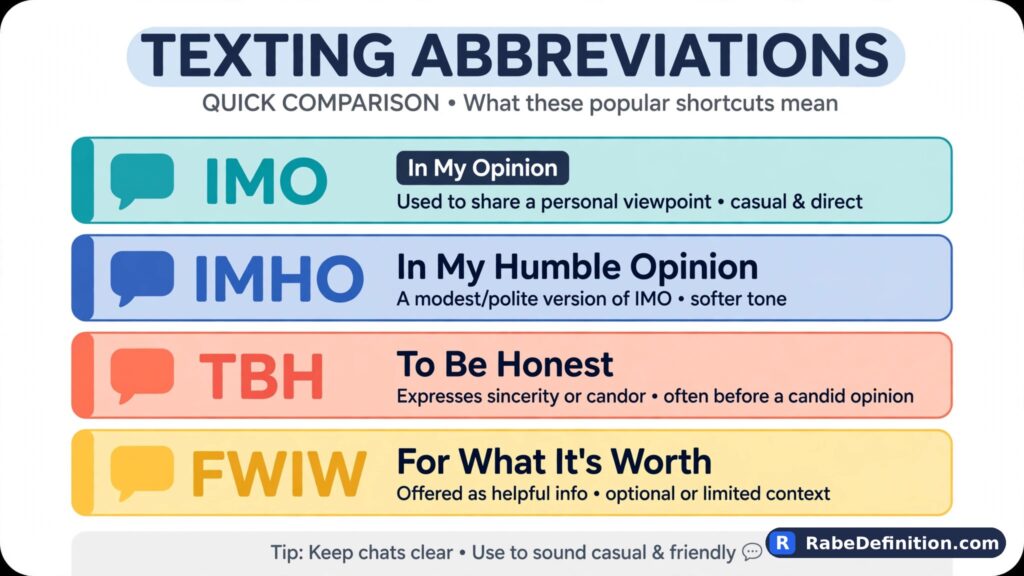
Several shortcuts handle opinions and honesty, but each one leans a different way:
| Term | Meaning | How it feels | Common spot |
|---|---|---|---|
| IMO | In my opinion | Neutral, personal | Any casual chat |
| IMHO | In my humble opinion | Softer, more polite | Debates, touchy topics |
| TBH | To be honest | Blunt, confessional | Honest feedback |
| FWIW | For what it’s worth | Gentle, low-pressure | Advice and suggestions |
| IDK | I don’t know | Unsure, hands-off | Questions you cannot answer |
The short version: IMO states a view, TBH confesses one, and IDK declines to have one. Questions have their own shortcuts too — a warm EYP is usually “Enjoy Your Presence,” a friendly note for good company rather than an opinion.
IMO vs IMHO: Which One Should You Use?
IMO and IMHO differ by one word, “humble,” and that word changes the temperature. IMHO sounds like the writer is stepping back a little, almost apologizing in advance for the take. It suits touchy subjects and moments when your view may be unpopular.
Plain IMO is the everyday default. It is neutral, quick, and confident enough for routine opinions about food, shows, plans, and work ideas. One caution: some readers hear IMHO as sarcasm, so on light topics IMO is the safer choice.
When Should You Use IMO?
Use IMO when a statement is genuinely a matter of taste or judgment: a ranking, a prediction, feedback, or a suggestion for the group. It fits group decisions well, because it votes without pretending to decide.
Skip it in formal writing, where the full phrase “in my opinion” reads better, and skip it where certainty matters, like instructions, apologies, or serious news, where it makes you sound unsure. It also weakens statements of simple fact — a deadline or a price does not become an opinion just because you label it one.
Common Misunderstandings About IMO
One mix-up is treating IMO as a shield that makes any comment polite. “IMO your presentation was terrible” still stings — the harsh words do the damage, not the label. IMO softens reasonable opinions; it does not rescue cruel ones.
Another is assuming only teenagers use it. IMO is standard across age groups online, including professionals in casual channels. A third is sending “IMO” alone as a complete message. On its own it says nothing — it needs an actual opinion attached.
Is IMO Passive-Aggressive?
By itself, no. IMO is a neutral marker, and most people use it the friendly way this article describes. The risk comes from what surrounds it. “IMO you should have known better” uses the label as cover for a dig, and readers can feel that instantly.
Punctuation and history matter more than the letters. A take dropped into a heated thread can read cold, while the same take in a relaxed chat reads as banter. If you would not say the sentence kindly out loud, do not expect three letters to fix its tone. Unlike sharper shortcuts such as FFS, IMO is neutral by itself.
Pro Tips For Using IMO Correctly
Attach IMO to opinions that are actually debatable. Labeling obvious facts makes you look unsure, and labeling every sentence makes it invisible. Once or twice in a conversation is plenty for most chats.
Read the room before you send: a playful IMO works with friends and falls flat in a formal thread. For extra softness, pair it with a genuine opening, like “I could be wrong, but IMO the second option is cheaper.”
Final Thoughts
The imo meaning in text is “in my opinion,” a quick label that marks a statement as one person’s view. It softens claims in chats, comments, and forums, and it reminds readers that a different view can sit beside it. Used well, it keeps debates lighter and feedback easier to accept in everyday online messages between people who want honest talk and fair answers.
Reach for IMO when a take is personal, debatable, or easy to misread as a proven fact. Skip it in formal writing and reports, serious talks, and moments when a clear, confident statement matters far more than tone. A short opinion, marked with IMHO and kindly worded, invites a real answer instead of a pointless argument.
FAQ Section
What does IMO mean in a text message?
IMO stands for “in my opinion” in a text message.
It marks the statement after it as the sender’s personal view, not a fact.
Is IMO the same as IMHO?
IMO and IMHO are close, but they are not exactly the same thing.
IMHO adds the word “humble,” so it sounds slightly softer and more polite.
Can I use IMO in professional messages?
You can use IMO in casual work chats with teammates you know well.
For formal emails, reports, and official documents, write the full phrase instead.
Is IMO rude to use?
IMO is not rude by itself, and most people use it to soften an opinion.
It can sound harsh only when the opinion attached to it is harsh or mocking.