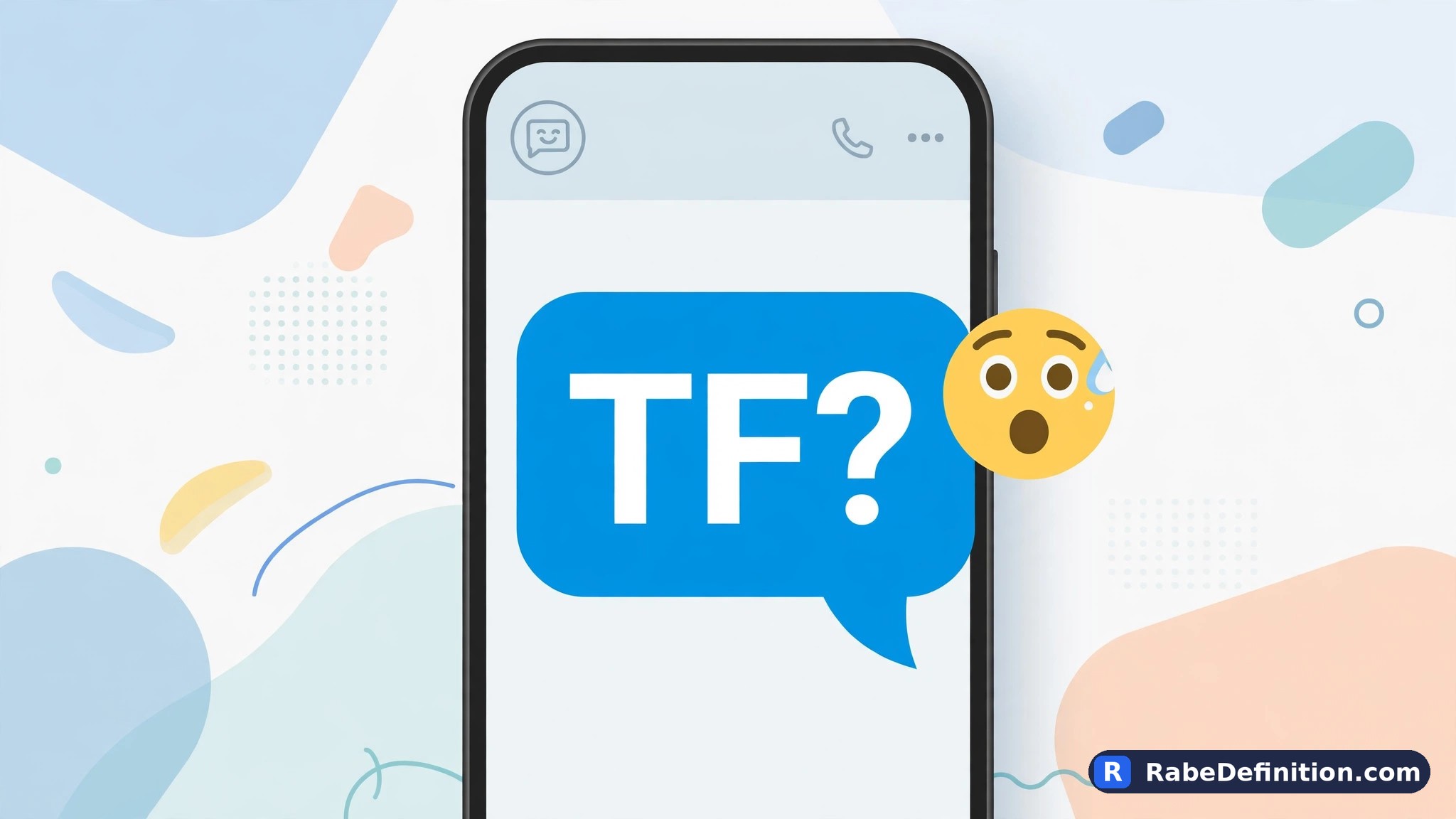
TF Meaning in Text: What Does TF Mean in Texting?
The tf meaning in text is “the f***,” the shortened, stressed part of a common profane question. People use TF when a plain question does not feel strong enough for their reaction. It adds force to words like why, how, or what inside a quick message.
In texts, DMs, and social media chats, TF usually appears right after surprising or confusing news. It can show surprise, disbelief, confusion, or mild annoyance, depending on what happened before it. Between close friends it often reads as playful, but from other people it can feel blunt.
This article explains how TF works inside real messages and what its different tones mean. You will see clear examples, simple reply ideas, and how TF differs from WTF and WTH. You will also learn where TF fits, where it does not belong, and how to judge it.
Quick Answer
The tf meaning in text is “the f***,” a shortened piece of a common profane question. People drop it into a sentence to react with surprise, disbelief, confusion, or annoyance, as in “how tf did that happen?”
What Does TF Mean?
TF doesn’t act like a normal word with a quiet, neutral meaning. It’s the stressed part of a question — the bit a speaker would raise their voice on out loud. Say “why would you do that?” again, stunned, with extra force in the middle. That force is what TF supplies in writing.
On its own, it usually signals that something doesn’t add up — the sender saw something odd and can’t make sense of it. The letters carry the reaction; the words around them carry the question.
TF in Texting
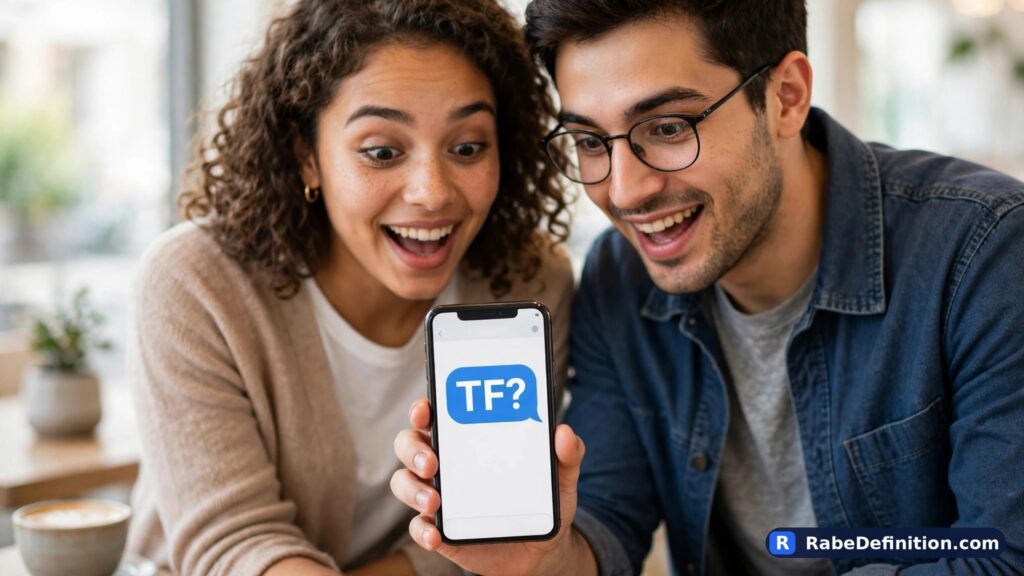
Texting strips away facial expressions and tone of voice, so people lean on shortcuts like this one to get a reaction across fast. TF is quick to type and lets the other person feel the surprise at once.
It rarely opens a calm conversation. It shows up after news: a changed plan, a strange screenshot, a result nobody saw coming. Capital letters sharpen it — a lowercase “tf” inside a sentence reads lighter, while “TF” standing alone as a full reply can look like real frustration.
Not every short question is a reaction — the wyf meaning in text is “where you from,” a question about someone’s home, not a reaction to news.
What It Means When Someone Just Replies “TF”
Sometimes TF arrives with nothing around it — no question, no follow-up, just the two letters as the whole reply. That bare version is a pure reaction, and it means something close to “wait, that makes no sense” or “I can’t believe that.” The person is not really asking you anything. They are flagging that the last message stopped them short.
Because it carries no question, a bare “tf” is also the easiest version to misread. Sent right after shocking news, it is almost always aimed at the news, not at you. Sent after something you personally did or said, it can be the start of a complaint, so the message before it matters more than the letters. If the chat goes quiet afterward, a short check-in like “you good?” clears the air better than guessing.
Common Uses of TF
Most uses fall into a few clear patterns:
| Situation | What the sender means | Example |
|---|---|---|
| Something surprising happens | “I can’t believe this” | “The tickets sold out in two minutes, tf” |
| Something makes no sense | “I don’t understand this” | “Why tf is the store closed at noon?” |
| A plan suddenly changes | “This caught me off guard” | “He moved the meeting to 7 a.m., tf” |
| Mild annoyance | “This is frustrating” | “The app logged me out again, tf” |
| Joking between friends | “That’s ridiculous, in a funny way” | “You ate the whole pizza yourself? tf” |
Common TF Sentence Patterns
TF almost never works alone inside a sentence. It slots after a question word, and the question word decides what kind of reaction it is:
| Pattern | What it usually signals | Example |
|---|---|---|
| Why tf | Disbelief at a reason or decision | “Why tf would they cancel it an hour before?” |
| How tf | Amazement that something was possible | “How tf did he finish that in one day?” |
| What tf | General confusion about a thing or statement | “What tf is this file supposed to be?” |
| Who tf | Surprise at an unknown or unexpected person | “Who tf just joined the call?” |
The pattern is a shortcut for the reader. “Why tf” questions a choice, “how tf” marvels at a result, and “what tf” asks for an explanation. Once you spot which question word is in front, the feeling behind the message is usually clear.
Real Texting Examples
Surprise after odd news:
Maya: “Our flight just got moved to tomorrow morning.”
Jordan: “tf? We were supposed to land tonight.”
Jordan isn’t angry at Maya — he’s reacting to the airline’s decision.
Confusion about something unclear:
“The instructions say to submit it twice. tf does that even mean?”
The sender wants an explanation, not an argument — TF here flags plain confusion.
A playful reaction between close friends:
“You beat my high score on your first try? tf, you’ve been secretly practicing.”
Read the full message and the tone is teasing, not upset.
How to Reply to TF
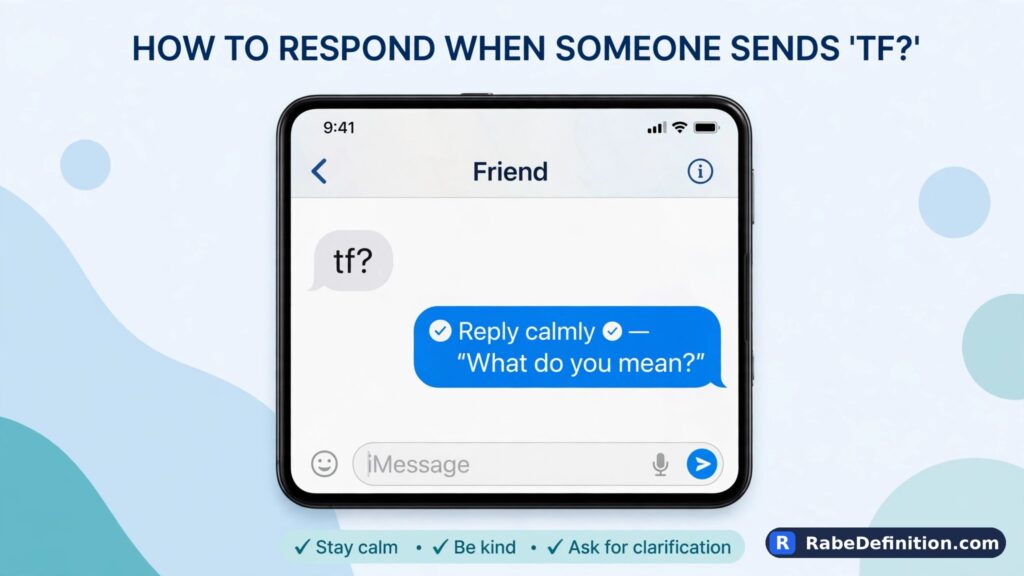
The right reply depends on what caused the reaction. If your news surprised someone, a simple acknowledgment works: “I know, I couldn’t believe it either.”
If the person seems confused, skip the reaction and answer the real question hiding under it. A clear explanation settles things faster than more slang.
When the message reads annoyed and it’s aimed at something you did, stay calm rather than defensive: “Fair point, let me fix it.” If a close friend is plainly joking, answer in the same playful tone. And if you can’t tell which way it was meant, just ask — “Wait, are you mad or joking?” beats guessing wrong.
A lighter reply works too — the ight meaning in text is a relaxed “alright” for confirming you got the message.
Tone and Context
TF has no fixed tone of its own. The same two letters can carry four different feelings, and small details decide which one a reader lands on.
The relationship comes first. Between siblings or close friends who talk this way daily, it’s routine and often funny. From someone you barely know, the same message can feel blunt or hostile.
Punctuation changes the weight, too. A question mark keeps it in “wait, really?” territory; a period, especially on a one-word reply, makes it read colder. An emoji or a “lol” can soften it, though neither guarantees a friendly reading — judge the whole conversation, not just two letters.
A different short reply is OFC — the ofc meaning in text is “of course,” used when you agree rather than reacting with surprise.
When to Use TF
Save it for casual conversations with people who know you well and use similar language. Close friends, siblings, and long-running group chats are its natural home, and it works best for quick reactions to small surprises: a weird headline, a game result, a changed plan.
Used sparingly, it keeps its punch. Drop it into every other message and you start sounding annoyed all the time, even when you’re not.
When Not to Use TF
Keep it out of work messages, emails, and school communication. Even shortened, most readers know what the letters stand for, and a manager, teacher, or client will read the full force behind them.
Avoid it with anyone you’ve just met, relatives who don’t text this way, and anyone who dislikes strong language. In a serious conversation it can also look dismissive, even when that wasn’t the intent.
A good rule: if you’d hesitate to say the full phrase out loud there, don’t type the short version.
TF on Social Media
The meaning stays the same across apps. What shifts is who sees it, and how public it is.
Snapchat
On Snapchat, TF usually appears in private chats or replies to a friend’s Snap, right after a photo or video. The chat is one-to-one and quick, so the snap before it makes the tone easy to read.
In Instagram DMs it works much like ordinary texting. In public comments the same letters read stronger, because strangers don’t know your relationship with the poster. What feels playful to a friend can look like an attack to everyone else.
TikTok
TikTok comments are fast and public, so TF there is often a quick reaction to something surprising in the video — an unexpected ending or a result nobody saw coming. It’s aimed at the content, not a person, so it tends to read as amazement more than anger.
Group chats have their own short forms — the gng meaning in text is gang, for a close circle of friends.
TF in Gaming and Discord Chats
Gaming chats are one of TF’s most natural habitats. Matches move fast, and players react in the shortest form available, so “tf” appears right after an impossible shot, a sudden glitch, or a teammate’s baffling play. In that setting it is overwhelmingly about the moment, not the person, and it often reads as amazement rather than anger.
Discord servers sit somewhere between private and public. In a small server of friends, TF lands the same way it does in a group chat. In a large public server, the same reply looks harsher to strangers reading along, and many servers moderate strong language even in shortened form. Voice chat adds one more wrinkle: spoken aloud, the phrase carries its full weight, so players who type it freely may still avoid saying it. Reading the server’s tone and rules first is the safe move.
TF vs Similar Terms
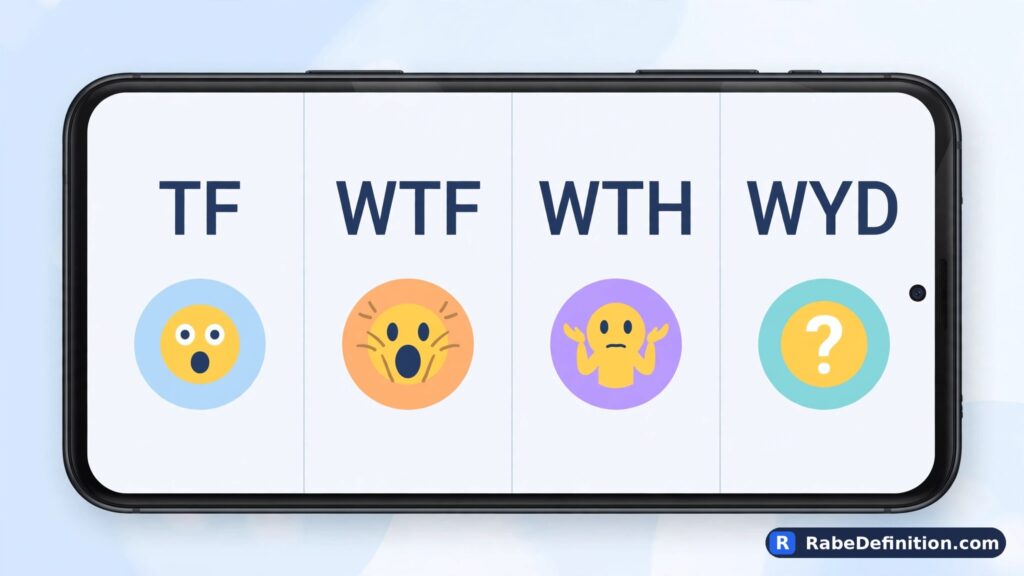
| Term | What it means | How it differs from TF |
|---|---|---|
| TF | The stressed part of a strong profane question | Adds force inside a larger question; rarely the whole message |
| WTF | The full profane question, built around TF | A complete reaction that stands alone; usually the strongest here |
| WTH | “What the heck” | A milder relative with a similar meaning, without the profanity |
| WYD | “What are you doing” | Not a reaction at all; it asks what someone is doing right now |
In short, WTH is the safer swap when you want the surprise without the edge, and WYD belongs in a different conversation entirely.
WYD’s close cousin is WYO — the wyo meaning in text is “what you on,” asking what someone is doing rather than reacting to it.
Clean Alternatives to TF
Sometimes you want the reaction without the profanity — a family chat, a class group, or any thread where you would rather keep things clean. These swaps carry nearly the same feeling:
- What the heck — the closest clean relative, same surprise, no edge.
- What on earth — works for confusion, as in “what on earth is this?”
- No way — pure disbelief, and it sounds friendly almost anywhere.
- Seriously? — questions a decision the way “why tf” does, minus the heat.
- Wait, what? — flags plain confusion and invites an explanation.
- That’s wild — reacts to surprising news without questioning anyone.
None of these needs a close relationship to land safely. If you are unsure who might read the message later — screenshots travel — picking an alternative from this list costs you nothing and keeps the reaction intact.
Common Mistakes
One common slip is reading every TF as anger. Plenty of people type it while laughing, and treating a joke like an insult can start an argument that never needed to happen.
The opposite mistake is assuming it’s always harmless. A flat “tf.” after you’ve shared real news may mean the other person is genuinely put off.
Newer texters also use it too early in a friendship, before any shared style exists, and it lands heavier than intended. Match the other person’s language first.
FAQs
What does TF mean from a guy or a girl?
It means the same thing from a guy or a girl. The tone depends on the person, the relationship, and the conversation around it.
Is TF a rude word?
It can sound rude because it is a shortened form of profanity. Close friends often treat it as casual slang, but formal settings call for cleaner wording.
What does TF mean on Snapchat?
On Snapchat, TF is a quick reaction of surprise, confusion, or disbelief. It usually answers a Snap or a private chat message, which gives it clear context.
What is the difference between TF and WTF?
WTF is the complete expression and can stand alone as a full reaction. TF is the shorter piece that usually sits inside a larger question, such as why tf or how tf.
How do you reply when someone sends TF?
Match the reason behind it by explaining confusion, agreeing with surprise, or staying calm at annoyance. If the tone is not clear, ask whether the person is joking or upset.
Can I use TF in a work chat?
No, TF does not belong in work chats, emails, or school messages. The shortened form still carries profanity and reads as unprofessional to most readers.
Conclusion
The tf meaning in text is a shortened form of a strong profane question used for reactions. People use it in questions like why or how to show surprise, confusion, disbelief, or annoyance. Its feeling depends on surrounding words, punctuation, and the relationship between the people talking. The same letters can sound playful, shocked, or rude in many different situations.
Read the full conversation before deciding how someone meant TF. Reply first to the reason behind it: explain when they seem confused, agree when surprised, and stay calm when annoyed. Keep TF in casual chats with close friends who use similar language every day. Leave it out of work, school, and formal messages, where cleaner wording always works far better. Its longer form WTF carries the same reaction with a little more force.