WTW Meaning in Text: What Does WTW Mean in Texting?
If you are wondering about the wtw meaning in text, here is the short answer: WTW expands to “what’s the word?” It is a relaxed opener that asks what’s up, what’s new, and what everyone is planning. People send it to start a chat and find out what someone is doing or thinking of doing.
WTW shows up mostly in texts, DMs, and group chats between friends who already talk casually. It works as both a greeting and a real question, so one message can check in and ask about plans together. The catch is that it is broad, so the words around it decide whether it is asking what’s new or what tonight’s plan is.
This guide explains what WTW means on each app, how context changes it, and how to answer it without guessing. You will see real chat examples, how WTW differs from close terms like WYD, and when the full sentence works better. By the end, that one short message will be easy to read and even easier to reply to.
What Does WTW Mean in Text?
WTW means “what’s the word?” People send it to find out what’s going on or whether anything is planned, almost always to someone they already know.
| Detail | Explanation |
|---|---|
| Full form | What’s the word? |
| What it asks | News, plans, or what someone is up to |
| Tone | Friendly, relaxed, casual |
| Formal or informal | Informal |
| Where you see it | Texts, DMs, Snapchat, group chats |
So “WTW tonight?” is really asking what tonight’s plan is. A bare “WTW?” reaches wider — your day, your news, or your plans — and the chat before it points to the right reading.
WTW Full Form and Slang Meaning
The full form is “what’s the word?”, and the key sits inside it: in everyday speech, “the word” means the news — the latest information going around. Asking for it is asking to be caught up.
Slang squeezes that same word into other shortcuts, too. WRD is a clipped spelling of “word” that friends send to agree with a statement. Adding a topic narrows WTW down fast: “WTW with the tickets?” asks for an update on one thing only.
How Context Changes the WTW Meaning
1. Checking in
Sam: “WTW?”
Jo: “Not much, just got back from the gym.”
Here it simply asks what is happening right now.
2. Asking about plans
Sam: “WTW Saturday?”
Jo: “I’m free after two.”
The day name turns it into a plans question.
3. Asking for an update
Sam: “WTW with the car?”
Jo: “Shop says Thursday.”
Now it asks for news about one specific thing.
4. Restarting a quiet chat
Sam: “yo wtw, been a minute”
Jo: “ikr, how’ve you been?”
Here it works as a warm opener more than a question. The message before it and the words after it decide which reading you are looking at.
What Does WTW Mean on Different Platforms?
The letters stay the same from app to app; only the reason for sending them shifts.
Text Messages
In plain texting, WTW is the classic opener between friends. “WTW after class?” asks what the plan is once class ends.
Snapchat
On Snapchat, WTW is often a low-effort way to start a chat. “WTW rn?” asks what you are doing at this minute.
In Instagram DMs, WTW opens a conversation or floats the idea of making plans. Under a post, it asks for the story behind a photo.
Group Chats
In a group chat, WTW asks everybody at once, usually about plans. These threads run on shorthand — the same chat might joke that the friend who shows off is a BTO, a “big time operator.”
The platform matters less than the conversation.
WTW Examples in Real Conversations
1: Friends Making Plans
Dana: “WTW Friday night?”
Chris: “Nothing set. Movie at eight?”
Meaning: Dana asks what Friday’s plan is, and quietly suggests they make one.
2: Casual Check-In
“WTW?”
“Just left work, grabbing food. You?”
Meaning: A general check-in about someone’s day, with no specific topic.
3: Group Chat
“WTW for the beach trip??”
“Leaving at nine, Sam’s driving”
Meaning: One person asks the whole group for the plan and its details.
A time or a topic turns a broad opener into a specific question.
Is WTW Rude?
WTW is not rude in a casual chat. Between friends the short form is expected, not lazy.
Punctuation can tilt the feeling a little. “WTW 😂” reads playful, while “WTW.” with a period can look flat or annoyed. Even then, the relationship matters far more than one character. When a near-stranger sends it, they are most likely just opening a chat the casual way — a habit, not a slight.
Tone and Context: How to Read WTW the Right Way
Tone rarely lives in the three letters themselves. It lives in the thread: who sent it, how fast they answer back, and what they say next. Quick replies and real questions after it mean someone wants to talk. After an argument, though, a lone “WTW?” can sound like a challenge, closer to “so what’s the word, then?” Judge what the sender does after the opener, not the opener alone.
Is WTW Flirty?
By itself, no. WTW carries no romantic interest in its letters. It can sit inside a flirty chat — “WTW tonight? 👀” may feel suggestive when the history points that way — but “WTW for the homework?” is plainly practical. Look at the whole conversation before reading anything into one abbreviation.
What Does WTW Mean From a Guy or a Girl?
The meaning is identical either way: “what’s the word?” A guy sending WTW and a girl sending WTW ask the exact same question. What people are really asking is whether it signals interest, and on its own, it does not. Interest shows in the pattern around it — late-night timing, fast replies, and follow-up questions.
How to Reply to WTW
Start by matching the reading. If it looks like a check-in, say what you are doing. If it looks like a plans question, answer with when you’re free or float an idea of your own.
If your plans are still fuzzy, hedge the way chat does: “Imk it’s at seven” uses IMK, “in my knowledge,” to share a belief without swearing to it.
Friendly Replies
- “Not much, just making dinner. What’s up with you?”
- “Same old. You got anything going on tonight?”
- “Just got home from practice. WTW with you?”
- “Free after six if you wanna do something”
Funny Replies
Since WTW literally asks for “the word,” a playful answer can hand one over:
- “The word is tacos. It’s always tacos.”
- “The word? Laundry. Mountains of it.”
- “The word is ‘nap,’ and I fully support it”
Replies When You Are Confused
Asking is always allowed. “Like, what’s the plan, or just what’s up?” sorts it out in one line. And if the plan they float sounds wrong, a soft IDT — “I don’t think so” — pushes back without killing the chat.
How to Keep the Conversation Going After WTW
WTW opens a door, but it does not walk through it. Chats die after this opener when both people trade short answers and nobody adds anything new. The fix is simple: answer, add one detail, and hand the question back. “Just got off work, we’re thinking tacos later — you in?” gives the other person something real to respond to.
When to Use WTW
WTW fits naturally in places like these:
- Casual texts with friends
- Group chats making plans
- DMs with people who use slang themselves
- Reopening a thread that went quiet
- Gaming lobbies and Discord servers
It works best with people who already know the shorthand.
When to Avoid WTW
Clearer wording wins in these spots:
- Work email and messages to a manager
- Job applications
- School assignments
- Messages to clients or customers
- A first message to a formal contact
- Serious or sensitive conversations
When in doubt, write the full question instead.
Common Mistakes About WTW
| Mistake | What Is Actually True |
|---|---|
| Reading WTW as one fixed question | It can ask about news, plans, or someone’s current activity |
| Treating it as a secret flirty code | The letters are neutral; the conversation sets the tone |
| Sending it in formal messages | It is casual slang and can look careless at work |
A last mistake is hunting for hidden meaning in a short message; most senders are simply asking what’s going on.
Similar Slang Terms
Several openers sit near WTW, but each one asks something slightly different:
| Term | Full Form | How It Differs |
|---|---|---|
| WTW | What’s the word? | Broad: news, plans, or the latest update |
| WSG | What’s good? | A greeting first; asks less about plans |
| WYO | What you on? | Asks what someone is doing or getting into |
| WYD | What you doing? | Focuses only on the present activity |
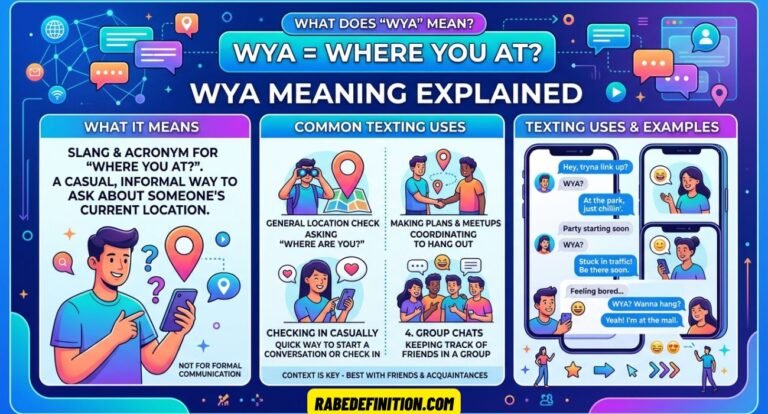
| WYA | Where you at? | Asks about location, nothing else |
For a check-in after real time apart, friends reach for HYB — “how you been” — which looks back over the gap.
WTW in Gaming and Discord Chats
In gaming lobbies and Discord servers, WTW usually opens a session rather than a conversation. “WTW tonight?” really asks which game, what time, and who is getting on. It also works as a roll call for the evening. A few gaming slang lists claim WTW can also mean “want to win” before a match, but that reading is rare and thinly documented next to the greeting — unless the chat is mid-match talk, read WTW as “what’s the word?”
Where Does WTW Come From?
The phrase behind the letters is much older than texting. “What’s the word?” has long been a spoken greeting in African American Vernacular English, where “the word” means the news — what’s happening and what’s worth knowing. The three-letter form came later, when texting and DM culture squeezed everyday greetings into shortcuts. No single person invented WTW, and no exact first-use date is documented.
Other Meanings of WTW
The same letters occasionally stand for something else entirely:
- “What the what?” Dictionary.com also lists WTW as a playful reaction of surprise, a cleaner cousin of stronger phrases. It answers surprising news instead of opening a chat.
- A company name. Outside chat, WTW is the stock-market name of the global advisory firm that used to be called Willis Towers Watson. In a business headline, WTW is a company, not slang.
- Local shorthand. Schools, teams, and workplaces sometimes use WTW as an internal code. Those meanings stay inside that circle.
In a casual message between friends, though, it is the greeting nearly every time.
Frequently Asked Questions
What does WTW mean in text?
WTW is short for “what’s the word?”, a relaxed way of asking what’s new or what’s happening.
It can also be about plans, depending on the words around it.
Is WTW rude?
No, WTW is friendly and informal between people who text casually.
It can seem too casual at work, where full sentences fit better.
What does WTW mean on TikTok?
On TikTok, WTW keeps the same meaning: “what’s the word?”
In comments and DMs, people use it to start a chat or ask about plans.
How should you reply to WTW?
Say what you’re doing or share your plans, then ask the question back.
If the meaning is unclear, ask whether they mean plans or just what’s up.
Can WTW have different meanings?
Yes, WTW can also mean “what the what?” as a playful reaction of surprise.
In texting, though, “what’s the word?” is what people mean almost every time.
Final Thoughts
WTW is one of those small texts that carries a big, friendly question. The wtw meaning points to one question — “what’s the word?” — a relaxed opener asking what’s new, what’s happening, or what’s being planned tonight. It works as a greeting and a question at once, which is why it can restart a quiet chat. The surrounding words do the steering: add a day and it asks about plans, add a topic and it asks for news.
Use WTW with friends and in group chats, and answer it the same relaxed way: say what you’re doing, add a detail, and ask back. In formal writing, spell the question out — every abbreviation trades a little clarity for speed.