How Physical Therapists Unpack TMJ Pain: Self Checks, Early Relief, and Lasting Habits
Jaw pain can be stubborn because the temporomandibular joint is small, complex, and influenced by everyday habits. People describe earaches without infection, headaches near the temples, clicking with chewing, or a jaw that veers to one side when opening. While dentists rule out tooth and bite problems, physical therapists look at the way the jaw, muscles, and neck move together. This article explains how TMJ mechanics create common symptoms, what you can safely check at home, early relief strategies, and the interventions in clinics and habits that support long-term control. It will not replace an evaluation, but it can help you understand the reasoning behind TMJ physical therapy.
How TMJ mechanics create pain you feel in the jaw, ear, and head
The jaw’s ball-and-socket shape (condyle and fossa) contains a small disc that helps the joint glide. The masseter and temporalis muscles close your jaw, while the lateral pterygoid helps pull the disc and guide opening. When the disc slides forward or the muscles guard from clenching, you might hear clicking, feel stiffness near the ear, or notice tenderness along the cheek. In outpatient clinics such as PhysioFit, providers commonly describe how forward head posture changes the line of pull on these muscles. A position with the chin forward can shorten suboccipital muscles and load the TMJ, which is why jaw symptoms often travel with neck tightness or headaches.
Two movement quirks create many daily aggravations. First, jaw deviation. If the disc on one side does not recenter smoothly, the jaw may veer toward that side on opening, then correct with a click. Second, habits that strain the jaw, like bruxism, nail biting, or gum chewing, keep the closing muscles working overtime. Constant low-grade tension sensitizes the joint and can turn small tasks, like biting into a crisp apple, into sharp twinges.
Self Check: Simple Ways to Tell if the Jaw Is the Source
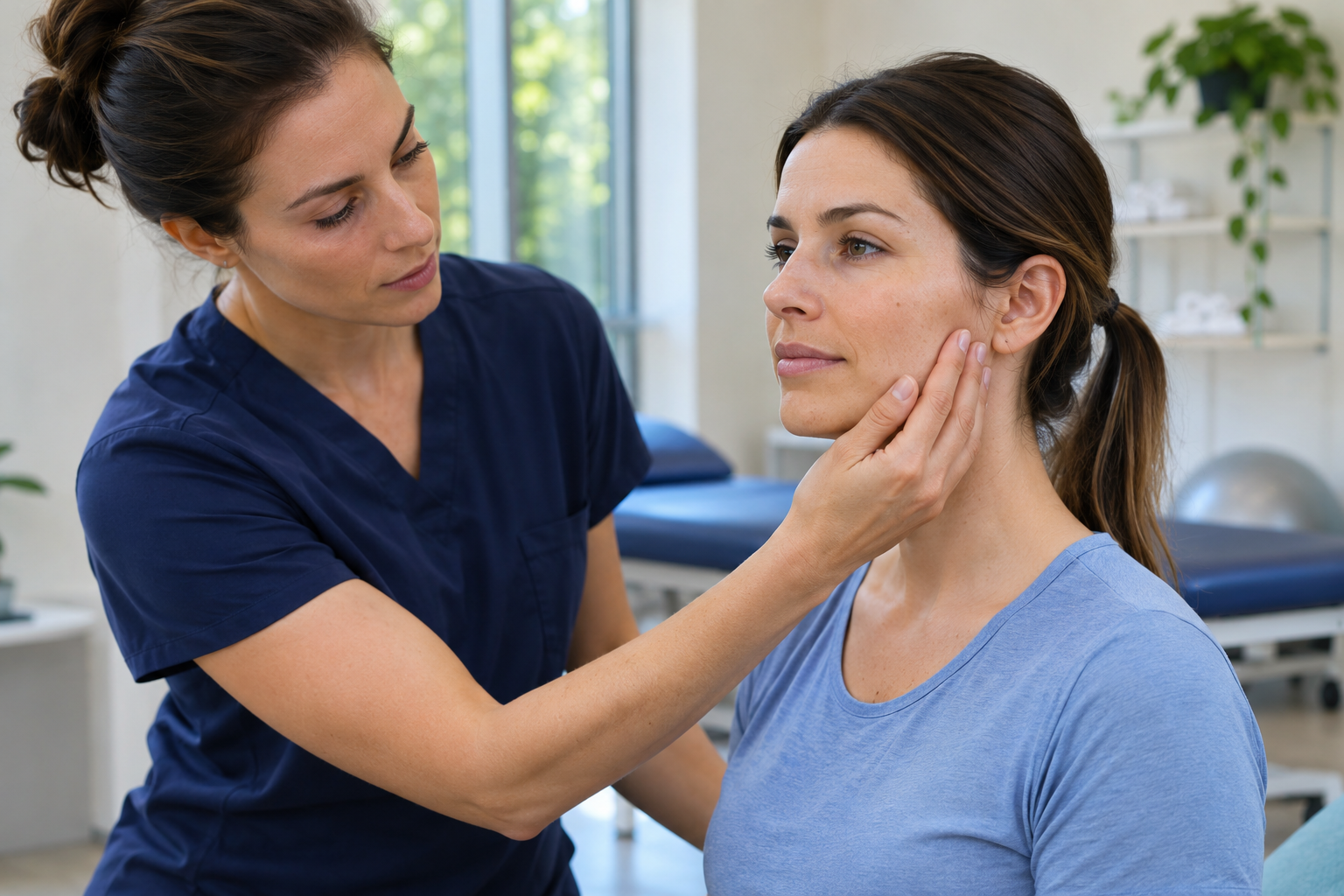
Try the three-finger opening screen. Stack three finger widths vertically between your front teeth. Most adults can do this comfortably when symptoms are calm. If you cannot, or the jaw pulls to one side, there may be a mobility or coordination issue. Next, lightly press your fingertips into the belly of the masseter (the firm muscle on your cheek when you clench) and temporalis (at the temple). Reproducing your familiar ache with gentle pressure suggests muscular involvement rather than a deep ear problem.
Check for clenching. Place your tongue on the roof of your mouth behind your front teeth and let your teeth float apart. Many people realize their default is teeth touching. Last, note noise patterns. A painless, occasional click with wide opening can be harmless. Painful, frequent clicks tied to chewing or yawning suggest the disc is not tracking well. Immediate warning signs that warrant prompt medical or dental care include a jaw locked closed after a yawn, facial trauma, swelling, fever, or new numbness.
Early Phase Relief You Can Start Safely
Calm irritated tissue first. A soft diet for several days limits compressive forces while the joint settles. Choose tender proteins, cooked vegetables, and avoid tough cuts, crusty bread, and chewy candy. Heat relaxes overactive muscles, while ice can soothe a flared joint. If warmth eases tightness but chewing still spikes pain sharply, use heat for muscles and brief, wrapped ice after meals for the joint. Keep each application to 10 to 15 minutes and protect your skin.
Rehearse quiet mechanics. Rest the tongue lightly on the palate with lips closed and teeth apart. Practice small, straight openings in front of a mirror so the lower teeth track like a drawbridge rather than an S curve. Gentle self-massage along the masseter and temporalis can help, but avoid deep pressure that increases soreness later. Limit extreme mouth positions for now: no wide yawns, big sandwiches, or dental flossing with the jaw hanging wide. If you must yawn, support the jaw lightly with your hand to reduce strain.
What Happens During Skilled Physical Therapy for TMJ Disorders
Expect a detailed look at how your jaw and neck coordinate. Many clinicians measure your comfortable and maximal opening, assess lateral movements, and watch how the jaw deviates. They often include the cervical spine because forward head posture and stiff upper neck joints can drive jaw overuse. Manual techniques might address trigger points in the masseter and temporalis or gently mobilize the TMJ to improve disc glide. You may also learn neuromuscular drills to recenter the jaw, such as controlled opening with tongue up contact and small lateral glides that do not provoke pain.
Therapists usually progress loading gradually, for example, using soft putty or a cotton roll between molars to retrain symmetrical bite force without clenching. Postural work is common: chin tucks to restore cervical alignment and scapular exercises to reduce neck strain that feeds jaw tension. Short-term soreness can follow manual treatment, especially if muscles have been guarding. The trade-off is that easing protective spasm often unlocks smoother motion. Your provider should show you how to track progress with consistent markers like morning stiffness, pain while eating specific foods, or finger width opening in the mirror.
Habits That Prolong Symptoms and How to Change Them
Small, repeated loads keep the joint irritable. Chewing gum, biting nails, leaning your chin on your hand, and holding a phone between shoulder and ear all nudge the jaw into overuse or crooked mechanics. Replace gum with mints that dissolve. Use a headset for calls. Set a reminder on your phone that says, Lips together, teeth apart, tongue up. Office workers can set hourly posture reminders and place a cue sticker on their monitor. If you notice clenching during stressful tasks, pair deep nasal breathing with a tongue-up rest position to break the cycle.
Sleep habits matter too. Stomach sleeping forces the jaw to one side for hours. Side sleepers can use a supportive pillow that keeps the neck neutral and avoids pressing the jaw hard into the mattress. If a dentist recommends a night guard, ask how it fits into your plan. Splints can protect teeth and reduce bruxism, but they do not retrain daytime habits by themselves. The most favorable results typically come from combining dental protection with movement retraining and load management.
When to Widen the Team and What to Avoid
Physical therapists often collaborate with dentists, orthodontists, or orofacial pain specialists. If your jaw locks repeatedly, if you cannot open wide enough to manage oral hygiene, or if you have persistent ear symptoms despite normal ear exams, coordinated care helps sort structural from muscular drivers. Avoid aggressive stretching devices or stacking tongue depressors to pry the mouth wider without guidance. For many patients with clicking and deviation, forcing motion early makes the disc slide worse and increases pain. Measured progress guided by symptoms prevents setbacks.
Two scenarios show how this looks in real life. A college student notices temple headaches and ear fullness during exam weeks. A therapist identifies daytime clenching, limited lateral glide to the right, and forward head posture. With tongue-up drills, a headset for study calls, and short posture breaks, the headaches ease within weeks. Another patient feels a sharp jab when biting crusty bread and hears a click on the left. The plan focuses on a soft diet, heat for the masseter, gentle joint mobilization, and openings guided by a mirror that keep the jaw from veering. After irritability drops, graded chewing reintroduces tougher foods without a flare.
TMJ problems are rarely about one tissue alone. They reflect how the joint, muscles, neck, and habits share load over time. A thoughtful plan calms irritation, restores straight, quiet movement, and reduces the hidden behaviors that keep symptoms alive. If your jaw has been stealing attention from your day, use the checks you can do yourself here to get oriented, start with simple relief steps, and consider an evaluation by a skilled clinician to build a plan you can follow. Done consistently, small choices add up to steadier jaws and easier meals.