WRD Meaning in Text: What Does WRD Mean?
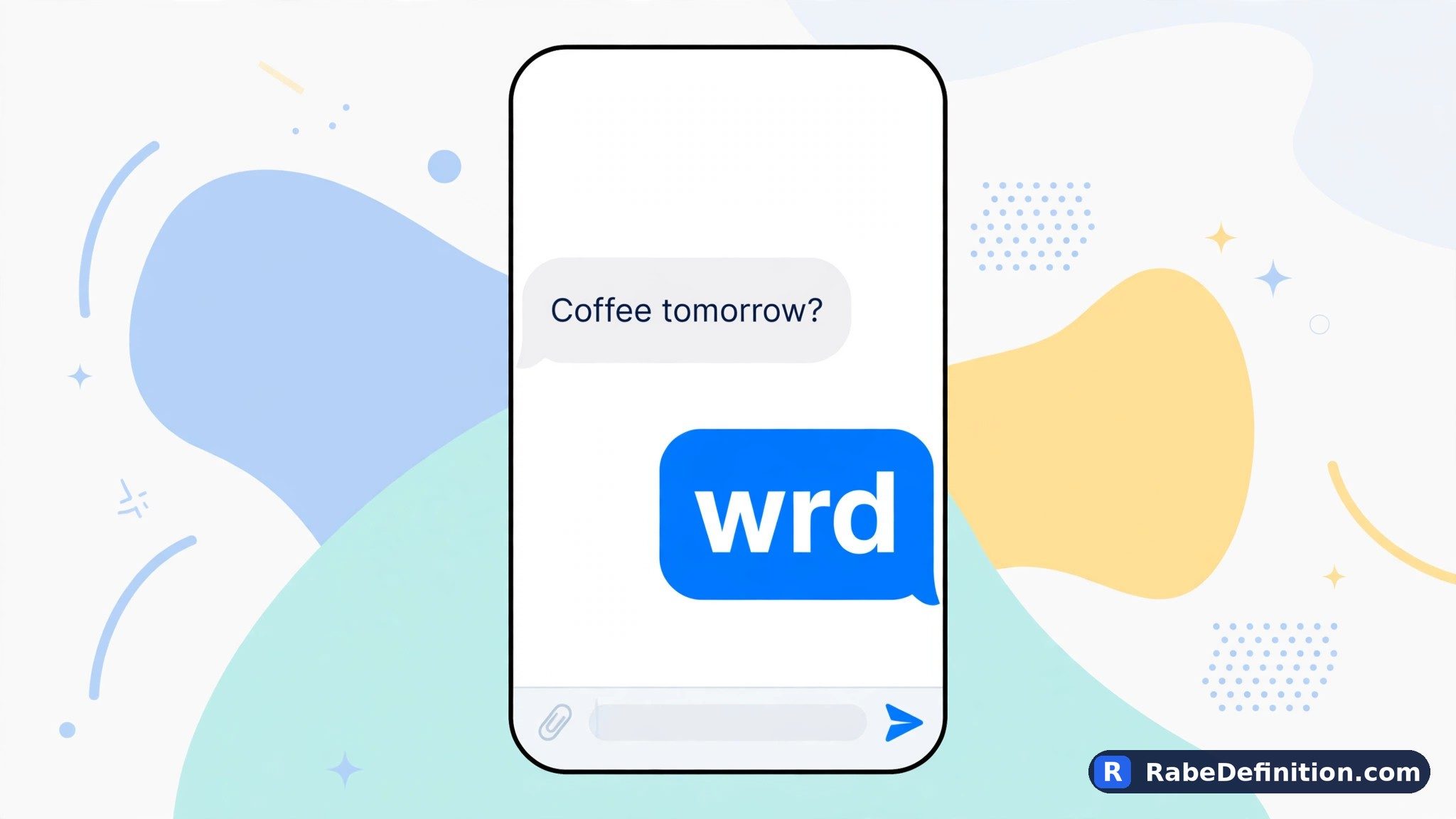
The wrd meaning in text is simple: WRD is a short form of the word “word,” and people use it to agree with what someone just said. When a friend texts you “wrd” by itself, they usually mean that something is true or that they agree with you. With a question mark added, the same reply can show surprise and act more like a casual “really”.
You will mostly see WRD in casual chats between friends, where short replies keep the conversation moving. The tone is relaxed and friendly, and it almost never sounds serious or rude. Still, the exact meaning depends on the message right before it, so one tiny reply can agree, acknowledge, or react with disbelief.
This guide explains what WRD means, where people use it, and how to read it in real conversations. You will see original examples, a comparison with similar slang, and clear tips for using it well. By the end, you will know how to reply when someone sends you “wrd” and when a full response works better.
What Does WRD Mean?
WRD means “word,” and in a text it signals agreement, a quick acknowledgment, or surprise, depending on the context.
It is simply the word “word” written without its vowel, typed the way people say it in casual speech. Saying “word” out loud has long been a way to confirm that something is true, and the texting version carries that same energy. So when a chat ends with “wrd,” read it as a small nod rather than a full sentence.
How Do You Pronounce WRD?
You pronounce WRD exactly like the full word “word,” not by spelling out the letters. Nobody says “double-you-arr-dee” in conversation, because WRD is just a faster way to type a word people already say. If you ever read a message out loud, say “word” and you will sound natural.
Simple Meaning (In Plain Words)
Think of WRD as a head nod in text form. A friend shares an opinion, you agree, and “wrd” says that for you in three letters.
The plain version covers three reactions. Plain “wrd” means agreement, like “yeah, true.” A “wrd?” with a question mark asks “seriously?” And a “wrd” after a plan or a favor usually means “okay, got it,” nothing deeper than that.
Where Is WRD Used?
WRD belongs to fast, informal conversations. You will run into it in:
- Text messages between friends
- Group chats that move quickly
- Snapchat and Instagram DMs and comments
- Discord servers, especially gaming and fan communities
- TikTok comments and replies on X
It rarely appears anywhere formal, and professional messages leave it out.
The same group chats where an SNM confirms a plan in two seconds.
Often typed while OTG, between stops during a busy day.
Why Do People Use WRD?
Speed is the main reason. Typing “wrd” takes a second, yet it still tells the other person you read their message and agree with it.
It also matches the tone of casual texting, where full sentences can feel heavier than the moment needs. One short reply can agree, react, or confirm a plan without slowing the chat down. That flexibility is why it has stayed popular.
Real-Life Examples Of WRD In Use

Example 1 — Agreement
Maya: “Our teacher talks way too fast in first period.”
Jordan: “wrd, I miss half the notes every day”
Jordan agrees and adds his own detail, which is the most common way WRD gets used.
Example 2 — Surprise or Disbelief
Priya: “Tickets for the game are going for ten dollars tonight.”
Sam: “wrd?? since when”
The double question marks turn WRD into “really?” Sam is shocked, not agreeing.
Example 3 — Casual Acknowledgment
Dre: “Sending you my half for the pizza in a bit.”
Leo: “wrd, no rush”
Here Leo just confirms he saw the message, like saying “cool, thanks.”
Example 4 — Group Chat Reaction
In a group chat, one friend posts that the Wi-Fi at the library finally works again. Two people reply “wrd,” and everyone understands it as shared relief, not a new topic.
Where an IKYFL answer handles the wild claims instead.
How to Reply to WRD
Your reply depends on which WRD you received. If it was agreement, just keep the conversation going and add your next thought, the same way Jordan did above.
If it was the surprised “wrd?”, answer the unspoken question behind it. A short confirmation works well, like “yeah, check the poster by the gym door,” because the person wants proof, not small talk.
If it was a plain acknowledgment after a plan or favor, you often do not need to reply at all. The chat has reached a natural stopping point, and sending more feels like noise.
Like an SMT shortcut, a plain WRD acknowledgment needs no reply at all.
WRD vs Similar Terms
Several short replies live near WRD, but each one carries a slightly different weight.
| Term | Meaning | Tone |
|---|---|---|
| WRD | Word; I agree, or really? | Casual and flexible |
| FR | For real | Agreement with extra emphasis |
| TRU | True | Plain, simple agreement |
| IKR | I know, right | Excited, enthusiastic agreement |
| NGL | Not gonna lie | Starts an honest admission |
If the reply feels calm and casual, it is probably WRD or TRU. If it sounds fired up, FR or IKR fits better, while NGL usually introduces a confession instead of reacting to one.
When Should You Use WRD?
WRD works best where the chat is already casual. Good moments include texting close friends, joking in a group chat, reacting in a gaming lobby, or agreeing under a friend’s social media post.
Skip it in work emails, messages to a teacher or manager, and customer service chats. Also avoid it with people you barely know, since they may not recognize the term and could read the short reply as dismissive. Matching the other person’s style is the safest guide.
Tone and Context
Punctuation does most of the talking with WRD. A plain “wrd” agrees, “wrd?” questions, and “wrd.” with a period can look flat or dry, almost like the person is unimpressed.
Caps add energy, so “WRD” feels stronger than the lowercase version. Your relationship matters too, because the same reply reads as friendly from a close friend and confusing from a stranger. When the tone feels unclear, look at the message before it before deciding what was meant.
Unlike GMFU, which can feel heated, WRD stays light.
Common Misunderstandings About WRD
Mixing up agreement and surprise. Without a question mark, the two versions look nearly identical in a fast chat, so readers guess wrong in both directions.
Assuming it always means “really?” Many people meet WRD as a shocked reaction first, but everyday use is plain agreement far more often.
Thinking it is a typo. Because WRD looks like “word” missing a letter, some readers assume the sender misspelled something instead of using slang on purpose.
Expecting everyone to know it. Older relatives, coworkers, and people outside texting culture may simply not recognize it, so a full word is kinder in mixed company.
Other Meanings of WRD
WRD does not have another widely established texting meaning, and it is best to be honest about that. Outside chats, the letters mostly show up as initials inside usernames, file names, or organization names, where they stand for whatever that person or group chose.
You may also spot “wrd” as a plain typing shortcut or a quick typo for “word” in long messages. In a normal conversation, the slang meaning is the safe reading almost every time.
Pro Tips For Using WRD Correctly
- Read the message before it first, because that message decides whether WRD agrees or asks “really?”
- Add a question mark when you mean surprise, so nobody has to guess your tone.
- Keep WRD in casual chats and leave it out of school or work messages.
- Pair it with a short follow-up when the topic matters, like “wrd, that test was brutal.”
- Use it in turns, not as your reply to everything, or the conversation starts to feel one-sided.
FAQs
What does WRD mean in a text message?
WRD means “word,” used to agree with someone or confirm a message.
With a question mark, it instead asks “really?” out of surprise.
Is WRD the same as FR?
No, FR means “for real” and adds stronger emphasis to agreement.
WRD is the calmer, more general reaction of the two.
Does WRD always mean “really?”
No, most of the time WRD simply means agreement, like “yeah” or “true.”
It only means “really?” when the tone or question mark shows surprise.
Where is WRD commonly used?
WRD shows up in texts, group chats, Snapchat, Instagram, and Discord.
It stays in casual conversations and out of formal writing.
Final Thoughts
The wrd meaning stays easy once context leads the way, because WRD almost always points back to the simple word “word.” Most senders use it to agree, acknowledge a plan, or react with mild surprise, and punctuation usually reveals which one fits. Read the message before it, check the question mark, and the intent becomes clear in nearly every casual chat you open.
Use WRD with friends who already text in short slang replies, and match the relaxed tone of the chat. Add a question mark for surprise, or add a few words when a plain reply could confuse someone. When the setting turns formal, write the full response instead, and the agreement will land exactly as intended every time.