NGL Meaning in Text: What Does NGL Mean?
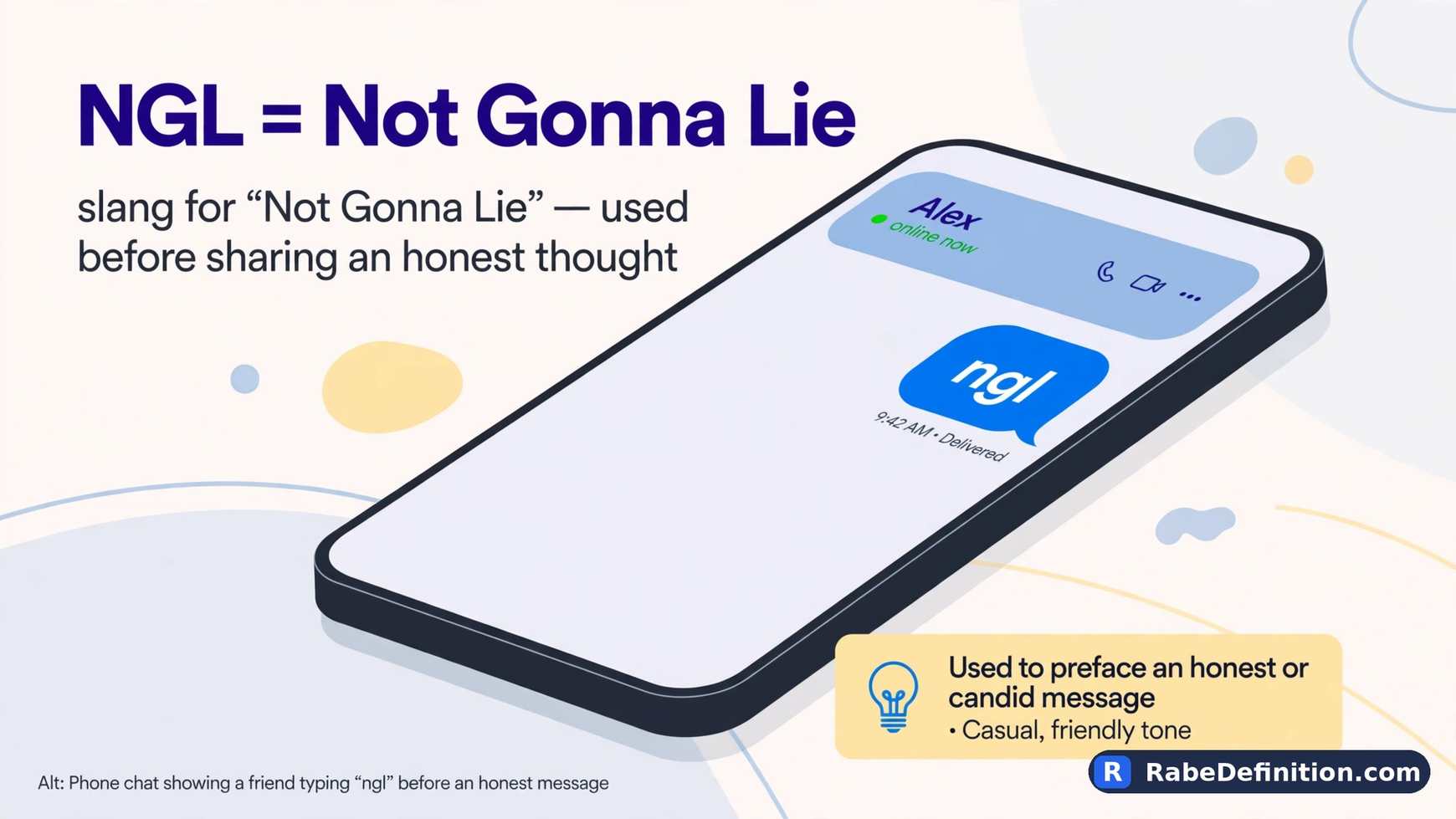
NGL means “not gonna lie,” and the ngl meaning in text is a short way to introduce an honest statement. People type it right before an opinion, confession, or reaction they want to sound completely truthful. It works like saying “honestly” at the start of a sentence, only shorter and more casual.
You will see ngl in texts between friends, in TikTok and Instagram comments, and in casual group chats. It often shows up when someone is admitting something small or sharing a take others might not share. The tone is usually sincere rather than rude, because the writer is choosing honesty over a polished answer.
This guide explains what ngl means, where it shows up, and how its tone shifts with the words around it. You will find real chat examples, simple ways to reply, and a clear look at how ngl compares with tbh. You will also learn when ngl sounds natural and when a fuller word like “honestly” fits better.
What Does NGL Mean?
NGL means “not gonna lie.” It’s a three-letter opener people put in front of a statement they want to sound fully honest.
The letters come from the everyday spoken phrase, shortened for typing. Writers use it when the next words carry weight — an opinion held back or a small fact finally admitted. It doesn’t change what the sentence means; it changes how it feels.
Simple Meaning (In Easy Words)
In plain words, ngl means “I’m going to tell you the truth about this” — being straight with someone instead of giving the safe, expected answer.
Say a friend serves a new soup recipe and asks how it tastes. Answering “ngl, it needs a little more salt” is honest without being harsh: a real opinion, not just a polite one.
How to Pronounce NGL
NGL is read as three separate letters: N-G-L. People spell it out only when reading a message aloud or asking what the letters stand for.
In normal speech, almost nobody says the letters — they say the full phrase, “not gonna lie.” The short form belongs to typing.
Where Did NGL Come From?
Nobody recorded the exact moment it appeared. The spoken phrase “not gonna lie” was common in everyday American conversation long before smartphones.
As texting and social apps grew, everyday phrases got shortened one by one. “Not gonna lie” became ngl, then spread through comments and group chats until it felt like ordinary internet vocabulary.
Where Is NGL Used?
NGL appears almost anywhere people write casually online:
- Texts and group chats between friends
- TikTok comments and video captions
- Instagram captions, comments, and stories
- Posts and replies on X
- Reddit threads and Discord servers
It crosses age groups more than most slang: teenagers use it constantly, but plenty of adults have picked it up too. They are the same apps where an imsg invitation moves a chat.
Why Do People Use NGL?
The biggest reason is that it softens honesty. A blunt opinion can land hard on its own, and ngl works like a small cushion in front of it, showing the honesty comes from a friendly place.
It also makes small admissions easier. Confessing a guilty pleasure feels lighter when three letters carry the awkward part. Unlike a practical brb, ngl carries feeling.
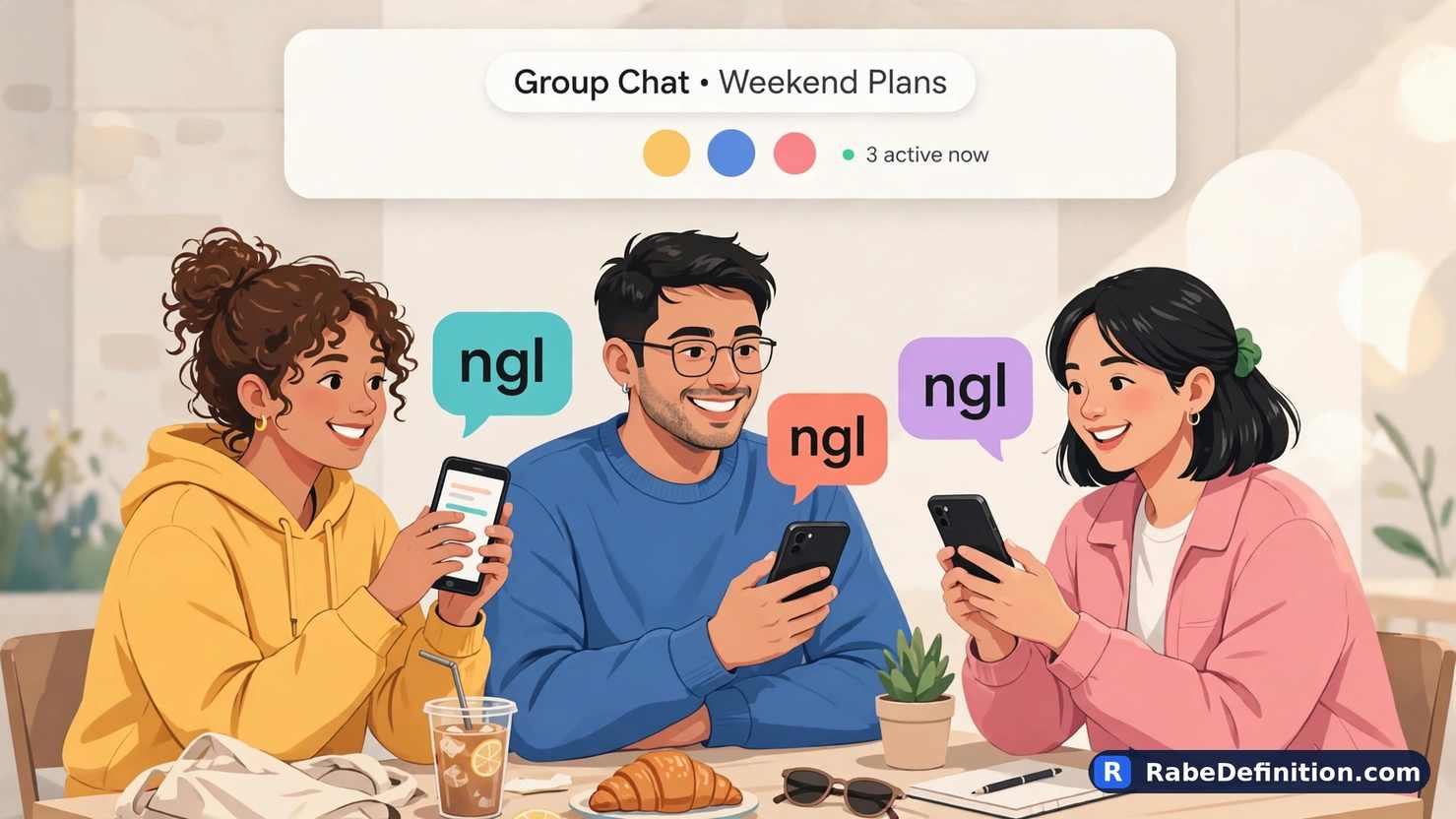
Real-Life Examples of NGL in Action
A few everyday moments show how flexible the term is:
- “ngl, I’ve had that song on repeat all week” — a small, cheerful confession.
- “That jacket looks great on you, ngl” — a compliment that sounds extra sincere.
- In a group project chat: “ngl, I haven’t started my part yet.”
Each one shares something the writer might normally keep quiet.
Does NGL Change Meaning Depending On Tone?
The definition never changes, but the feeling does. With a playful topic, ngl reads like a light confession: “ngl, I still sleep with a night light” — the honesty is mostly for laughs.
With a personal topic, it turns sincere, like someone reflecting on a hard year in a caption. Before feedback, it softens criticism into caring input instead of an attack.
What Does NGL Mean From a Guy or a Girl?
The meaning doesn’t change with the sender: from a guy or a girl, ngl still means “not gonna lie.” The subject changes instead — jokes between friends, or a compliment from someone who likes you. Read the message itself, not the gender, to judge the intent.
NGL vs Similar Terms (Comparison Table)
Several short terms deal in honesty, but each does a slightly different job:
| Term | Stands For | Best Used For |
| NGL | Not gonna lie | Honest opinions and confessions with a personal feel |
| TBH | To be honest | A straightforward opinion, usually more neutral |
| FR | For real | Strong agreement or confirming truth |
| No cap | No lie | Stressing a claim is real, not exaggerated |
| IMO | In my opinion | Marking a statement as your view, not a fact |
The closest match is tbh, but ngl usually carries more personal weight. SMH reacts to a moment; ngl introduces one.
Other Meanings of NGL
NGL is also the name of an anonymous question app. People share a link in an Instagram story, and followers send anonymous questions through it, which the owner answers publicly.
Outside that, ngl appears as plain initials in usernames and team tags. Inside a sentence about feelings or opinions, though, it almost always means “not gonna lie.”
When Should You Use NGL?
Reach for ngl when you’re sharing an honest opinion with friends, admitting something small, or adding a sincere note to a caption. It fits casual group chats and posts.
Skip it in work emails, school assignments, and applications, where “honestly” reads better. Also skip it with genuinely serious news — a heavy moment deserves full sentences, not a three-letter shortcut.
Is NGL Rude?
On its own, no. NGL is usually a softener, so it tends to make honesty sound friendlier, not harsher.
The sentence after it decides everything. “Ngl, I loved your presentation” is kind; the same opener before a personal insult is rude because of the insult, not the slang. An FYI raises the same tone question in work chats.
Why NGL Fits Today’s Online Culture So Well
Feeds are full of polished photos and carefully planned posts, and a lot of readers are tired of the shine. People respond to posts that sound like a real person talking, flaws and all.
NGL promises the unedited version before the sentence even starts, which is why it shows up in posts about real struggles, honest reviews, and small confessions.
How to Reply When Someone Says NGL
Match their honesty with a simple, real response. If a friend confesses something small, “honestly, same here” keeps things easy.
If it’s a compliment, a plain “thank you, that means a lot” works well. If it’s gentle criticism, “fair point, thanks for telling me straight” shows you heard it as intended. Long, dramatic replies are rarely needed. A WDYM asks for the missing detail honestly given.
Common Misunderstandings About NGL
It doesn’t mean the person was lying before. It adds extra honesty to one statement only.
It doesn’t always warn of something negative. Compliments and happy confessions follow ngl just as often as criticism.
It isn’t limited to teenagers. The phrase underneath is ordinary spoken English, so adults use the short form too.
It isn’t a meaningless filler. The three letters set expectations and soften the sentence that follows.
Pro Tips for Using NGL Naturally
- Put ngl at the start of the sentence for the clearest effect: “ngl, that test was harder than I expected.”
- Use it once in a while, not in every message, or it loses its honest punch.
- Don’t stack it with other slang in one sentence; “ngl fr no cap” reads as clutter.
- In semi-formal chats, swap it for “honestly” or “to be fair” for a cleaner tone.
- Back it up with a specific statement. Vague honesty gets fewer replies than a concrete confession.
FAQ Section
What does NGL mean in texting?
NGL means “not gonna lie” in texts and online chats.
People type it before an honest opinion or confession.
Is NGL the same as TBH?
No, the ngl meaning feels more personal and confessional.
TBH usually introduces a plainer, more neutral opinion.
Can NGL be used in a positive sentence?
Yes, ngl often introduces compliments and happy confessions.
It is not limited to criticism or bad news.
Is it okay to use NGL in professional messages?
No, ngl belongs in casual chats and on social media.
In formal writing, use “honestly” or the full phrase.
Where did NGL originally come from?
The term comes from a spoken phrase people used long before texting.
Texting and social media shortened that phrase into three letters.
Does NGL always mean something bad is about to be said?
No, ngl can introduce good news, praise, or a funny admission.
The words after it decide the tone.
Final Thoughts
NGL simply means “not gonna lie,” and the ngl meaning stays the same across texts, comments, and captions online. It introduces a statement the writer wants you to read as honest and unfiltered. The feeling behind it changes with context, so it can soften a confession, strengthen a compliment, or prepare you for gentle criticism in everyday conversations with friends.
Use ngl with friends and in casual spaces where a little honest humor or sincerity feels welcome. Match its tone when you reply, and keep it out of formal writing, where the full phrase sounds clearer and more professional. Honestly, read it as a signal from others, not as a warning, and it will rarely confuse you in any chat.