SMH Meaning in Text: What Does SMH Mean?
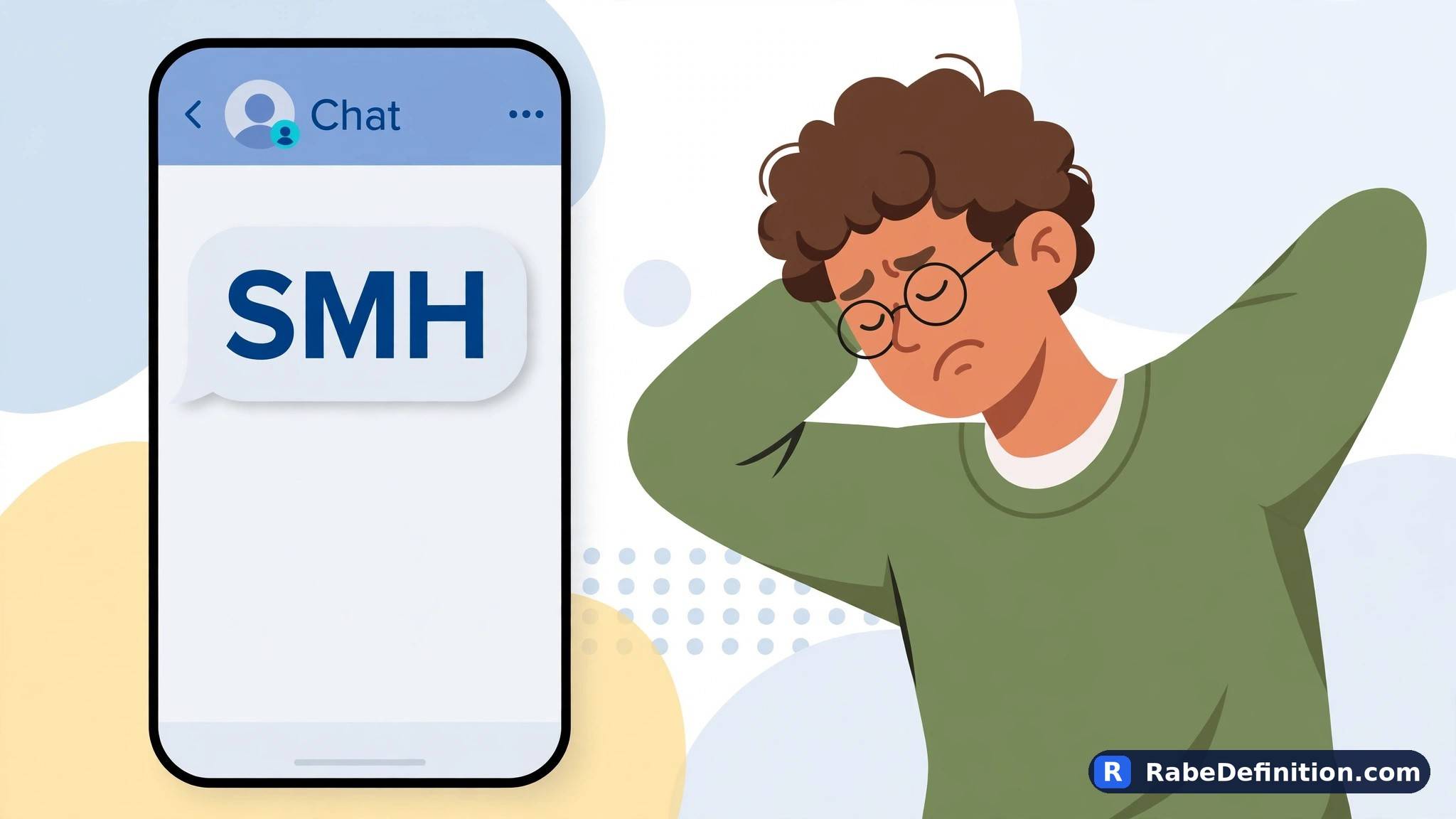
If you are looking up the smh meaning, SMH stands for shaking my head. People type it when something makes them react the way a real head shake would, with disbelief, disappointment, or mild frustration. It is a reaction term, not a full message, and it usually comments on something that just happened or was just said.
In everyday chats, SMH works like a facial expression written in letters. A friend might send it after a silly mistake, a bad joke, or a piece of news that sounds too ridiculous to accept at face value. The tone is often playful between friends, although the same three letters can sound annoyed in a serious situation.
This article explains what SMH means in texting and online comments, where people use it, and the feelings behind it. You will see real-life examples, a comparison with similar terms, and clear guidance on when the term fits and when it does not. You will also learn how to reply to SMH and how to read its tone from context.
What Does SMH Mean?
SMH means “shaking my head.” It is used in texting and online chats to show disbelief, disappointment, or amused frustration without writing a full sentence.
The phrase copies a real gesture. In person, people often shake their heads slowly at something foolish or unbelievable without saying a word. SMH puts that same silent reaction into a message.
Simple Meaning (In Easy Words)
Picture a friend telling you he watered his plants with soda because he ran out of water. You would shake your head before you found any words. Typing SMH sends that reaction in three letters.
The feeling behind it sits somewhere between “I cannot believe this” and “that was not smart.” It is rarely a strong attack. Most of the time it is a light way to say a moment left you speechless.
Where Is SMH Used?
SMH appears almost anywhere people write short, casual messages to each other.
Common Platforms
You will see it in Instagram comments, TikTok replies, Snapchat chats, WhatsApp messages, posts on X, and gaming chats. It also shows up in group texts reacting to a shared story.
Example Situations
People use SMH when a teammate misses an easy shot, a coworker replies to everyone by accident, or a headline sounds too strange to be true. It also appears under fail videos and posts admitting an obvious mistake. They are the same fast chats where a brb pauses the talk.
Why Do People Use SMH?
Quick and Easy
A full reaction sentence takes time, and the moment passes quickly. SMH delivers the whole reaction instantly, which suits fast chats and comment threads.
Emotion-Based
The term carries a feeling rather than information. Readers instantly picture the head shake, so the sender does not need to explain it.
Perfect for Reactions
Memes, short videos, and funny posts invite reactions more than discussion. SMH is built for that job, because it responds to a moment without starting a long conversation.
Universal Slang
The term has been used online for years, so most regular internet users recognize it right away. That makes it safe with friends and online communities.
Real-Life Examples of SMH
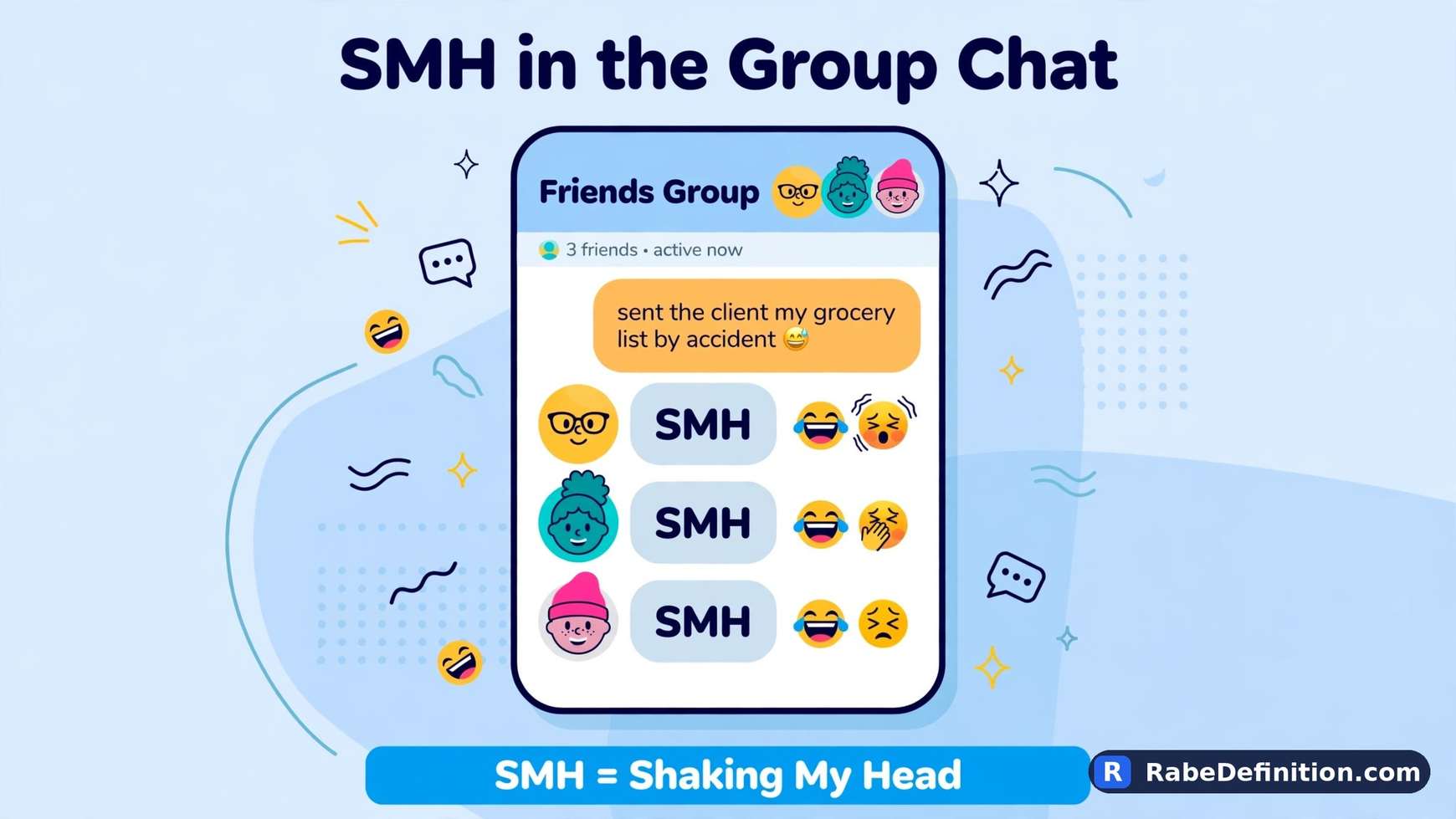
A sister texts that she put the house key in the fridge again, and her brother answers with a single “smh.” A student tells the group chat he submitted his essay to the wrong portal, and two friends reply “SMH” before helping. A fan posts “smh, we had that game won” after his team gives up a late goal.
You will also see it aimed at the sender’s own mistake. Someone who walks into a glass door might caption the story “smh at myself.” That self-directed use keeps the tone light.
How to Reply to SMH
The best reply depends on whether the SMH was aimed at you, at a situation, or at the sender. If a friend sends SMH about your mistake, a short laugh and an honest admission work well, such as “I know, I messed that up.”
When someone uses SMH about a news story, you can simply react with them. Replies like “right?” or “I saw that too” match the mood without adding much. If the tone feels genuinely annoyed, though, a calmer answer is better than a joke. A warm MYF turns the teasing back into affection.
SMH vs Similar Internet Terms
SMH is easy to confuse with other short reaction terms, but each one carries a different feeling.
| Term | Meaning | Feeling it shows |
| SMH | Shaking my head | Disbelief or mild disappointment |
| LOL | Laughing out loud | Something is funny |
| OMG | Oh my God | Shock or surprise |
| IDK | I don’t know | The person has no answer |
| FFS | For f***’s sake | Stronger frustration or annoyance |
LOL celebrates the funny side of a moment, while SMH points at what went wrong in it. OMG reacts to surprise in either direction, good or bad. SMH stays narrower and almost always leans negative, even as a joke. GN is the calm sign-off at the other end of the chat.
When Should You Use SMH?
Good Situations
Use SMH when a friend makes a harmless silly mistake, a video shows an obvious fail, or a plan falls apart in a funny way. It also works for teasing yourself about your own slip. A polite NTY declines without judging anyone.
Situations to Avoid
Skip SMH in work emails, school messages to teachers, and any formal writing. Avoid it when someone shares real bad news, because the term can look dismissive of their feelings. It is also a poor fit with people who may not know internet slang.
Tone and Context
SMH can sound funny, annoyed, or disappointed, and the words around it decide which one a reader hears. “Smh you really wore socks with sandals again” reads as friendly teasing between close friends. “SMH. Third delay this week” reads as real irritation aimed at a situation.
A laughing emoji or a “lol” beside it softens the reaction, while a period and no other words make it feel colder. When you cannot tell which tone someone meant, the safest reading is the milder one. Like a thinking hm, SMH is read from the words around it.
Common Misunderstandings
It Does Not Always Mean Anger
Many readers assume SMH signals real anger, but most everyday uses are playful. Friends send it while laughing, and the head shake is closer to teasing than to rage.
It Is Not an Insult by Default
The term reacts to an action or a moment, not to a person’s worth. It can feel rude in the wrong setting, but in friendly chats it lands lightly.
It Is Not Always Serious
Memes and jokes attract SMH constantly, so the term often appears where nobody is upset at all. Reading it as a serious complaint makes casual chats sound harsher than they are.
It Is Not “Smile My Head”
Beginners sometimes guess the letters stand for “smile my head,” which is not a real phrase. The correct expansion is “shaking my head,” and remembering the gesture makes it easy to keep.
Other Meanings of SMH
Outside chat slang, SMH is also the short name of The Sydney Morning Herald, a well-known Australian newspaper. In news links and headlines, the letters point to that publication, not the reaction.
A small number of people also read SMH as “scratching my head,” meaning confused, but that version is far less common. In normal texting and social media, “shaking my head” is the meaning to assume unless a news context suggests otherwise.
Pro Tips for Using SMH
Match the Tone
Keep SMH for casual moments. If the situation is delicate, write your reaction in full words so nothing gets misread.
Pair It With a Few Words
SMH alone can look abrupt, so adding a short phrase often helps. “Smh, classic parking job” tells the reader what you are reacting to.
Don’t Overuse It
Sending SMH after every message drains it of meaning and can make you sound annoyed. Save it for moments that genuinely earn the head shake.
FAQs
What does SMH mean in texting?
SMH stands for “shaking my head” in texting and online chats. People use it to show disbelief, disappointment, or amused frustration.
Is SMH rude?
SMH is not rude by default, and friends usually read it as playful teasing. It can feel dismissive in serious or formal situations, so context decides how it lands.
What does SMH mean from a guy or a girl?
The smh meaning is the same from a guy or a girl, and it signals a head-shake reaction. Tone depends on the conversation, so read the words around it before guessing at feelings.
How do you use SMH in a sentence?
Place SMH before or after a short comment, such as “smh, the bus left without me.” It works as a reaction and rarely needs a full sentence around it.
Is SMH the same as facepalm?
SMH and facepalm both react to something foolish, but they copy different gestures. SMH copies shaking your head, while facepalm copies covering your face with your hand.
Final Thoughts
SMH is a written head shake, and the smh meaning covers the disbelief, disappointment, and mild frustration people feel at silly or careless moments. Friends use it playfully far more often than angrily, so the surrounding words and your relationship with the sender matter most. Read the tone before reacting, and the three letters rarely cause confusion in casual chats or comments.
Use SMH sparingly in relaxed conversations where everyone knows the slang and the mood stays light. Add a few words when the reaction could be misread by someone outside the chat, and switch to full sentences in serious or formal settings. Used that way, it stays a friendly disbelief instead of sounding cold or careless with people’s feelings.