ONB Meaning in Text: What Does ONB Mean?
The onb meaning in texting is “On Bro,” a short oath people add to a statement to show they are being honest. It works like “I swear” or “for real,” and it tells the reader the sender means exactly what they just said. ONB usually sits right before or right after the claim it supports.
Friends use ONB in casual texts, group chats, and Snapchat or TikTok messages when a plain statement does not feel strong enough. It can back up a promise, a denial, or surprising news, and it often appears when the sender expects doubt. The tone is serious for slang, though close friends also use it jokingly when they stretch a small claim for fun.
This article explains how ONB works in everyday chats and what shifts its tone from sincere to playful. You will see original examples, simple reply ideas, and a clear comparison with close terms like ONG and no cap. It also covers ONB’s other meanings, when the term fits, and when plain words work better.
You Saw “ONB” In A Text And Just… Nodded Along?
ONB means “On Bro.” People add it to a message when they want you to know they are telling the truth.
It looks like a tiny throwaway word, but it changes how a sentence lands. The sender is not only sharing information. They are asking you to trust it, and that difference is the whole point of the term.
What Does ONB Mean?
ONB is an oath phrase, closer to a promise than to a normal word. When someone writes “onb I didn’t take it,” ONB does the swearing, and the rest of the sentence is the claim.
The “bro” works the way it does in everyday speech. It points to the friendship between the two people, not to an actual brother. Swearing on that friendship is what gives the phrase its force.
Simple Meaning (In Plain English)
In plain English, ONB means “I swear” or “I am telling the truth.” Swap it into a sentence and nothing else changes: “Onb, the test got moved to Friday” becomes “I swear, the test got moved to Friday.” If the sentence still makes sense after that swap, you have the right reading.
ONB in Texting
Placement tells you a lot. At the start of a message, ONB sets the tone early: the claim that follows is meant to be believed. At the end, it works like a final stamp, added when the claim sounds doubtful on its own.
Lowercase “onb” is the common form in fast chats. As a complete reply on its own, it usually answers a doubt. Someone asks, “You were really there?” and the whole answer is “onb.”
Where Is ONB Used?
ONB lives in casual, friend-to-friend spaces. You will see it in texts, group chats, Snapchat chats and captions, TikTok comments, Instagram DMs, and gaming chats.
You will rarely see it in work emails, school messages, or formal writing. Many readers outside slang-heavy circles have never seen it, so it stays inside close friend groups.
Group chats have their own short forms — the wyo meaning in text is “what you on,” asking what someone is doing.
Why Do People Use ONB?
The biggest reason is emphasis. A plain statement can sound weak, and ONB adds weight without many words.
It also answers doubt before the doubt is even spoken. Instead of waiting for “are you lying?” the sender handles it in advance. And it is fast: three letters replace a full promise.
A check-in is different from an oath — the hru meaning in text is “how are you,” a friendly question rather than a promise.
Real-Life Examples Of ONB In Action

A denial between friends
Maya: “You told Jordan about the surprise party, didn’t you?”
Ben: “onb I didn’t say a word.”
Meaning: Ben is swearing the secret stayed safe.
A firm promise
Priya: “Don’t be late this time.”
Sam: “onb, I’m leaving the house at five.”
Meaning: Sam is making a real promise, not a rough guess.
News that sounds too good
Jess, in the group chat: “onb the teacher just cancelled tomorrow’s quiz.”
Meaning: Jess backs it up before anyone can doubt her.
How to Reply to ONB
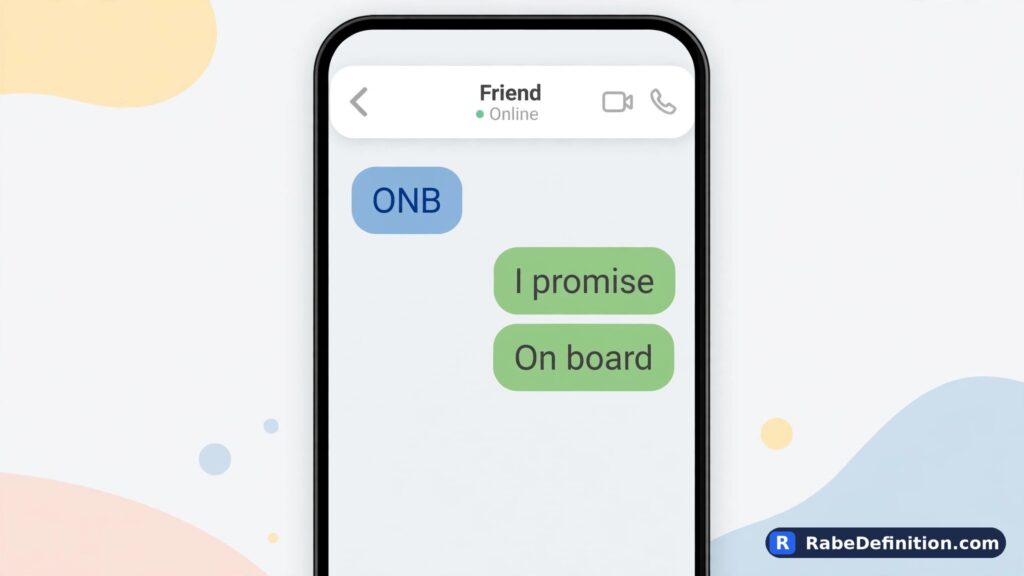
Reply to the claim, not to the three letters. If you believe the person, “okay, I believe you” is enough, and you can ask for the next detail.
If you still have doubts, ask for something concrete in a light way, like “send the screenshot then.” If it was a promise, hold them to it playfully: “holding you to that.” When the tone is clearly joking, match the energy instead of taking the oath literally.
A different short reply is OFC — the ofc meaning in text is “of course,” used when you agree rather than swearing to it.
Tone and Context
ONB raises the stakes of whatever it touches. Between close friends, it can feel warm, loyal, and routine. From someone you barely know, the same three letters can feel pushy, like a demand for trust they have not earned yet.
Frequency matters too: swearing on one big claim sounds sincere, while swearing on every message makes each oath worth less. Capital letters and a period make it firmer, while a trailing “lol” softens it into a joke.
A reaction is different from an oath — the tf meaning in text is a surprised reaction, not a promise.
ONB vs Similar Terms

Several short forms cover the same ground, but they hit with different force.
| Term | What it means | How it differs from ONB |
|---|---|---|
| ONB | On bro | Swears on the friendship; serious but casual |
| ONG | On God | A stronger oath, taken more seriously |
| No cap | No lie | Stresses honesty without swearing on anyone |
| FR | For real | Agrees or emphasizes; weaker than an oath |
ONB sits in the middle: stronger than “for real,” lighter than swearing on God.
Other Meanings of ONB
ONB is not locked to a single meaning, and the surrounding conversation decides which one fits. As a reaction to something mildly funny, some people use ONB for “outward nose breath,” the small exhale through the nose made instead of a real laugh. That reading is weaker than LOL and usually follows a meme or dry joke.
It can also dismiss old information as “old news, bro.” A few meaning lists give ONB as “out of nowhere” for something sudden, so a message about a surprise can carry that reading too.
When Should You Use ONB?
ONB fits when the chat is already casual, the other person uses slang, and your claim genuinely needs backing. Promises, denials, and surprising news between friends are its natural home.
Skip it in work messages, school writing, and anything sent to a client or teacher, where it can look careless or confuse the reader. It is also the wrong tool in a serious apology, where a quick oath can make real words sound cheap.
A quick yes works the same way — the yh meaning in text is a fast “yeah” for agreeing in a chat.
Common Misunderstandings About ONB
It needs a real brother. It does not. The “bro” names the friendship in general, and anyone can use it.
It is always completely serious. Friends often use it jokingly, swearing hard on tiny claims like finishing a pizza.
Everyone knows this one. They do not. ONB is niche, and plenty of regular texters will not recognize it.
Adding ONB makes a claim true. It only shows the sender wants to be believed; the claim still stands or falls on the facts.
Pro Tips For Using ONB Naturally
Save it for claims that actually need support. If every message carries an oath, none of them feel special.
Match the other person’s style, and keep the claim clear enough to understand without slang. Stacking oaths, like adding ONG and ISTG to the same line, usually reads as trying too hard. When in doubt, write “I swear” in full. It lands with everyone.
Final Thoughts
The onb meaning in texting is “On Bro,” an oath people attach to a claim so the reader knows they are being fully honest. It works like “I swear” or “for real,” and its force comes from the friendship it names in the chat. ONB belongs in casual texts, active group chats, and lively social media messages between people who already talk in this relaxed way.
Read the claim around it before judging the tone, because friends use ONB for promises, firm denials, surprising news, and playful joking. Reply to the message itself, believe it or question it calmly, and keep your answer in the same casual, friendly energy. Save ONB for the real moments that actually need its weight.
It is, after all, an oath made on bro — a promise backed by the friendship it names.
FAQ
What does ONB stand for in a text?
ONB stands for “On Bro” in most texts and chats.
People use it to show a statement is honest and meant seriously.
Is ONB the same as ONG?
The two phrases are close, but they are not exactly the same.
ONG means “on God” and usually sounds stronger and more serious than ONB.
What does ONB mean on Snapchat?
On Snapchat, ONB usually means “On Bro,” just like in a normal text.
It shows up in quick chats and captions backing up a claim or promise.
Can ONB mean something else?
Yes, it can also mean “outward nose breath,” a reaction to something mildly funny.
The messages around it show whether it is an oath or a quiet laugh.
Is ONB rude to use?
ONB is not rude between friends who already use casual slang with each other.
It can feel pushy from a stranger, and it does not belong in formal messages.
How should I reply when someone adds ONB to a message?
Reply to the claim itself instead of the three letters.
Say you believe them, ask for a detail, or match their joking tone.