RSVP Meaning in Text: What It Stands For and How to Reply
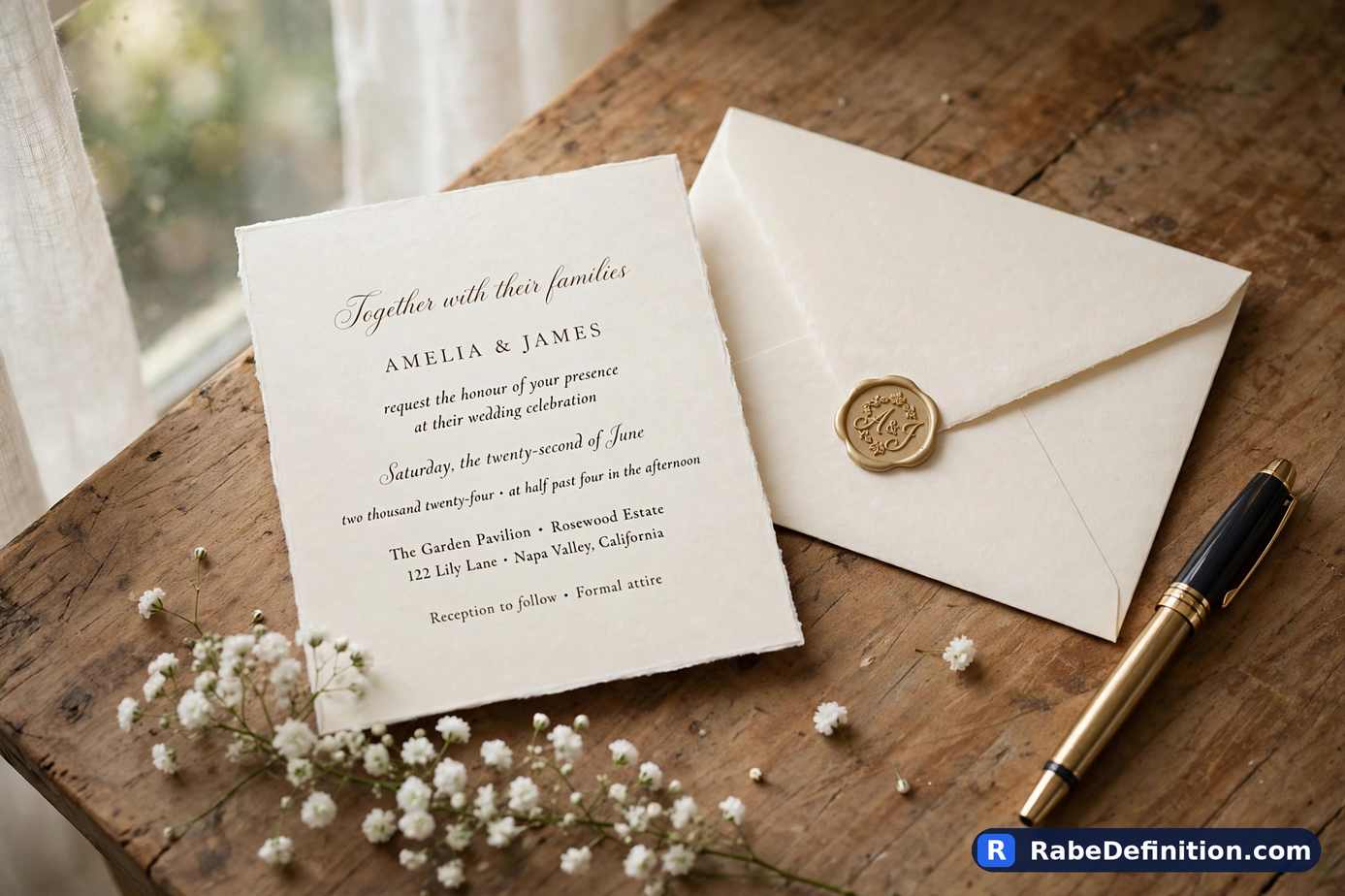
The rsvp meaning is simple: RSVP asks you to tell the host whether you are coming or not. The four letters come from a French sentence, répondez s’il vous plaît, “respond, if you please.” You will find them at the bottom of wedding invitations, party invites, and event pages, usually with a reply-by date attached.
The request is the same at a black-tie gala and at a backyard barbecue, even though the tone around it changes. Hosts ask because the headcount drives real decisions — food, seats, and cost all depend on who actually shows up. One nuance matters: RSVP asks for an answer either way, so a “no” is just as expected as a “yes.”
This article explains what RSVP stands for, where the French wording came from, and how the term works as both a noun and a verb. You will also see real invitation examples, platform-by-platform notes, and the mistakes that leave hosts guessing. By the end, you will know how to write an RSVP line, how to answer one, and when no RSVP is needed at all.
Quick Answer
RSVP means “please respond.” It began as a French sentence, répondez s’il vous plaît, and hosts print the letters on invitations so they know how many guests are coming.
What Does RSVP Mean?
RSVP is an initialism of répondez s’il vous plaît, a French sentence meaning “respond, if you please,” and it asks every invited guest to say whether they will attend.
| Detail | Explanation |
|---|---|
| Most common meaning | Please respond — tell the host if you are coming |
| Full form | Répondez s’il vous plaît (French) |
| Tone | Neutral; the event around it sets the formality |
| Common contexts | Weddings, parties, work events, online events |
| Formal or informal | Both; printed on formal cards and tapped in apps |
An RSVP is a request, not a decoration. The host is planning around real numbers — meals ordered, chairs set out, money spent — and your answer, yes or no, is the number they plan with. Silence is the only reply that helps nobody.
“RSVP by June 3 so we can give the caterer a final count.”
That one line carries the whole system: a deadline, a reason, and a clear ask.
Why Is It Written in French?
For centuries, French was the shared language of European diplomacy and polite society, and formal manners were often French manners. Through the 1800s, an elegant invitation borrowed French phrasing the way it borrowed French cooking terms, and RSVP came in with that fashion. The fashion faded, but the four letters had already become the standard mark on invitations in the English-speaking world, so they stayed. Etiquette writers note that the abbreviation is now rarely used in France itself — a borrowing that outlived its home.
How to Pronounce RSVP
You say the letters, one by one: ar-ess-vee-pee, with the stress on the final “pee.” Cambridge gives the American pronunciation as /ˌɑːr.es.viːˈpiː/. Nobody pronounces RSVP as a word, and there is no long spoken form — even in formal speeches, the letters are what people say.
Full Definition
Dictionary entries split RSVP three ways: an abbreviation printed on invitations, a verb for the act of answering, and a noun for the answer itself. Cambridge defines the printed form as an abbreviation for répondez s’il vous plaît, French for “please reply,” placed at the end of a written invitation.
As a Verb
Used as a verb, RSVP means to reply to an invitation: “Have you RSVP’d for the wedding yet?” or “Please RSVP by noon Friday.” Merriam-Webster lists the verb forms as RSVP’d or RSVPed, with RSVP’ing or RSVPing for the present form, and dates the verb’s first known use to 1934. In casual writing you will also see RSVP’ed; all three past forms show up, with RSVP’d the most common.
As a Noun
As a noun, an RSVP is the reply itself: “We’ve had forty RSVPs,” or “Her RSVP arrived with a kind note.” Hosts count RSVPs the way they count chairs — each one is a person accounted for. Cambridge records this sense too, as a message saying whether you will go to an event.
The Redundancy Issue
Look closely at “please RSVP” and you will spot a small doubling: the SVP already contains s’il vous plaît, the French “please,” so the phrase technically says “please, please respond.” Nobody minds — the doubled version is the one most invitations use, and it reads as warmer, not wrong. If you want the strictly tidy form, print “RSVP by [date]” alone and let the built-in please do its quiet work.
Context and Usage
The letters never change, but the weight behind them does. A reply owed to a wedding planner working with a caterer is a different thing from a thumbs-up in a group chat, even though both are RSVPs. The three settings below cover most invitations you will ever receive.
Formal Events
Weddings, galas, and company dinners run on confirmed numbers, so the RSVP here is a real commitment with a real deadline. The invitation usually arrives with a reply card or a link, and the host needs your answer to order food, build a seating plan, and pay vendors. Not answering is read as poor manners in this setting, because the cost of guessing lands on the host.

Casual Events
Birthday parties, barbecues, and game nights use the same word with a lighter touch. The invitation may be a text or a social media event, and a short “Count me in” or “Can’t make it, sorry” is a complete reply. Answer anyway: the host is still buying food and counting chairs, just fewer of both.
Digital Events
Online workshops, webinars, and virtual parties ask for an RSVP too, usually as a registration. Organizers use the list to send links, slides, and reminders to the right people, and to know how large a room — even a digital one — to prepare. Registering and then not showing up costs the host less than at a wedding, but the courtesy of a reply still applies.
Is RSVP Formal or Casual?
The word itself is neutral; the invitation around it sets the register. Printed on a heavy card with a reply envelope, RSVP calls for a prompt, complete answer and a little care with wording. Tapped as a button in an app, it asks for nothing more than an honest tap. Read the event, not the letters: the bigger the host’s cost per guest, the more formal your answer should be.
Real-Life Examples
Five short exchanges show the word at work, from a printed wedding card to a same-day dinner text.
1: Wedding Invitation
Host: “The invitations go out Monday. The card asks guests to RSVP by May 1 — the caterer needs a final number.”
Guest: “I’ll send mine back this week. Two attending, and I’ll take the chicken.”
A formal setting, a complete answer: who is coming, how many, and the meal choice, all before the deadline.
2: Casual Party
Ana: “WTW for Saturday? I’m grilling at mine — RSVP in the chat so I know how much to buy.”
Ben: “I’m in. Bringing the potato salad again.”
A group-chat invite still needs a count, and Ben gives his answer plus a useful extra.
3: Work Event
Priya: “HYB? The picnic form closes Friday — did you RSVP yet?”
Tom: “Just did. I added my daughter on the form, like it asked.”
Work events often ask about family members too, and the form is where that answer belongs.
4: Digital Event
Organizer: “Thursday’s workshop is free, but RSVP on the event page — the meeting link goes only to people who register.”
Attendee: “Done. Will the slides come by email afterward?”
Organizer: “Yes, to everyone on the RSVP list.”
Here the RSVP is a registration, and it controls who receives the link and the follow-up.
5: Last-Minute Invite
Host: “Short notice, I know — dinner at mine tonight at eight. Can you come?”
Guest: “I can! Do you need an official RSVP?”
Host: “That was it. See you at eight.”
At this size, the yes in the text thread is the RSVP.
Platform-Specific Meaning
The meaning stays fixed across platforms; only the buttons change. What each service calls a reply, and what the host sees, differs enough to be worth a quick tour.
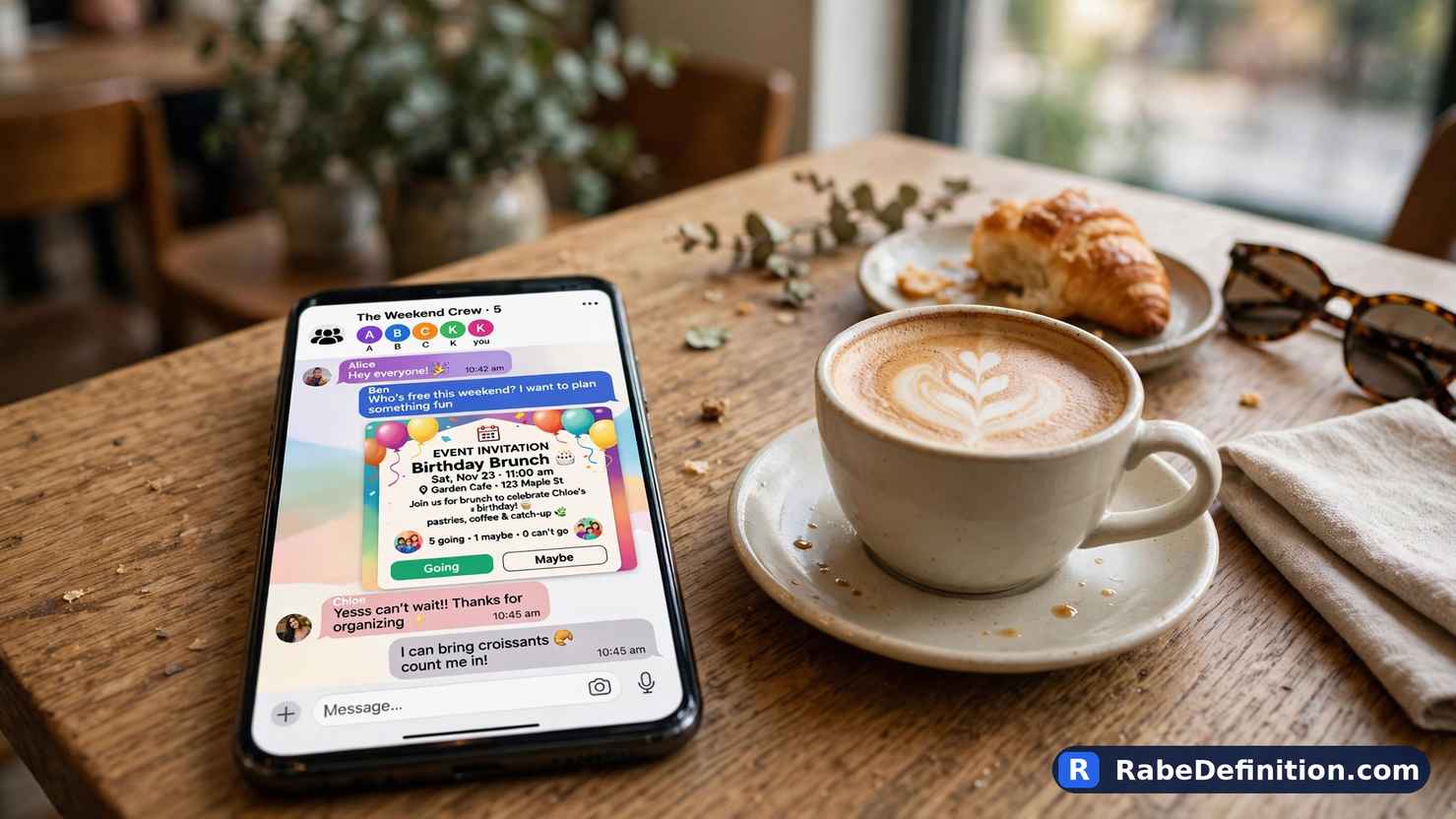
WhatsApp invitations usually travel through group chats, and event features in groups let members answer with a tap — going, not going, or maybe. The host watches the tally build inside the chat and can nudge the quiet ones. A “maybe” here is at least an answer, though a firm one still helps more.
Snapchat
Snapchat has no built-in RSVP button, so an invitation arrives as a snap or a chat message and your reply is simply your answer in the thread. Because snaps disappear, an invite is easy to lose track of — answer when you see it, even if the answer is “let me check.” Silence on Snapchat reads as a no that nobody actually sent.
TikTok
On TikTok, RSVP mostly appears as a topic rather than a tool: wedding planners and etiquette creators post about reply deadlines, flaky yeses, and guests who never answer. The word’s meaning in those videos is the standard one. The debate is about behavior — whether a yes still means a person will actually show up.
Facebook Events
Facebook Events gives hosts three buttons — Going, Can’t Go, and a third labeled Interested. Only the first two are answers. Interested tells the host you liked the look of the event; it does not put you in the count for food or seats, so switch it once you know.
Eventbrite and Meetup
Eventbrite and Meetup are built around the RSVP as a core action — registering is the reply. Eventbrite sign-ups may ask for meal choices or guest details, and both platforms send reminders as the date approaches. A free ticket still represents a seat the organizer is holding for you.
Email Invitations
An emailed invitation either links to a reply form or simply asks for an answer by return email. Keep the reply short and complete: whether you are coming, how many of you, and anything the host asked about, such as a meal choice. If the email went to a group, reply to the host, not to the whole list.
RSVP Meaning in Text and Chat
In a plain text message there is no button to tap, so the word itself does the asking. A host might write, “IMK either way by Friday — the venue needs its final count,” and a friend’s “Can’t, sorry, work” is a full and acceptable answer. Dating chats run on the same machinery: a profile might advertise a label like sapiosexual, but the actual evening still gets settled by a plain “RSVP by Thursday so I can book the table.” The medium is casual; the request is the same one printed on the heaviest wedding card.
Alternative Meanings and Variations
RSVP almost never means anything else, but the wording around it changes who has to answer and how stiff the request sounds. These are the variations you will actually meet.
RSVP, Regrets Only
This line flips the default: reply only if you cannot come. Silence is counted as attendance. Hosts use it for events where nearly everyone invited is expected — a family reunion, a standing team lunch — and it spares them a pile of yeses.
Regrets Only
The same instruction in its shortest dress, usually printed alone at the foot of the invitation. It means exactly what “RSVP, regrets only” means: speak up only to decline.
Please Reply
The plain-English replacement, and the clearest choice when some guests may not know the French borrowing. It asks for the same answer with zero decoding, at the cost of a little formality.
Kindly Respond
A warmer, more formal variant that suits printed invitations for weddings and ceremonies. The request is identical; only the courtesy is turned up.
Confirm Your Attendance
The direct, businesslike version, common for conferences, trainings, and ticketed workshops. It tells the guest exactly which fact the host needs: confirmed presence.
Let Me Know
The most relaxed form, used between friends and family for small plans. Low pressure, same job — the host still wants a count before buying food.
How to Write RSVP on an Invitation
A good RSVP line carries three things: the request, a deadline, and a way to answer. “RSVP by May 1” is the skeleton; add the channel — “at the link below,” “to Ana at 555-0134,” or a reply card in the envelope — and the line is complete. Formal cards sometimes dress the sentence up: “We endeavor to confirm every seat by June,” though one polished sentence is plenty. If some guests may not know the term, “Please reply by May 1” loses nothing.
Related Terms and NLP Variations
The reply request travels with a small family of terms. Knowing them makes any invitation easier to read — and easier to write.
| Term | Meaning |
|---|---|
| SVP | The French short form of s’il vous plaît, “please” |
| Répondez s’il vous plaît | A French sentence asking the guest to reply |
| Regrets only | Reply only if you cannot attend |
| Save the date | An early notice that an invitation will follow |
| Plus-one | An extra guest an invitee is allowed to bring |
| Headcount | The number of people expected at the event |
| Reply card | The printed card sent with an invitation for the guest’s answer |
| RAS syndrome | A joking name for doubled words in phrases like “please RSVP” |
RSVP vs. Save the Date: What Is the Difference?
A save-the-date is an announcement, not a question. It goes out months ahead — “the wedding is June 22 in Napa; invitation to follow” — and asks for nothing but a mark on the calendar. The RSVP arrives later, with the formal invitation, and it does ask a question, with a deadline attached. Answer the second one; simply note the first.
How to Respond to an RSVP
Answering well is a small skill with an outsized effect on the person hosting. Five steps cover nearly every invitation you will receive.
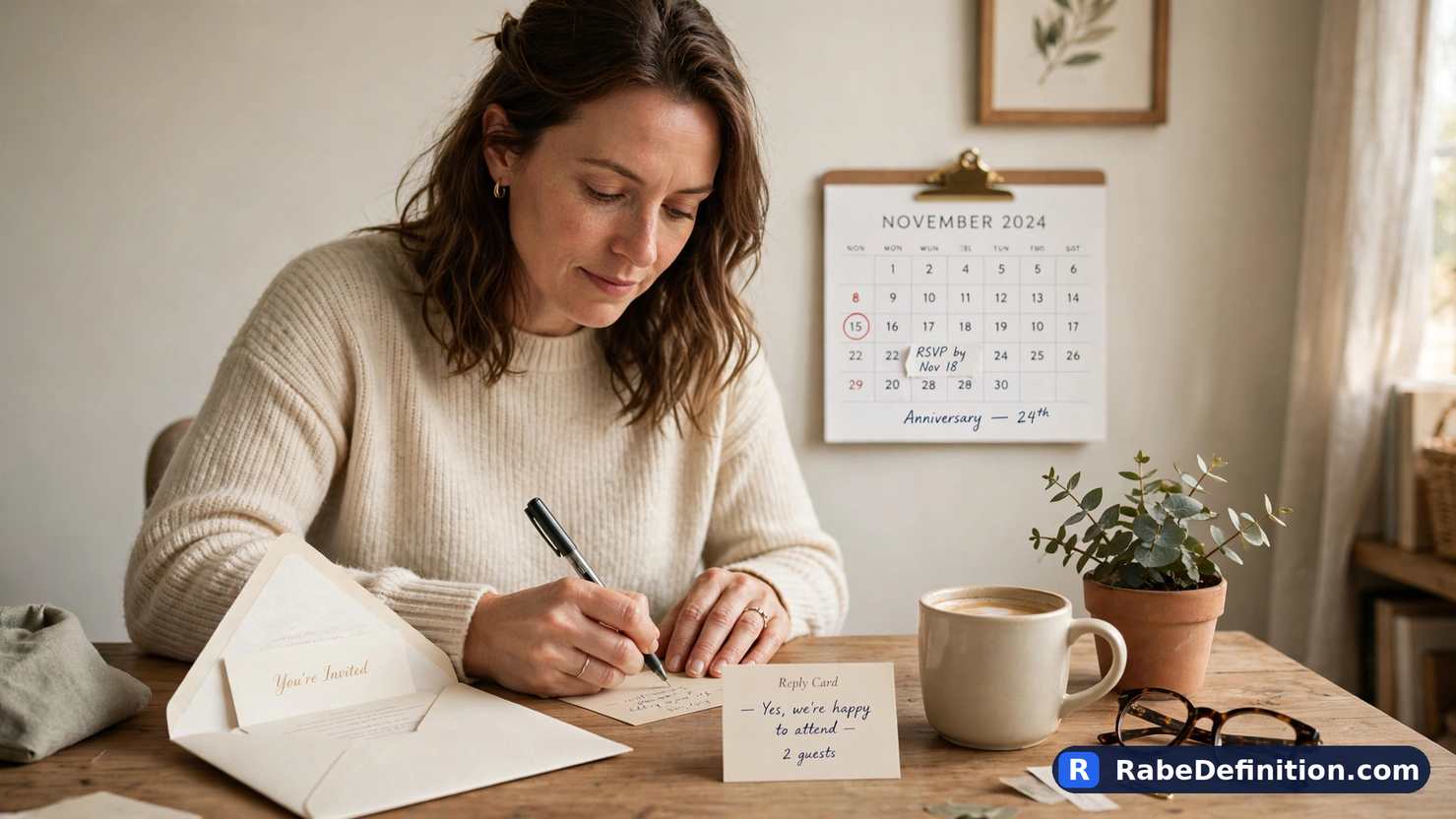
1: Read the Invitation Carefully
Before answering, find four things: the deadline, the way to reply, whether a guest is included, and anything the host asks you to choose, like a meal. Most RSVP mistakes are really reading mistakes.
2: Respond by the Deadline
The date exists because vendors, venues, and seating plans lock in after it. Answering early is a genuine kindness. If the deadline has passed, contact the host directly, apologize in a sentence, and give your answer — do not just show up.
3: Be Clear About Your Answer
Say the plain thing: “I will be there” or “I cannot make it.” A clear no helps the host more than a hopeful maybe. If you truly do not know yet, say when you will know, and then meet that date.
4: Include Additional Information if Requested
If the invitation asks for a meal choice, the name of your guest, or a song request, send it with your reply. Every detail you include now is a follow-up message the host does not have to send later.
5: Follow Through on Your Commitment
A yes is a small promise. Keep it if you possibly can, and if illness or an emergency breaks it, tell the host the moment you know — a wedding seat and a paid-for meal may still be reassigned.
Misinterpretations and Common Mistakes
The term is simple; the errors around it are social, not linguistic. These five account for most of the trouble.
1: Thinking RSVP Means “Reply Only If You Are Coming”
It does not. The request covers both answers, because the host plans around the nos as much as the yeses. The only invitation that wants replies from decliners alone is the one marked regrets only.
2: Assuming the Host Will Chase You
The invitation is the ask; chasing is not part of the host’s job. With a hundred guests, no host can personally pursue every missing answer, and waiting for a reminder quietly shifts your work onto them.
3: Bringing Uninvited Guests
If the invitation names only you, it invites only you. An extra person is an extra meal, chair, and cost the host never agreed to. If you hope to bring someone, ask first — and accept a no gracefully.
4: RSVPing “Maybe” When a Clear Answer Is Needed
A maybe reserves nothing and plans nothing. Where the invitation offers no maybe option, pick the honest answer you can stand behind, or tell the host the date by which you will decide.
5: Forgetting to RSVP Altogether
The most common mistake of all. Even when you are sure the host expects you, answer officially — expectations are not a headcount, and the caterer cannot cook for a feeling.
When NOT to Use RSVP
Some gatherings genuinely do not need a reply system. Adding one there creates work without adding certainty.
Open House Events
An open house runs for hours with guests drifting in and out, and the host stocks for a crowd, not a count. No RSVP is expected; just come inside the stated hours.
Public Events
Festivals, street fairs, and open concerts take whoever shows up. There is no guest list to answer to, and no host waiting on your reply.
Very Small Gatherings
For dinner with three close friends, a formal reply request is overkill. A quick call or text — “I’m in, what can I bring?” — does the whole job.
When the Invitation Does Not Request It
If an invitation carries no RSVP line, no reply is owed. For a small dinner party it is still kind to confirm, since food is involved, but that is courtesy, not obligation.
Usage Tips for Hosts
Hosts control more of the reply rate than they think: how the invitation is built decides how many answers come back. These habits bring the answers in.
Set a Clear Deadline
Print the date on the invitation itself, not in a separate message. For weddings, asking for replies a few weeks before the day is the usual convention — long enough to chase stragglers, early enough to finalize vendors.
Provide Multiple Response Options
A reply card for the traditionalists, a link or phone number for everyone else. Every extra channel raises the response rate, because guests answer in the way that costs them the least effort.
Send Reminders
One gentle reminder, a week or so before the deadline, catches the people who meant to answer and forgot. Keep it light: the goal is a reply, not a scolding.
Follow Up with Non-Responders
After the deadline, a short personal message — “We’re finalizing numbers Friday; can I put you down?” — resolves most of the remaining silence. People forget; a direct ask usually settles it.
Be Gracious About Declines
A no is information, not rejection. Thank the guest for answering, and mean it: the people who decline clearly are the reason your final count is accurate.
The Importance of RSVP in Event Planning
Behind the courtesy sits arithmetic. Almost every decision a host makes scales with the guest count, and the RSVP list is where that number comes from.
Food and Beverage Planning
Caterers cook to a confirmed count and charge by the person. Answers that arrive late or never force a guess — too much food wastes money, too little leaves guests hungry.
Seating Arrangements
A seating chart needs names, not estimates. Knowing exactly who is coming lets a host place guests thoughtfully and keep the evening comfortable.
Budget Management
Meals, rentals, favors, and printed materials are all priced per guest. An accurate count is the difference between a budget that holds and one that quietly doubles.
Logistics and Planning
Chairs, parking, name tags, and gift bags all follow the same number. A firm count turns a week of small scrambles into a checklist.
Guest Experience
Guests feel the count too: enough food, a seat that fits the table, a room that is full but not packed. A well-answered invitation is the first piece of hospitality, before anyone arrives.
Frequently Asked Questions
1. What does RSVP stand for?
The letters shorten a French sentence: répondez s’il vous plaît.
In English that is “respond, if you please” — simply, “please respond.”
2. Is RSVP only used for weddings?
No. Any host who needs a headcount can use it, from birthday parties to work events.
Weddings just made the term famous.
3. Do I have to RSVP if I am not going?
Yes. The host needs your no as much as your yes to plan food and seating.
The one exception is an invitation marked “regrets only.”
4. What if I miss the RSVP deadline?
Contact the host right away, apologize briefly, and give your answer.
Do not assume there is still room — ask.
5. What does “RSVP, regrets only” mean?
Reply only if you cannot come.
If the host hears nothing, they count you as attending.
6. Is “please RSVP” redundant?
Strictly, yes — the SVP already contains the French word for “please.”
It is so common, though, that nobody minds.
7. Can I bring a plus-one if I RSVP?
Only when the invitation offers you one.
If no guest is mentioned, ask the host before bringing anyone.
8. How do I RSVP to a digital event?
Click the register or RSVP control on the event page and complete the short form.
The organizer then sends the link or materials to responders.
9. What if I RSVP yes but cannot attend later?
Tell the host as soon as your plans change.
A quick, honest message beats an empty chair, especially where a meal was paid for.
10. Why is RSVP in French?
French was long the language of diplomacy and formal society, so polite invitations borrowed its phrasing.
The fashion faded; the four letters stayed.
Conclusion
The rsvp meaning comes down to one small courtesy: tell the host whether you are coming. Behind the four letters sits a French sentence, répondez s’il vous plaît, “please respond,” and the request covers both answers, yes and no alike. The same letters serve a wedding, a webinar, and a backyard barbecue.
Answer by the deadline, in the way the invitation asks, and keep the answer clear. If the card offers you a plus-one, name them when you reply; if plans change after a yes, tell the host at once. Hosts should print a date, offer a way to answer, and take declines with good grace. Four letters, answered on time, turn a guest list into a plan that works.