YW Meaning in Text: What Does YW Mean?
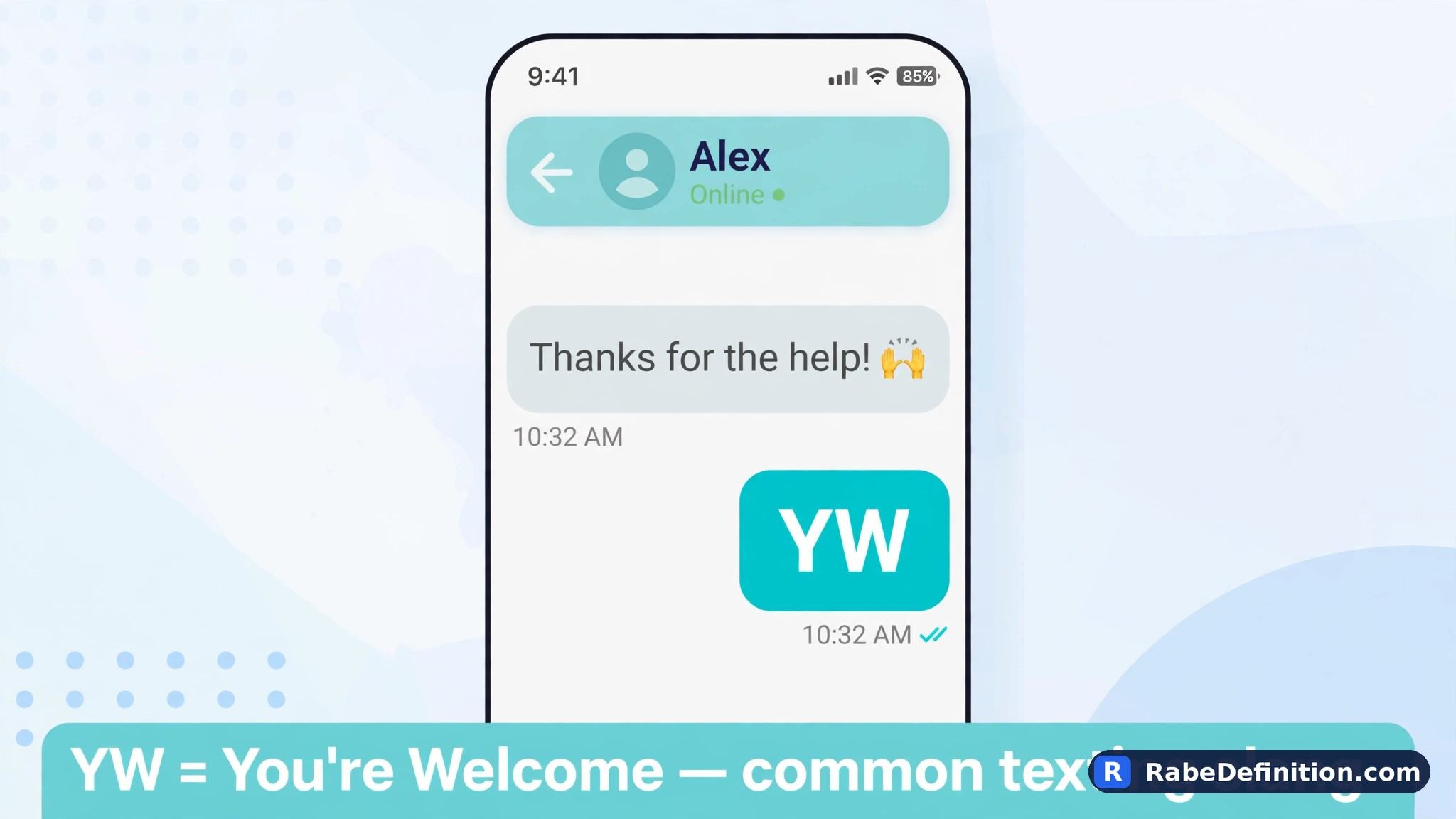
When someone asks what does yw mean, the answer is simple: yw is a short way of writing “you’re welcome” in a text. People send it right after someone thanks them, usually for something small and everyday. It carries the same friendly meaning as the full phrase, just in two quick letters.
You’ll mostly see yw in relaxed chats with friends, family, and people you message often. On its own it looks very short, so the tone depends on the rest of the conversation. A plain yw is normal and polite in casual texting, while yw with an emoji feels warmer.
This guide explains the yw meaning in plain words and shows where people actually use it. You’ll see real conversation examples, a comparison with np and other short replies, and the situations where yw fits best. You’ll also learn when writing out the full “you’re welcome” is the safer choice.
What Does YW Mean? (Simple Definition)
YW means “you’re welcome.” It’s the short reply people type after someone says thanks, thank you, or thx in a chat.
The two letters stand in for the full phrase, so the meaning doesn’t change. Someone helps you, you thank them, and yw closes the exchange politely, whether the favor was tiny or big.
YW only makes sense as a response. It isn’t a greeting or a question, because it answers a thank-you that came before it.
How to Pronounce YW
People almost never say yw out loud. In speech, they use the full words “you’re welcome,” because the abbreviation exists for typing.
Reading it aloud letter by letter sounds unnatural, so voice notes and calls always use the full phrase.
Simple Meaning In Easy Words
Think of yw as the smallest polite reply you can send. Someone thanks you, and instead of typing a whole sentence, you tap two letters and move on.
It feels close to “no problem” or “don’t mention it.” All of them say the same thing: the help was no trouble, and you’re glad to give it.
A typical exchange: “Thanks for sending the homework.” “yw.” Short, friendly, and complete.
Where Is YW Used?
YW belongs to casual digital communication, not formal writing.
Texting (SMS)
Friends and family trade quick replies all day. After a “thanks for the ride,” yw feels natural and complete.
Threads that open with a WYS check-in often close with a quick yw.
Social Media
Comments and DMs on Instagram, Snapchat, and TikTok move fast, so short replies fit right in. Creators often answer thanks with yw under posts.
Gaming Chats
During a match, nobody has time to type twelve letters. After a revive or a good callout, “thx” and “yw” pass between teammates in a second.
These are the same team chats where an NT lands after a near win.
Discord & Group Chats
Group conversations scroll quickly. A short yw acknowledges the thanks without adding clutter.
Casual Emails (Rarely)
You might see it in a relaxed email between close coworkers, never with clients or managers.
Why Do People Use YW Instead Of “You’re Welcome”?
Speed is the biggest reason. Two letters take a split second to type, and that adds up across dozens of replies a day.
Tone matters too. A full “you’re welcome” can sound stiff between close friends, while yw matches the relaxed feel of the conversation.
Texting culture plays a part too. Short forms like lol, brb, and thx are normal digital language now, and yw sits in that same family.
Real-Life Examples Of YW In Conversations
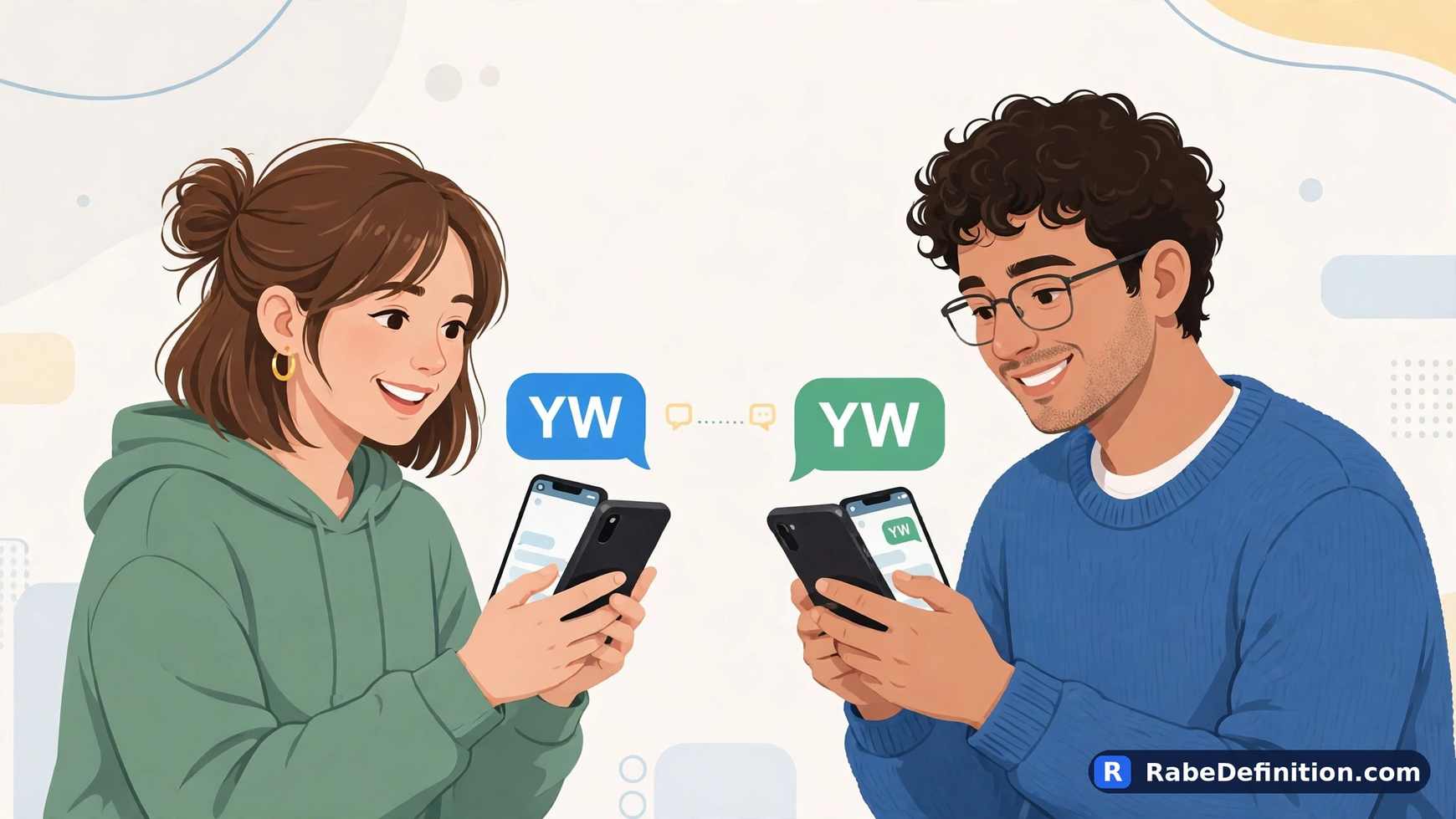
Example 1 (texting a friend):
“Thanks for grabbing my package off the porch!”
“yw, it was right there anyway”
Example 2 (family chat):
“Thank you for watching the dog this weekend.”
“yw! He was an angel, bring him anytime”
Example 3 (gaming chat):
“thx for the heal, saved the round”
“yw, stay behind cover next time lol”
Example 4 (social media comment):
“Thank you for the study playlist, it actually helped.”
“yw, glad it worked for you”
Notice the pattern: yw always follows a thank-you, and the mood stays light.
Favors like the porch pickup usually start with an OTW heads-up.
What Does YW Mean From a Guy or a Girl?
YW means the same thing no matter who sends it. A guy or a girl typing yw is simply saying “you’re welcome.”
What can shift is the warmth around it. A bare “yw” is the standard reply, while yw with a smiley emoji, or “yw, happy to help,” feels friendlier. Read the whole conversation, because yw alone is neither warm nor cold.
YW vs Similar Terms (Comparison Table)
Several short replies can answer a thank-you, each with a slightly different feel.
| Term | Meaning | Best Used In |
|---|---|---|
| yw | You’re welcome | Casual texting with friends |
| np | No problem | Casual texting and gaming |
| ofc | Of course | Friendly replies with a confident tone |
| anytime | Anytime, always happy to help | Warm, personal replies |
| no worries | No worries | Relaxed, easygoing chats |
| you’re welcome | Full phrase | Polite or professional settings |
YW is the most direct shortening of the full phrase, so it feels like the default. NP focuses on the favor being no trouble, while ofc sounds gladly given.
Other Ways to Say “You’re Welcome” in a Text
If yw feels repetitive, you have plenty of natural swaps. Np is the closest cousin and works in the same spots.
“No worries” sounds easygoing, and “anytime” adds warmth for people you help often. “Glad to help” suits bigger favors, where a two-letter reply might feel too small. “Don’t mention it” is friendly and a little old-fashioned.
Mixing these up keeps your replies sounding human instead of automatic.
When Should You Use YW?
Good Times To Use YW:
- Texting close friends or family
- Replying in gaming chats and Discord servers
- Answering thanks in social media comments
- Fast group conversations where replies stay short
Times To Avoid YW:
- Professional emails and formal work messages
- Messages to a teacher, manager, or client
- Formal letters, applications, or official requests
- First conversations with new contacts
The simple test is the setting. If the chat is relaxed, yw fits. If it carries any formality, the full phrase shows more respect.
Tone and Context
Because yw is so short, small details around it change how it lands. On its own it reads neutral in an easygoing chat, especially when the whole conversation uses short replies.
Punctuation and extras soften or sharpen it. “yw!” or yw with a smiley emoji feels cheerful, while “yw.” with a period can look flat to some readers. A short follow-up, like “yw, let me know if you need the rest,” removes any doubt.
The relationship matters most. Between close friends, a bare yw is invisible. With someone new, one extra friendly word helps.
Like a TW label, yw’s two letters read differently depending on the room.
Common Misunderstandings About YW
Misunderstanding 1: “YW means something negative.” It doesn’t. YW is a positive, polite reply with no hidden rude meaning behind it.
Unlike MYB, which can close a topic, yw never hides a rude meaning.
Misunderstanding 2: “Replying with just yw is rude.” In casual texting, short replies are the normal style, not disrespect. That only changes in formal settings, where the full phrase is expected.
Misunderstanding 3: “Only teenagers use yw.” People of all ages use it, because anyone who texts regularly picks up the same shortcuts. It’s standard casual English online now.
Misunderstanding 4: “YW and WYD mean the same thing.” They don’t. WYD means “what you doing” and asks a question, while yw answers a thank-you.
Pro Tips For Using YW Correctly
Match the other person’s style. If they write full sentences, answering “you’re welcome” in full keeps the tone even.
Add warmth when it costs nothing. An emoji or a word like “anytime” turns a plain yw into a clearly friendly reply.
Default to the full phrase when you’re unsure. Nobody was ever offended by a complete “you’re welcome,” so it’s the safe pick with teachers and new contacts.
Don’t stack abbreviations in every message, or the chat starts to feel robotic.
Frequently Asked Questions (FAQ)
Q1: What does yw mean in a text message?
YW means “you’re welcome” in a text message.
It’s the short reply people send right after someone thanks them.
Q2: Is yw rude to use in texting?
No, yw is not rude in casual texting.
Short replies are normal between friends, though the full phrase feels warmer with new people.
Q3: Can I use yw in a professional email?
It’s better to avoid yw in a professional email.
Writing out “you’re welcome” looks more polite and respectful at work.
Q4: What’s the difference between yw and np?
YW means “you’re welcome,” while np means “no problem.”
Both work as casual replies to thanks, and people often use them the same way.
Final Thoughts
YW is simply the short texting form of “you’re welcome,” sent after someone says thanks. The yw meaning stays friendly and polite in casual chats with friends, family, and teammates. It works in texts, comments, game chats, and group conversations where short replies are normal. Two letters carry the full message, so nothing is lost.
Use yw when the conversation is relaxed and the favor was small or routine. Add an emoji or a word like “anytime” when you want the reply to feel warmer. In formal messages, work emails, or talks with teachers and managers, write the full phrase instead. Matching your reply to the setting keeps it polite and easy for everyone to understand after a thank you.