
Fine Pixel Pitch Screens: Dallas LED Video Wall Company Specs
Let’s talk about making a lasting impression. If you want to captivate your audience, a massive, vibrant display is the right way to go. But jumping into the world of digital signage means encountering a lot of technical jargon. You might hear terms like pixel pitch, refresh rates, and surface mounted devices. Navigating these details is much easier when you understand exactly what they mean for your specific environment. Whether you are upgrading a corporate boardroom or setting up a large command center, getting the right specifications makes all the difference. We are going to explore everything you need to know about Fine Pixel Pitch Screens and how they fit into your overall strategy. By taking a closer look at the technology, you can make smarter decisions for your facility.
Decoding the Core Specifications
Understanding the technology behind your display helps you make an informed investment. You want a screen that looks sharp from every angle and performs flawlessly under your building’s unique lighting conditions. Knowing the technical foundation guarantees your content will shine.
What is Pixel Pitch?
Pixel pitch is simply the distance in millimeters between the center of one LED pixel and the center of the next. A smaller number means the pixels are packed tightly together. This tight grouping creates a much higher resolution. When you look at Fine Pixel Pitch Screens, you are usually dealing with a pitch of 2.5 millimeters or less. Options like 0.9mm or 1.2mm are incredibly common for spaces where viewers sit close to the screen. If your audience is just a few feet away, this tight pixel density prevents the image from looking pixelated or blocky. The closer people are, the smaller your pixel pitch needs to be.
Brightness and Contrast
Brightness is measured in nits. Indoor environments usually require screens that output between 600 and 1200 nits. This range ensures your content remains vibrant even if your lobby has massive windows letting in harsh sunlight. Contrast is just as important. New technologies like Chip on Board packaging provide much deeper blacks and sharper contrast compared to traditional Surface Mounted Device panels. When you evaluate Dallas LED Video Wall Company Specs, you will want to match the screen’s brightness and contrast capabilities directly to your room’s ambient light. A bright room requires a brighter screen, while a dark theater might prioritize deeper blacks.
Refresh Rates and Camera Performance
If you plan to broadcast events, host video conferences, or take photos in front of your display, the refresh rate matters immensely. A low refresh rate causes terrible flickering on camera. You will want a screen with a refresh rate of at least 3840Hz. Some premium panels even push 7680Hz. This high rate guarantees smooth motion and perfect camera compatibility. It ensures your presentations look just as good to virtual attendees as they do to people in the physical room. You will never have to worry about ugly scan lines ruining your recorded videos.
Selecting the Perfect Setup for Your Environment
Every space has distinct requirements. A screen that works beautifully in a massive auditorium might be complete overkill for an executive conference room. You need to align your hardware choices with your physical footprint and your daily operational needs. The goal is to maximize impact without overspending on features you will never use.
Determining the Ideal Viewing Distance
There is a simple rule of thumb for figuring out the right pixel pitch for your space. Convert the pixel pitch to meters to find the minimum comfortable viewing distance. For example, a 1.5mm screen looks great from about 1.5 meters away. If your viewers are sitting 10 to 15 feet away in a conference room, a 1.2mm or 1.5mm screen provides a flawless, seamless image. For massive lobbies where people are walking by at a distance, you might save budget by opting for a 2.5mm screen. Always map out where your audience will stand before finalizing your hardware order.
Energy Efficiency and Thermal Management
Running a massive digital canvas requires power. Older technologies used to draw massive amounts of electricity and generate a lot of heat, requiring heavy air conditioning to keep the room comfortable. Modern fine pitch panels are designed with highly efficient power supplies. They consume less energy while maintaining peak brightness. Additionally, the aluminum cabinets dissipate heat effectively without the need for loud internal cooling fans. This silent operation is exactly what you want in a quiet boardroom or broadcast studio where background noise is unacceptable.
Video Processing and Content Management
The screen itself is only half of the equation. The video processor acts as the brain of your setup. It takes your input sources like laptops or media players and scales them perfectly across the massive pixel canvas. High end processors ensure there is zero lag between your source and the screen. When you evaluate different systems, make sure the processing hardware supports standard inputs like HDMI, DisplayPort, and SDI. It should also handle 4K or even 8K resolutions easily, giving you the flexibility to display anything from simple slide decks to incredibly detailed data dashboards. Do not overlook the software interface, as a user friendly control system makes daily operation much simpler.
Managing Installation and Maintenance
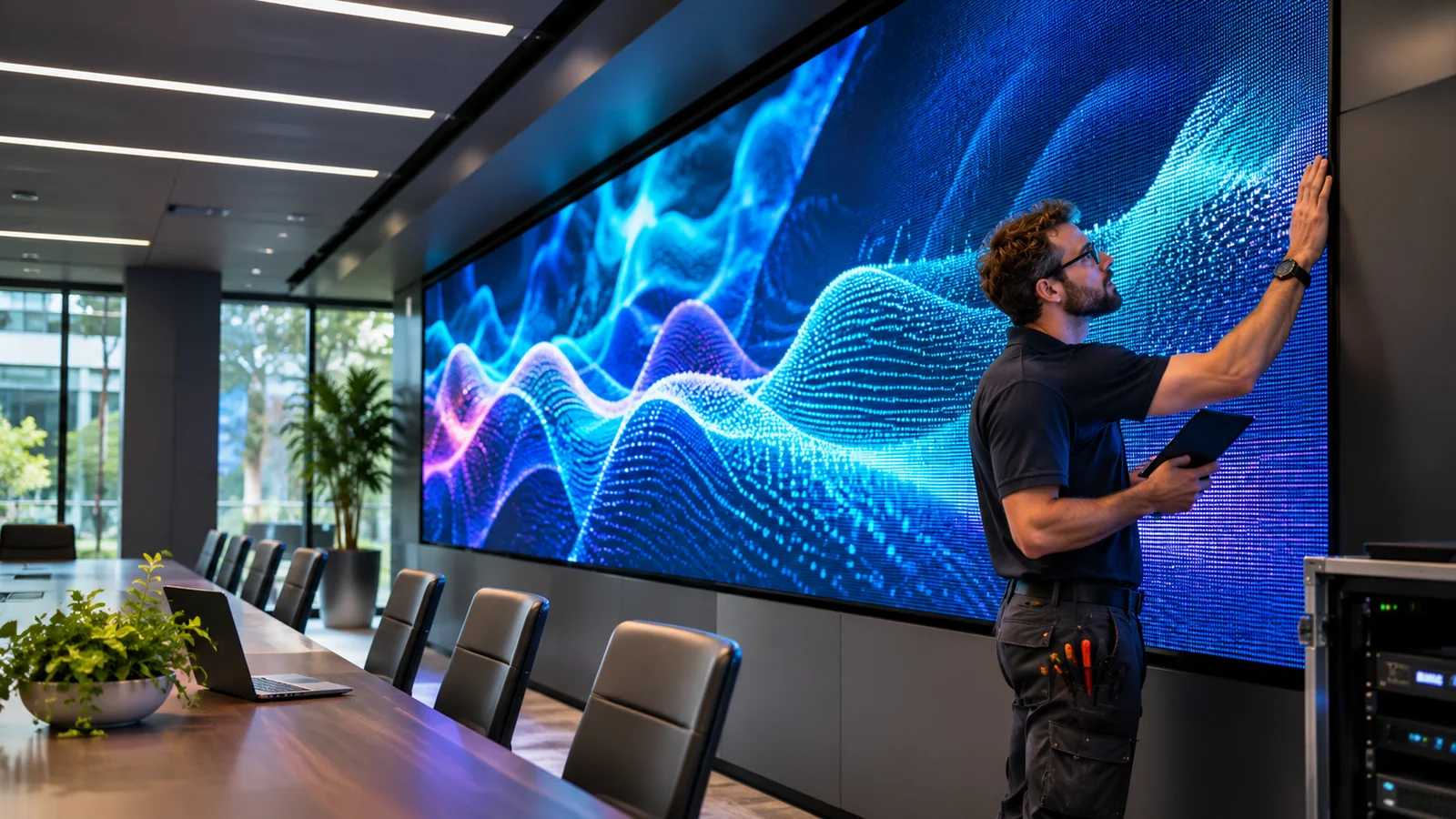
Fine pixel pitch displays are sophisticated pieces of engineering. They require incredibly precise installation to ensure there are no visible seams between the individual panels. The best systems feature lightweight, die cast aluminum cabinets that snap together perfectly. You should also look for front serviceable designs. If a pixel goes out or a module needs replacing, a front serviceable screen allows technicians to pop out the specific section using a magnetic tool without taking down the entire wall. This keeps your downtime to an absolute minimum and saves you significant money on labor.
Partnering with the Right Local Experts
Buying the hardware is only the first step. The success of your project relies heavily on the team that designs, installs, and supports your system. Choosing a reliable local provider ensures you get exactly what you need without the headaches of poor integration. Local experts understand the nuances of the regional market and can provide tailored advice.
Custom Configuration and Design
Your space is unique. Off the shelf solutions rarely fit perfectly. A great provider will conduct a thorough site visit to assess structural load capacities, power availability, and thermal management needs. They will help you decide between standard widescreen aspect ratios for presentations or custom ultra wide configurations for command centers. When reviewing proposals, look for teams that offer comprehensive indoor LED display configurations rather than just dropping off boxes of hardware. They should act as architectural consultants, ensuring the display integrates smoothly into your existing interior design.
Warranty and Long Term Support
These displays are significant investments designed to run for thousands of hours. However, technology still needs occasional maintenance. Always verify the warranty terms. A solid standard is a five year hardware warranty coupled with lifetime technical support. You want a partner who stocks spare parts locally and can deploy a technician quickly if something goes wrong. Proper commercial visual solutions always include robust post installation support to keep your displays running around the clock without a hitch. Ask your provider about their service level agreements to guarantee peace of mind for years to come.